
Epoxy wins the gap-filling contest against cyanoacrylate on any non-machined, uneven, or load-bearing joint: the two-part resin mechanically locks into pores and voids without shrinking, bridging gaps up to roughly 1/4" (6 mm) or more, whereas cyanoacrylate (CA) needs hairline joints to develop strength [S2][S1].
CA's moisture-triggered anionic polymerization creates a rigid, glass-like film that is excellent in shear but very poor in peel, and it starves out on any gap wider than a few thousandths of an inch [S2][S3]. Epoxy cures into a cross-linked network with high tensile, shear, and peel strength, plus the chemical and thermal headroom (over 300°F / 149°C for many formulas) that CA cannot match above about 176°F (80°C) [S1].
Chemistry Behind the Gap-Filling Difference
Two-part epoxy combines a resin and a hardener; mixing triggers an exothermic cross-linking reaction that builds a tough, three-dimensional polymer network independent of substrate moisture, so it can cure in thick sections and inside voids without starving [S2][S3]. The cured mass becomes its own structural material that mechanically interlocks with wood fibers, ceramic porosity, or abraded metal, not just a film between two mating faces [S2].
Cyanoacrylate is a single-component, moisture-initiated adhesive: even trace humidity on the substrate or in the air starts anionic polymerization and the bond sets in seconds [S1][S3]. That same speed is the limitation on uneven surfaces, because the cured film is thin, rigid, and brittle; once the joint opens beyond a few thousandths of an inch the CA cannot span the void and the bond area collapses to a narrow bridge [S2][S5]. On dry or acidic substrates (kiln-dried oak, teak, certain plastics) CA can fail to cure at all without an activator mist or surface primer [S2][S3].
Decision Matrix: Epoxy vs Cyanoacrylate on 4 Criteria
Across four shop-floor criteria the choice is consistent: epoxy dominates gap fill, thermal headroom, and chemical resistance; CA wins only on cycle time and minimal surface prep [S5][S3].
The fundamental shop rule from [S2] is: "use super glue for machined, tight-fitting wood joints and use epoxy for joints with gaps or voids." Breaking that rule is the most common cause of adhesive failure on uneven substrates [S2]. For load-bearing joints, dissimilar-material assemblies that flex, or any repair exposed to solvents, fuel, or under-hood heat, the matrix above tilts decisively toward epoxy [S3][S5].
Use Cases Where Each Adhesive Earns Its Place
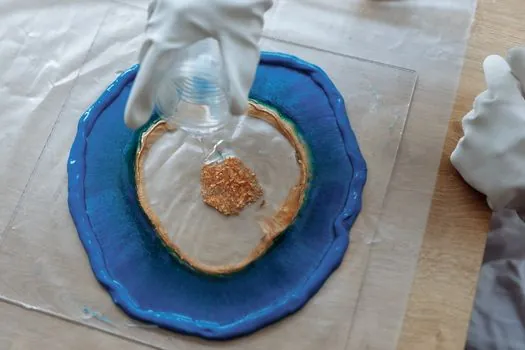
Pick cyanoacrylate when the joint is already precision-machined, the part is small, and the line must hold handling load in seconds: miniature assembly, rubber seals snapped into plastic housings, inlay work, and quick tear repairs on non-porous rigid substrates [S3][S1]. Its single-component, low-viscosity nature also suits automated high-speed dispensing where cycle time dominates [S3].
Pick epoxy for everything with a visible gap: ceramic chip and uneven fracture repair, wood joinery with voids, loose side-mirror housings, under-hood automotive brackets, and any dissimilar-material assembly where thermal-expansion stress or vibration would crack a CA film [S1][S4]. Mending epoxies bridge chips and uneven fracture lines in ceramics, china, and sculpture where CA's thin consistency cannot build a fillet [S4]. For structural wood joints with imperfect mating surfaces, laminations, and void filling, the cross-linked epoxy mass carries the load that CA cannot [S2]. When creep under sustained load at elevated temperature is on the table, epoxy is also the more forgiving system, as detailed in Adhesive Bonded Joint Creep at Elevated Temperature.
Surface Prep, Mix Ratio, and Pitfalls on Uneven Joints
Cyanoacrylate tolerates minimal prep but punishes dirty, oily, or acidic surfaces: a quick solvent wipe and, on plastics, a surface activator or primer is the difference between a full-strength bond and a starved cure [S3][S5]. Even on a clean part, CA needs snug, aligned mating faces; any visible daylight across the joint means the bond area has collapsed and the cured glue is a thin bridge, not a fillet [S2].
Epoxy demands more involved prep, but pays it back in joint strength: glossy metals should be abraded, porous substrates should be clean and dust-free, and the resin-to-hardener ratio must be measured exactly per the formulation to reach full cross-linking and full mechanical properties [S3][S5]. Polyurethane (Gorilla-style) glues fall in between but are a poor third choice for gap filling compared to filled epoxy; they foam as they cure and do not build the same dense mass [S6]. For larger structural bond lines that also need flame-retardant or potting behavior, the chemistry ladder is different again, and the Flame-Retardant Potting Compounds for Electronics reference covers where epoxies sit versus silicones and urethanes. For higher-volume production lines weighing dispensing equipment for either adhesive class, the filling machine and filling weighing scale reference pages lay out the volumetric accuracy and floor-loading constraints that drive two-part mix-ratio dispense heads.
When the Answer Is Neither: UV-Curable and Hybrid Chemistries
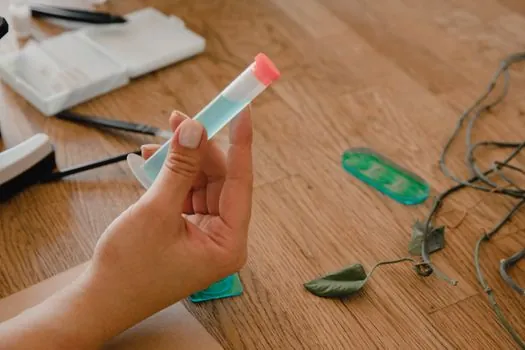
Where CA is too fast and epoxy is too slow, UV-curable adhesives offer open working time plus near-instant cure-on-demand, but only where UV light can reach the entire bond line, so fully opaque, shadowed, or deep-section joints are ruled out [S3]. For assemblies with that constraint, two-part epoxy remains the only system that cures deep in a thick, uneven joint without external energy input.
Limitations and Failure Modes to Spec Around
Cyanoacrylate fails three ways on uneven surfaces: it starves in wide gaps, it cracks under peel or impact loading because the cured film is rigid and brittle, and it softens above about 176°F (80°C) in typical formulations [S1][S2]. It also has fair-to-good chemical resistance, so solvents, fuels, and hot water will progressively weaken the bond line [S5].
Epoxy's failure modes are different: an off-ratio mix leaves unreacted resin or amine that plasticizes the joint and drops glass-transition temperature; under-cure in cold shops stretches the 24-hour full-cure window; and the cured material is still relatively rigid unless a flexible formulation is chosen for vibration or thermal-expansion duty [S3]. On high-temperature or chemically aggressive service, always cross-check the specific formulation's TDS against the application's chemical and temperature envelope rather than assuming "epoxy" alone qualifies [S5]. For broader context on how adhesive selection fits into mechanical-retention design trades, see the Adhesive-Bonded vs Mechanically Retained Vehicle Windows comparison.
For shop use in 2026, the tracking signals to watch are: new flexible epoxy formulations targeting vibration-loaded dissimilar joints, and activator/primer systems that extend CA cure into acidic or dry substrates; either of these would shift the decision matrix above for specific use cases, but the core gap-filling verdict (epoxy over CA) holds across current technical guidance [S2][S3][S5].
Component reference pages worth checking: industrial adhesive.