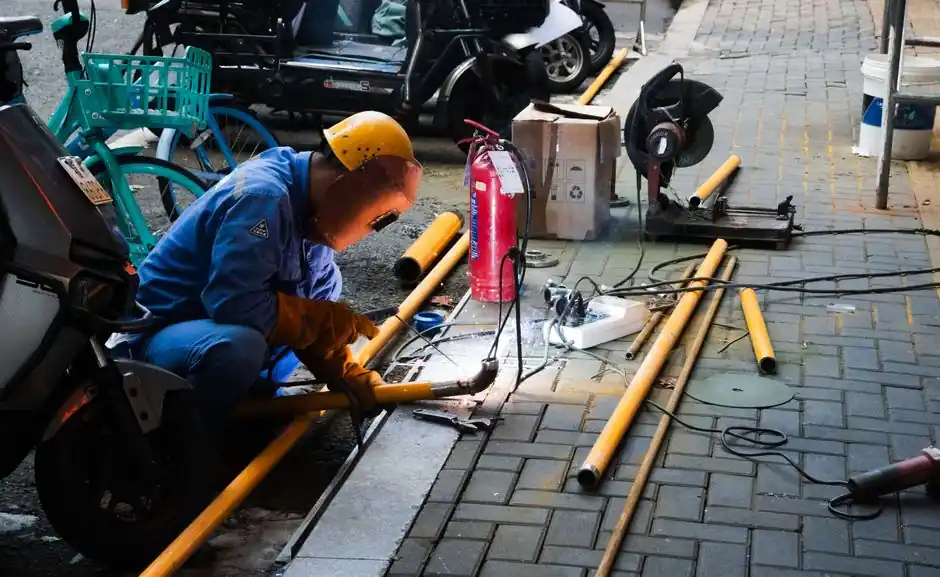
ER316L is the appropriate choice for 316-family base metals and chloride-prone service, while it contains molybdenum that ER308L lacks [S4][S6][S8].
Both ER308L and ER316L are AWS A5.9 classifications, and selection must follow the base-metal grade, qualified welding procedure, exposure conditions and governing fabrication requirements [S4][S6].
Match the Filler to the Base-Metal Family
ER308L, including ER308LSi, is the normal choice for austenitic stainless steels such as 301, 302, 304, 305, CF-8 and CF-3, including the corresponding low-carbon grades [S1]. ER308L is therefore suitable for 304/304L fabrication where the weld sees the same general environment as the base metal.
ER316L, including ER316LSi, is matched to ER316 and ER316L base metals; CF-8M and CF-3M are the cast equivalents identified for 316 and 316L [S1]. Selecting ER316L for 316-family material preserves the molybdenum-bearing weld deposit instead of diluting the base metal with a non-molybdenum filler [S3].
The practical rule is direct: ER308L to 304/304L and ER316L to 316/316L unless the design, qualified WPS or corrosion assessment calls for another austenitic grade. For dissimilar stainless joints, ER309L can be more appropriate because it is alloyed to tolerate dilution and reduce martensitic formation at the boundary [S1][S3].
Compare Chemistry and Service Performance
Molybdenum improves resistance to pitting and crevice corrosion, which makes ER316L the normal choice for 316/316L in marine, coastal, food-processing and chemical environments [S3][S8].
ER308L is generally suitable for common 304-family fabrication, whereas ER316L is preferred for chloride exposure [S8]. ER309L is the option for dissimilar joints, including stainless-to-carbon-steel joints, but it contains no molybdenum and is not a molybdenum-bearing substitute for ER316L [S1].
Use ER308L for General 304 Fabrication
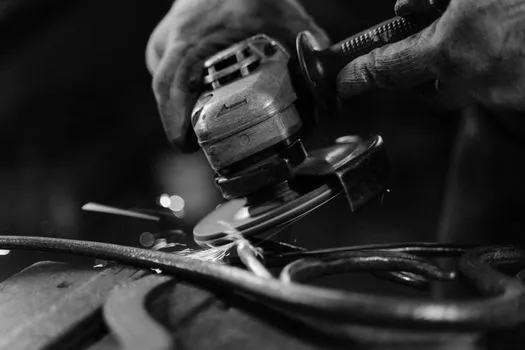
ER308L is the economical, general-purpose choice for 304/304L stainless steel when the exposure is mild, non-chloride service [S3][S8]. Its low-carbon classification limits carbide precipitation in the heat-affected zone and helps preserve corrosion resistance when welding 304L [S3].
These values are not a substitute for joint qualification. The WPS must establish the acceptable base-metal range, filler diameter, shielding gas, heat input, interpass temperature and required mechanical properties for the actual joint.
ER308L is not the best default for 316/316L because its lack of Mo discards the corrosion-resistant alloying that defines the 316 family [S1][S3]. It is also not the preferred choice for a stainless-to-carbon-steel joint, where ER309L is designed to absorb greater dilution without forming the martensitic structure associated with ER308L [S3].
Use ER316L for Chloride and Chemical Exposure
ER316L is the appropriate starting classification for 316/316L when the weld will contact chlorides, marine atmospheres or aggressive chemicals [S3][S6][S8]. Its 2.0–3.0% Mo content is the decisive metallurgical feature, because pitting and crevice corrosion are the failure mechanisms that make plain 304-family service unsuitable [S4].
ER316L is also specified for pharmaceutical, food and beverage, chemical-processing and power-generation fabrication where corrosion resistance and weld integrity are required [S4]. ER309L cannot replace ER316L in these applications because it contains no Mo [S1].
The boundary is equally important: ER316L is not the universal stainless answer. It does not solve every dissimilar-metal or high-temperature problem. ER308H is preferred for some high-temperature applications because its higher carbon content provides better creep resistance than ER308L [S1], while stabilized ER347 matches ER347 and ER321 base materials [S1].
Control Product Form, Carbon and Silicon
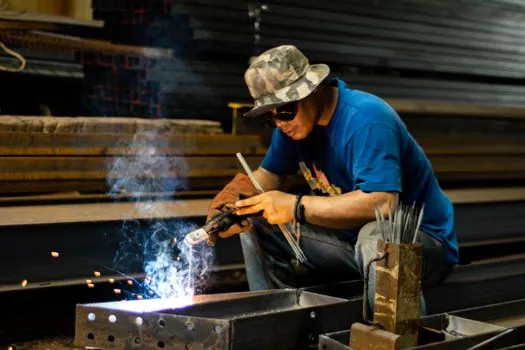
The purchase specification should identify the exact AWS A5.9 classification and any silicon suffix, because ER308L and ER308LSi are distinct product forms even though they share the same base classification family [S1][S3]. The low-carbon suffix L denotes carbon at or below 0.03% for both ER308L and ER316L [S4].
That processing benefit does not make ER308LSi interchangeable with ER316LSi, because the molybdenum-bearing composition remains the deciding material requirement for 316-family corrosion service.
Check the manufacturer's certificate against the required AWS A5.9 classification and the project specification. Do not select from the label alone: verify grade, diameter, batch identity, storage condition and certification status [S6]. If a drawing or code requires a specific tensile strength, corrosion test or joint qualification, the catalog value alone does not demonstrate compliance.
Qualify the Joint, Not Just the Rod
AWS A5.9 classifies the filler metal, while the completed joint still depends on the base metal, welding process, heat input, shielding gas and qualification criteria [S4][S6]. ER316L deposited on 316L does not transfer 316 corrosion resistance into an unqualified 308L weld without consideration of dilution and procedure limits.
For 304/304L, a qualified ER308L procedure is the normal technical case. For 316/316L, use ER316L. For stainless-to-carbon steel, use the dissimilar-metal design selected by the WPS, commonly ER309L, because its chromium and nickel content supports dilution tolerance [S1][S3].
Do not assume that an ER308L application can be changed to ER316L without qualification. Conversely, substituting ER309L for some ER308L applications may be technically possible, but it must be supported by the applicable joint design and procedure rather than by alloy-number similarity [S1].
Decision Matrix for Procurement and Engineering
Base metal 304/304L, non-chloride service: ER308L is the standard match, with 18.0–20.0% Cr, 8.0–10.0% Ni and typical tensile strength of 517–620 MPa [S4]. Base metal 316/316L, chloride or chemical exposure: ER316L is the required path, with 2.0–3.0% Mo and typical tensile strength of 552–690 MPa [S4].
Stainless-to-carbon or dissimilar stainless joint: ER309L is the purpose-built transition choice, with about 23Cr-13Ni chemistry and tolerance for up to roughly 40% dilution [S3]. High-temperature 304-family service: assess ER308H rather than substituting ER308L solely from general practice [S1]. Stabilized 321/347 base metal: assess matching ER347 filler [S1].
For final acceptance, require the AWS A5.9 classification, base-metal grade, service exposure, qualified WPS reference, welding process, filler diameter and applicable project code on the purchase record. These fields create an auditable selection trail and prevent a low-cost ER308L substitution from degrading 316-family corrosion performance.
Track two items before releasing the purchase order: confirm whether the drawing permits ER316L for the 316-family joint, and verify that the supplier certificate states AWS A5.9 ER316L rather than ER316LSi or an unverified stainless designation.