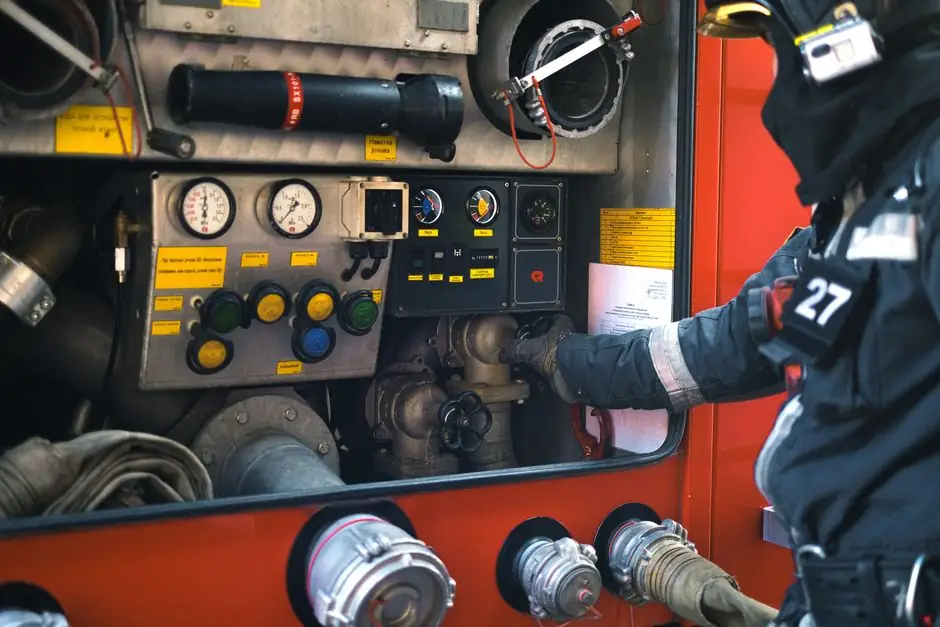
Flameproof (Ex d) detector heads contain any internal ignition inside a heavy stainless or cast-aluminium enclosure, allowing the use of higher-power infrared sources, heated catalytic beads, and mains-fed pump assemblies inside Zone 1 and Zone 2 [S1][S3].
Intrinsically safe (Ex ia) detector heads prevent ignition by capping circuit energy below ignition thresholds, so the head, cabling, and barrier can be installed in Zone 0 where an explosive atmosphere is present continuously or for long periods [S4][S5].
Containment vs prevention: the two engineering philosophies
Ex d assumes ignition can happen inside the device and designs around it: the enclosure must withstand at least 1.5× the reference pressure of the gas group, and the flamepath joints are held to typically 0.1–0.5 mm gap with 6–25 mm joint length depending on group and volume [S1]. A 10 L Group IIC (hydrogen) enclosure typically uses 8–10 mm wall thickness in cast aluminium or stainless steel, with machined flanges and certified Ex d cable glands to keep flamepaths intact [S1][S3].
Ex ia assumes ignition must never happen, so the head, cable, and associated barrier are treated as one system: voltage, current, and stored energy in cable capacitance and inductance are clamped below the ignition curve of the target gas, even with two simultaneous faults applied [S4][S5]. The trade-off is the head itself cannot draw more than a few hundred milliwatts, which rules out filament-lamp NDIR sources and high-temperature catalytic pellistors in Zone 0 [S2].
Zone coverage and certification scope
Ex ia detector heads are the only heads permitted in Zone 0 under both IEC 60079-11 and ATEX 2014/34/EU, and they are also accepted in Zone 1 and Zone 2; Ex d heads are restricted to Zone 1 and Zone 2 because they cannot guarantee the containment standard under continuous gas presence [S3][S5]. For underground mining, equipment can carry combined Ex d ia Gb/M1 marking, layering a flameproof enclosure for the high-power section with an intrinsically safe interface for the signal circuit [S2].
North American Class I, Division 1 maps roughly to Zone 1, and Division 2 to Zone 2, but the Division system does not have a clean Zone 0 equivalent; engineers specifying for continuous-presence atmospheres in the US typically default to Ex ia-rated heads and barriers for the field device [S5]. Conduit seals per NEC 501.15 are still required where Ex d enclosures enter threaded rigid metal conduit runs in North American plants [S1].
Sensor technology fit: IR sources, catalytic beads, and electrochemical cells
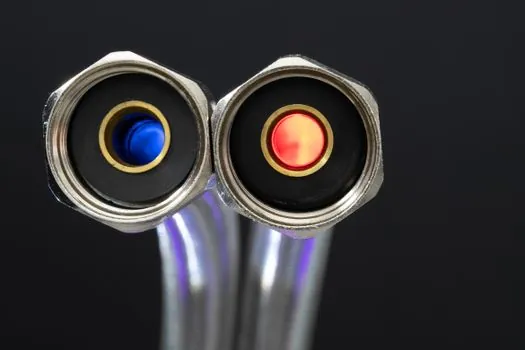
Flameproof heads accommodate non-dispersive infrared (NDIR) sensors with hot filament lamps, heated catalytic-bead (pellistor) elements, and even pumped sample-draw modules because the enclosure absorbs any ignition event; the same NDIR sensor with a filament source is explicitly excluded from Zone 0 because the filament is treated as a potential ignition source by certification bodies [S2]. Ex ia heads lean on low-power NDIR with pulsed IR LEDs, electrochemical cells for toxic gases, and ultrasonic or metal-oxide semiconductor (MOS) paths, all of which can run inside the milliwatt budget of a Zener barrier or galvanic isolator [S1][S4].
For toxic gas detection in chemical plants, Ex ia electrochemical heads dominate Zone 0 applications; Ex d heads are usually specified for perimeter or process-pipe locations where higher-power IR and pellistor heads give faster response to methane, propane, and heavier hydrocarbons, see toxic gas detection architecture for chemical plants: sensor stack, placement, and for the placement logic on the toxic side [S2][S3].
Wiring, barriers, and the 4-20 mA loop
Ex ia detector heads are wired through a safety barrier, either a passive Zener-diode barrier with shunt resistor or an active galvanic isolator using transformer or optocoupler isolation, located in the safe area; the barrier limits the energy that can reach the hazardous area under normal and fault conditions, and the cable capacitance and inductance budgets are calculated back from the head's entity parameters (Ui, Ii, Pi, Ci, Li) [S1][S4]. Maximum cable length is set by the gas group and cable parameters, not by voltage drop alone, and typical IS loops run to a few hundred metres before the entity parameters are exhausted [S1].
Ex d heads are wired with standard Ex d cable glands or through increased-safety (Ex e) terminal compartments, with no barrier in the loop; cable sizing is governed by voltage drop and mechanical protection rather than entity parameters, which is why an Ex d head can drive long cable runs, local displays, and relays on the same loop without the energy-budget arithmetic that IS demands [S1][S3]. For a deeper look at loop diagnostics on fixed heads, see the comparison between HART diagnostics over 4-20 mA and other fieldbus options for fixed gas detector HART diagnostics over the 4-20 mA loop: wiring, signal, and selection.
Cost, weight, and maintenance trade-offs

Ex d heads cost more in raw material, a stainless flameproof head with brazed double-gauze gas inlet and UL-approved resin potting routinely weighs 1.5-3× an equivalent IS head and uses cast or machined enclosures that drive unit price up [S2][S3]. IS heads are lighter, cheaper at the device level, and easier to swap in the field, but the barrier, the dedicated IS cable, and the entity-parameter commissioning add cost back at the panel end, so total installed cost depends on loop count, cable length, and zone mix [S1][S4].
Maintenance rules diverge sharply: an Ex d enclosure must be isolated, gas-freed, and opened only when the surrounding atmosphere is below LEL, because opening the cover breaks the flamepath; an Ex ia head is typically hot-swappable under a permit because the barrier keeps the loop energy below ignition thresholds even when the head is disconnected, which is a major operational advantage in continuous-process plants [S3][S5].
Decision matrix: which head goes where
Use Ex ia when the sensor sits in Zone 0, when the gas is toxic and the head must run on low-power electrochemistry, when hot-swap maintenance is required on a live process, or when cable runs are short enough to fit inside the entity-parameter budget; the same rule applies to Zone 1 with handheld and personal monitors that rely on IS to remove enclosure mass [S3][S5]. Use Ex d when the head must drive a high-power NDIR filament source, a heated catalytic bead, or a pumped sample-draw module; when the loop runs hundreds of metres back to the control room; when Zone 1/2 is the worst case; and when the mechanical robustness of a cast stainless head is needed against impact, washdown, or corrosive offshore atmospheres [S1][S2][S3].
Mining is the one environment where a single head can carry both marks: Ex d ia Gb/M1, with the high-power sensor section in a flameproof can and the signal interface in an IS sub-assembly, combining the strengths of both concepts inside one certified unit [S2]. For everything else, pick on zone first, sensor technology second, and loop economics third, in that order, and the Ex d vs Ex ia decision falls out cleanly.
Track the next ATEX 2014/34/EU and IEC 60079-11 harmonised-standard updates and the IECEx certification database entries for combined Ex d ia heads as the leading signal for whether the combined-marking approach expands beyond mining into oil and gas and chemical processing.