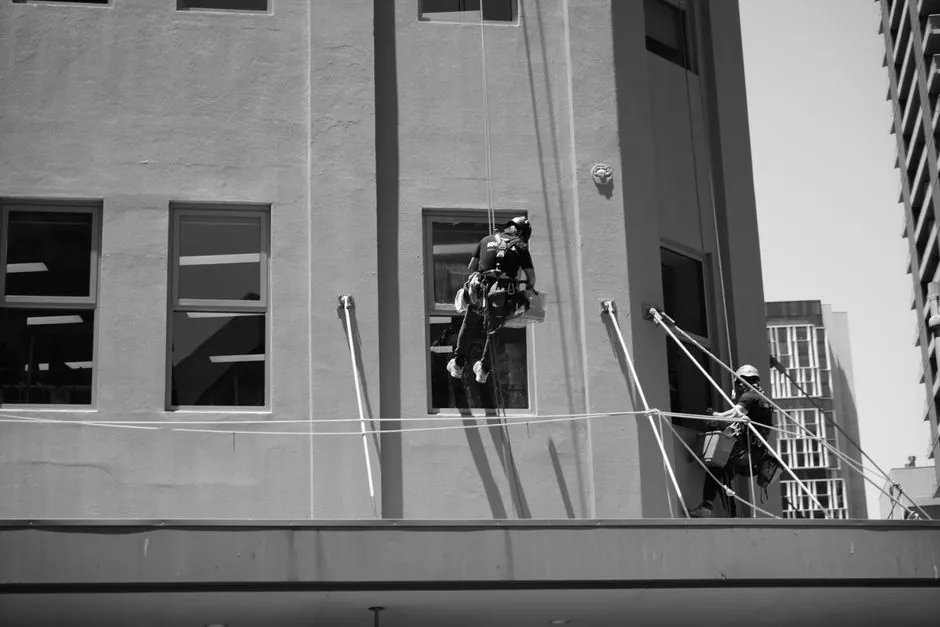
A personal fall arrest system has three parts: an anchor point, body harness, and connecting device [S2].
What Belongs in the Total Fall Arrest Budget
A personal fall arrest system has three functional parts: an anchor point, a body harness, and a connecting device [S2]. A complete personal fall arrest system includes an anchor point, body harness, and connecting device [S2].
The full-body fall-arrest harness is normally the wearable component, while the lanyard, self-retracting lifeline, rope grab, or positioning device forms the connection to the anchor [S2][S3][S6]. Anchor hardware includes roof anchors, beam anchors, anchor straps, weld-on posts, and rope-grab devices [S2][S5].
A defensible total-cost model therefore has five cost buckets: harness, connecting device, anchorage hardware, engineering and installation, and inspection and replacement. Shipping, taxes, discounts, rescue equipment, and rescue-plan development remain separate line items because the cited product prices do not include a complete site assessment [S2][S5].
Equipment Price Benchmarks
An eBay full-body fall-arrest harness kit with single leg and black safety lanyard was listed at $66.49 [S4].
The shock-absorbing lanyard is not interchangeable with every connector. The product catalog separates shock-absorbing, non-shock, tie-off, and restraint lanyards, while general fall-arrest harnesses use a back D-ring to connect to a self-retracting lifeline or shock-absorbing lanyard [S3][S6].
Anchor Hardware Drives the Largest Variable Cost
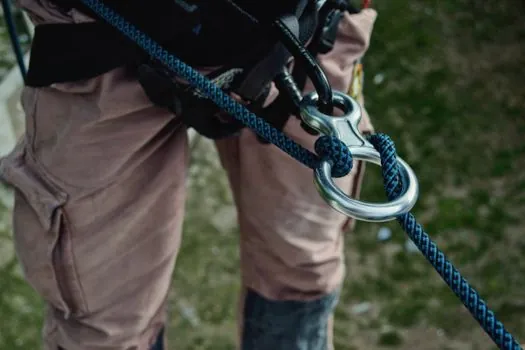
Published anchor prices range from $189.99 for a Guardian Beamer 2000 sliding beam anchor to $385.89 for a CB-18 roof anchor for wood and metal roofs [S2].
Beam-anchor selection must match the structure. A roof anchor is a different engineering problem because attachment capacity depends on the roof deck and framing rather than a universal product rating.
Temporary rooftop systems may instead require anchors, straps, inspection, and removal. Neither approach can be priced responsibly from the anchor’s retail tag alone.
For a detailed treatment of harness adjustment points, see 5-point vs 4-point fall-arrest harness adjustment. More adjustment points can support fit and compatibility, but they do not establish anchorage capacity [S1][S3].
Compare Lanyard and Connector Architectures
Shock-absorbing lanyards suit applications where energy absorption during an arrest is required, while fixed or restraint lanyards serve a different purpose and should not be substituted automatically [S6]. A general fall-arrest harness has a single dorsal D-ring for connection to a self-retracting lifeline or shock-absorbing lanyard [S3].
Against four criteria, a shock-absorbing lanyard is simple, portable, and normally lower in equipment cost, but it introduces deployment geometry and connector compatibility constraints. A rope-and-rope-grab arrangement supports vertical or guided systems but requires compatible rope and grab specifications [S1][S2].
This comparison also separates equipment choice from design suitability. A low-price lanyard is economical only when its length, absorber, hooks, anchorage, and permitted use match the exposure.
The dust mask and other respiratory equipment belong to a different protection program. They may be required for the task, but adding them to the fall-arrest subtotal distorts the cost of the arrest system.
Installation and Engineering Are Not Accessory Costs
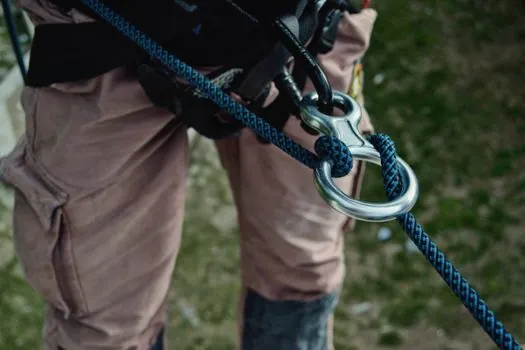
A three-part equipment list does not make the system site-ready [S2]. The installed total must include anchor design, substrate verification, installation labor, fall clearance, swing-factor review, and compatibility between the harness, connector, and anchor. The CB-18 roof anchor for wood and metal roofs is listed at $385.89 [S2].
Access and production disruption can move the total further. A weld-on post priced at $296.99 may require hot work, welding procedures, surface preparation, and a controlled work window [S2]. A portable beam anchor avoids permanent fabrication, but deployment still depends on beam geometry, operation, and the manufacturer’s instructions [S2].
Training and rescue planning belong in operating cost. The catalog includes trauma straps at $25.70 and a pair of suspension-trauma straps at $52.89, while rescue kits range from a $3,700.00 Gotcha 195 ft unit to a $3,728.00 325 ft unit [S2]. These figures show that rescue provision is not covered by a low harness-and-lanyard purchase price.
Total Cost of Ownership Over the Equipment Life
The first-year cost equals the selected harness, lanyard or lifeline, anchorage, installation, engineering, training, and inspection. Later costs come from planned inspection, damaged-hardware replacement, anchorage corrosion, rope or webbing retirement, and rescue-equipment maintenance. The published $25.70 trauma-strap price and $52.89 suspension-strap pair show that even secondary safety equipment carries recurring replacement review [S2].
Volume purchasing can lower unit prices, but it can also create storage, tagging, inspection, and obsolescence work. Color-coded harnesses, serial-controlled self-retracting lifelines, and dated inspection records improve traceability, yet each control adds administrative effort. The total-cost calculation should include the labor required to retrieve, inspect, quarantine, and replace individual units [S5].
Rescue capability can also shift the financial profile. The $1,475.00 Gotcha Kit, $3,700.00 195 ft rescue kit, and $3,728.00 325 ft rescue kit represent substantial additions beyond routine PPE [S2]. For heights where a suspended rescue plan is required, including rescue in the project budget prevents a false comparison between a low-price kit and a high-consequence installation.
Who Should Use Each Cost Level
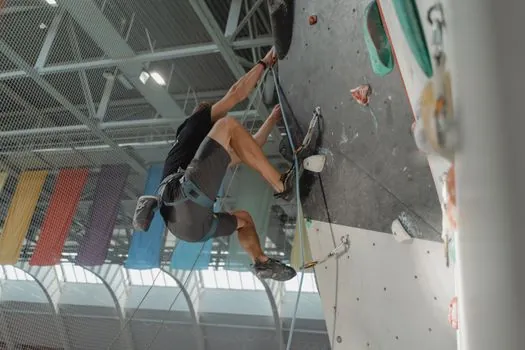
Entry-level purchasing around $36.09 to $66.49 fits buyers evaluating packaged harness-and-lanyard equipment for applications where the complete system, suitability, and anchorage are already verified [S1][S4]. It does not fit buyers who need an engineered anchor, a permanent post, a long lifeline, or site-specific fall-clearance analysis.
A $116.00 combo kit or a $189.99 to $385.89 anchor arrangement suits users assembling a more complete system with dedicated anchorage [S2][S5]. Higher-cost options are justified where horizontal mobility, guided rope access, 60 ft-plus lifeline coverage, rescue capability, or a structural attachment requirement is present [S2].
The product is not suitable for positioning or restraint merely because it includes a lanyard. Supplier catalogs treat shock absorbing, non-shock, tie-off, restraint, positioning, and self-retracting lanyards as distinct classes [S5][S6]. The face shield and hearing protection similarly address separate hazards rather than arrest capacity [S1][S5].
Procurement Checklist Before Purchase
A complete quote should list 1 harness, 1 compatible connecting device, and 1 identified anchorage method, matching the three-part personal fall-arrest system [S2]. It should also state the worker’s mass, fall-clearance requirement, anchorage substrate, installation method, and inspection interval so that price comparisons use the same technical basis [S2][S3].
Require separate prices for harness, lanyard or SRL, connectors, anchor hardware, engineering, installation, training, inspection, and rescue equipment. Compare the $36.09 Amazon kit, $116.00 combo kit, $296.99 weld-on post, $385.89 roof anchor, and $1,000.00 Absorbinator kit within that common structure [S1][S2][S5].
Two trackable procurement signals determine whether the initial budget holds: the approved anchorage design and the supplier’s quote for the full bill of materials. If either changes, recalculate fall clearance, installation hours, shutdown cost, and rescue provision before ordering.
