Upstream, midstream, and downstream oil and gas sites are explicitly classified as high-hazard work under Alberta OHS Code Part 11, Schedule 2, which lists gas, oil, and chemical plants alongside pipeline facilities and seismic operations [S5].
For US-based operations, the controlling reference is ANSI/ISEA Z308.1-2021, and Type IV (portable, outdoor/mobile, corrosion-, moisture-, and impact-resistant) is the kit class the standard specifically names for oil and gas, along with agriculture and forestry [S2].
ANSI Z308.1 Class and Type Decision Grid
ANSI/ISEA Z308.1-2021 splits kits on two axes: Class A versus Class B, and Type I through Type IV, and the four-way cross is the first filter for any procurement spec [S2].
Class A is the baseline for common workplace injuries (minor cuts, abrasions, burns, eye irritation) and matches the supply list in Table 1 of the standard [S2]. Class B carries larger quantities of the same items and adds a splint and a tourniquet, which directly addresses the trauma and severe-bleeding events that drive fatality risk on drilling and production sites [S2]. Type I is stationary indoor, Type II is portable indoor, Type III is portable with water resistance for outdoor settings, and Type IV is the rugged outdoor/mobile category built to resist corrosion, moisture, and impact, which is why the standard calls out oil and gas as a Type IV environment [S2].
For a typical 10 to 50-person lease or well-pad crew, the conservative spec is a Class B / Type IV kit as the primary unit, supplemented by Type III vehicle kits on each pickup and Type I mounted units inside control buildings. For more details on the broader first-aid kit taxonomy and the first aid kit container types, the encyclopedia entry breaks down the four Types side by side.
Minimum Contents Required for a Compliant Kit
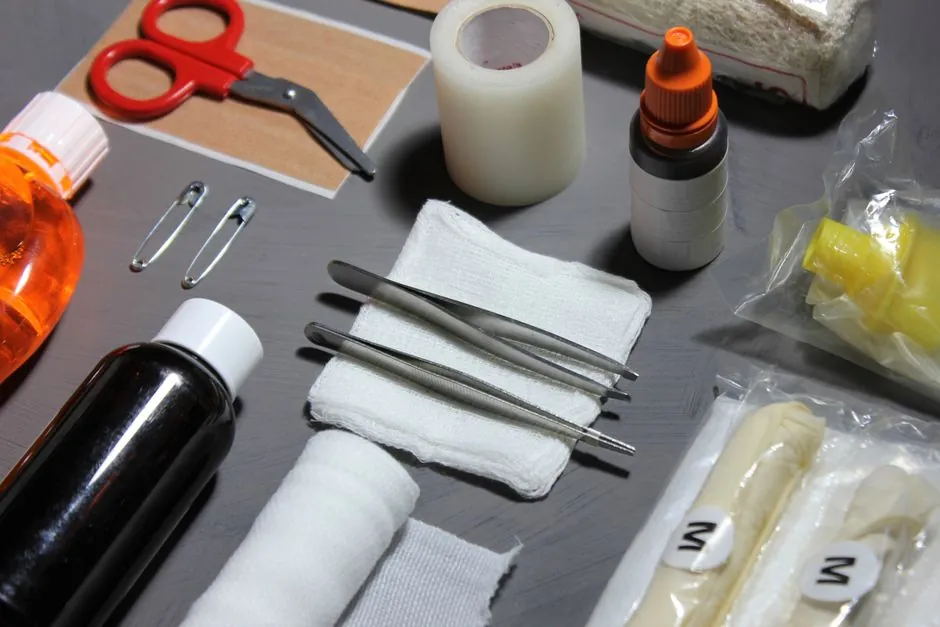
Class A 16-unit kits anchor the ANSI minimum: 1 x 3 in adhesive bandages (16), 2.5 yd adhesive tape (1 roll), 0.5 g antibiotic treatment packets (10), and 0.5 g antiseptic application packets (10) [S3][S4].
Class B scales these up and adds a 4 x 24 in splint and a tourniquet, the two items that distinguish a Class B kit from a Class A kit under Table 1 of ANSI/ISEA Z308.1-2021 [S2]. For oil and gas, the practical additions that most safety managers layer on top of the ANSI minimum are a hemostatic gauze pack, a chest seal, a CPR barrier, a thermal blanket, and a burn dressing (4 x 4 in or larger), because ANSI does not mandate these but field data consistently shows they are used [S8]. An eyewash adjunct, either bottled sterile saline or a plumbed ANSI Z358.1 unit, is also standard practice wherever chemical exposure is possible, and that decision is covered separately in eye wash station selection for confined space entry.
Canadian Cross-Border Requirements: CSA Z1220-17 and OHS Codes
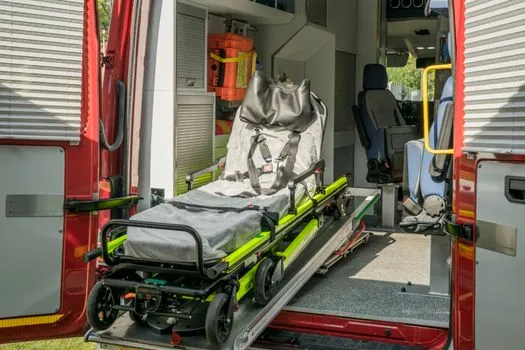
On Canadian sites, CSA Z1220-17 (Type 1, Type 2, and Type 3 in various sizes) is the governing kit standard, and Worksafe Saskatchewan explicitly requires that every worksite have a first aid station with a CSA-compliant kit plus a first aid register and a suitable first aid manual [S5][S6].
Alberta's OHS Code Schedule 2 layers two more inputs on top of the kit itself: hazard level (Low/Medium/High, with gas, oil, and chemical plants always High) and worksite distance from a hospital, broken into Close (up to 20 min), Distant (20 to 40 min), and Isolated (more than 40 min) [S5]. An isolated well pad more than 40 minutes from the nearest hospital needs a higher attendant certification and a larger kit at every worker-count threshold than a refinery control room 10 minutes from a city ER, and procurement has to reflect that split [S5]. Record retention for first aid events in Alberta runs at least 3 years from the date of injury or illness [S5].
Trauma, Bleeding Control, and Heat-Specific Hazards
Oil and gas incidents are dominated by trauma, thermal burns, and chemical exposure, so the kit has to be picked for the failure mode, not for a generic office checklist [S1].
For drilling and completions crews, the priority additions over an ANSI minimum are a CAT-style tourniquet, compressed gauze, hemostatic gauze, a 6 in emergency trauma dressing, a chest seal, and a 5 x 9 in burn dressing, all packed inside a Type IV case that will survive being dragged through a tank battery or a saltwater disposal pad [S2][S8]. For downstream and petrochemical sites, the additions shift toward large-volume sterile saline for eye flush, calcium gluconate for hydrofluoric acid exposure (where applicable), and a spill response adjunct, which is where the kit specification starts to overlap with a broader lamps and light fittings and area-exposure plan, since lighting at the injury scene drives outcome as much as gauze. AED placement is a separate but coupled decision, and most safety managers in this sector treat the AED as a hard requirement at the kit station rather than an option.
Placement, Inspection Cycle, and Mounting
ANSI/ISEA Z308.1-2021 and Worksafe Saskatchewan both treat accessibility as a hard requirement: a kit in a locked drawer is the same as no kit at all [S2][S6].
Field practice on producing sites is one Type IV kit per active work area within 30 seconds walking distance, a Type III kit in each crew vehicle, and a Type I mounted kit in every permanent building, with all units inspected on a documented monthly cycle that records seal integrity, expiration dates on ointments and saline, and single-use item counts [S2][S6]. Texas TDI's oil and gas safety resources reinforce the same point: the kit is part of an emergency action plan, and the inspection log is what proves the kit is actually usable when a release or a struck-by injury happens [S1].
Selection Criteria Comparison: ANSI Class A vs Class B vs CSA Z1220
Across the three main options a procurement engineer will see on a quote, the decision criteria line up as follows: [S3]
Class A (ANSI Z308.1-2021): covers minor cuts, burns, and eye injuries only, has no splint and no tourniquet, fits typical office and warehouse use, and is the lowest-cost baseline. Class B (ANSI Z308.1-2021): same supply list as Class A but at higher quantities, adds a splint and a tourniquet, and is the right pick for oil and gas trauma exposure [S2]. CSA Z1220-17 Type 1/2/3: required on Canadian worksites, structured by attendant level and worksite distance, and is the binding standard rather than a voluntary upgrade [S5][S6]. The rule of thumb is: spec Class B + Type IV for US upstream and midstream, add CSA Z1220 compliance for any Canadian asset, and never rely on a Class A kit as the primary unit on a producing location [S2][S5].
The next decision nodes to track are ANSI/ISEA Z308.1 revision activity (the 2021 edition is the current reference and any successor revision will reset the contents table), the harmonization status between ANSI Z308.1 and CSA Z1220 for cross-border operators, and whether your operator's HSE standard upgrades the tourniquet requirement from a Class B add-on to a per-vehicle standalone kit.
Component reference pages worth checking: oil seal.