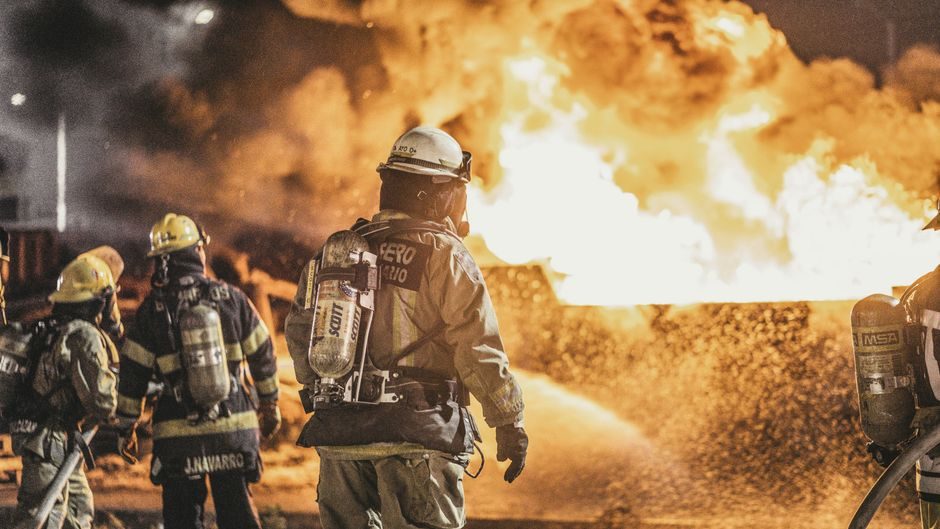
Flame arresters protect low-pressure storage tanks, vent stacks, and pipeline manifolds from flashback ignition; sourcing data from July 2026 lists in-line detonation and end-of-line arresters around US$100/piece MOQ on Made-in-China.com [S3].
The category covers three duty classes — end-of-line (EOL), in-line deflagration, and in-line detonation — and a typical 2026 build uses 304/316 stainless crimped-ribbon or foil-element cores rather than cast-iron housings [S1][S3].
Defintion and Scope: What a Flame Arrester Actually Does
A flame arrester is a passive safety device that allows gas or vapour to flow through a porous element while quenching the flame front, dropping the gas temperature below the auto-ignition point before it reaches the upstream side [S1]. ZhenChao lists it as a core tank-protection product alongside breather valves, emergency vent manholes, and hydraulic safety valves, which is the typical 2026 grouping for fixed-roof atmospheric storage [S1]. The element geometry — crimped ribbon, parallel plate, or sintered mesh — defines both the Maximum Experimental Safe Gap (MESG) class the unit can quench and the pressure drop the unit will impose on the vent line at design flow.
Application scope splits three ways: atmospheric tank vent protection (EOL), in-line deflagration protection on vapour-recovery or loading lines, and in-line detonation protection on long pipelines where flame speed can transition to detonation within metres [S3]. The MESG rating of the element must be smaller than the MESG of the gas group being handled — for hydrogen-rich streams, that pushes the spec toward tighter foil-element designs rather than the wider ribbon mesh acceptable for gasoline vapours.
Selection Criteria: Six Numbers That Drive the Quote
End-of-line units with 304/316 stainless bodies, listed in July 2026 at roughly US$100/piece MOQ from Jiangsu Bafang and similar Chinese suppliers, are the entry point for fixed-roof tank vents [S3]. The six numbers that drive vendor selection are: (1) gas group / MESG class (IIA, IIB, IIC), (2) burn duration rating, (3) housing material and pressure rating, (4) end connection (flanged vs threaded), (5) element type (crimped ribbon / foil / sintered), and (6) installed orientation (vertical EOL vs horizontal in-line).
For a typical gasoline-service atmospheric tank, a 304SS EOL arrester with a 0.65–0.85 mm crimped-ribbon element and ANSI 150# flanged connection is the common baseline; pushing to IIC gases (hydrogen, acetylene) or detonation duty lifts the cost multiple times because the housing becomes heavier, the element stack is longer, and the unit must carry a third-party ATEX/IECEx certificate traceable to a notified body [S1][S3].
Variant Comparison: EOL vs In-Line Deflagration vs In-Line Detonation
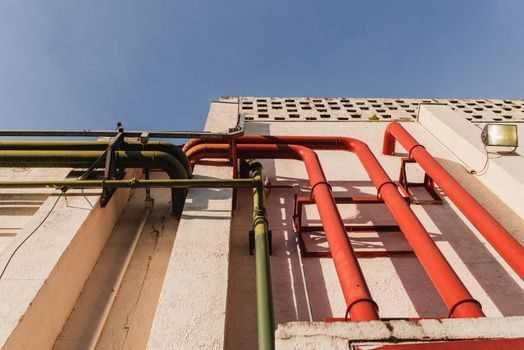
The 2026 Chinese wholesale market is dominated by three product families with predictable price gaps: EOL arresters around US$100/piece, in-line stable deflagration units in a similar band, and detonation-rated in-line arresters that scale up with housing size and element length [S3]. ZhenChao's published 2026 catalogue reflects the same split with the ZCZHQ-II stainless in-line series, the ZCZGB-II drawer-type for ease of element cleaning, and a separate EOL unit for vent-stack mounting [S1].
A decision matrix for the buyer: EOL units suit atmospheric tank vents with short, vertical runs and no flame-propagation path; in-line deflagration arresters suit loading-arm vapour return and tank-to-tank manifold lines under about 10 m of developed length; in-line detonation arresters are mandatory on long cross-country vapour lines and on any run that can develop a DDT (deflagration-to-detonation transition) distance inside the piping [S1][S3].
Materials, Element Geometry, and Maintenance Access
Stainless steel — typically 304 for general hydrocarbon service and 316 / 316L for sour service or chloride exposure — has become the default 2026 housing material on Chinese-built units, displacing aluminium and cast iron in most new quotes [S1][S3]. The element itself is the critical wear part: crimped-ribbon stacks trap polymer, salt, or corrosion product over time, and pressure-drop rise above the design value is the field signal that cleaning or element replacement is overdue.
That is why drawer-type (cartridge) housings such as the ZCZGB-II design are now standard on EOL and short in-line runs: the element pulls out the front of the housing without breaking the line, which collapses the maintenance window from a full pipe cut-out to a gasket-and-bolt job [S1]. For a related reference on adjacent tank-protection hardware, see the flame arrester encyclopedia entry. Buyers comparing 2026 stainless vs aluminium quotes should also note the weight delta — a 304SS EOL unit of 6" size typically lands around 25–35 kg versus 10–15 kg for aluminium of the same flange class, which matters for elevated vent-stack mounting.
Standards, Certification, and Documentation Buyers Should Demand

For European and Middle-East projects, the non-negotiable document set on a 2026 quote is an ATEX 2014/34/EU certificate covering the gas group and temperature class, an IECEx Ex d IIA/IIB/IIC rating where the unit is installed in a Zone 1 boundary, and a PED 2014/68/EU conformity assessment for the housing [S1][S3]. For refinery and offshore duty, NACE MR0175 compliance is required on wetted parts when the service is sour (H2S partial pressure above the standard threshold), and EN 16852 or ISO 16852 (the flame arrester performance standard) should be cited on the nameplate or datasheet.
Chinese-built units listed in July 2026 carry the nameplate and datasheet but rarely ship with full ATEX/IECEx as standard — most suppliers quote a 4–6 week lead time once a notified-body certificate is requested, and the cost adder is typically a percentage uplift on the unit price [S3]. For buyers who need the document package, that delta must be priced in before the PO is cut; a US$100 base unit can land 2–3× higher with full European certification.
Who Should NOT Pick the Cheapest EOL Unit
The US$100 EOL arresters dominating the 2026 Chinese B2B listings are the right pick for fixed-roof gasoline/diesel tank vents at ambient temperature, and the wrong pick for nearly everything else [S3]. Specifically, they are not suitable for: hydrogen, acetylene, or propylene oxide service (IIC gas group, requires tighter element MESG); long vapour-recovery lines where detonation is credible (requires an in-line detonation arrester, not an EOL); cryogenic LNG service (requires austenitic stainless with impact-test certification below the design temperature); and sour crude service (requires NACE MR0175 wetted-parts compliance).
For pipeline buyers, the seamless steel pipe buying guide covers the upstream line-pipe spec that determines whether an in-line detonation arrester is needed at all. The shortest version of the decision: if the developed run between isolation valves is short and the gas is a IIA hydrocarbon at near-atmospheric pressure, the cheap EOL is fine; if any of those three conditions break, the spec moves up at least one class and the price moves with it.
2026 Price Bands and Sourcing Signals

Made-in-China.com's July 2026 listings show a tight US$100/piece MOQ baseline for both EOL and in-line deflagration units from Jiangsu Bafang and peers, with no published price escalation for stainless upgrade at that entry tier [S3]. ZhenChao's published catalogue positions its 304SS and 316SS products across the same range, with drawer-type and ZCZHQ-II in-line models carrying the typical Chinese-OEM spec sheet pattern (model code, flange size, element type, weight) rather than a price list [S1].
The trackable signals to watch into late 2026 are: (a) European notified-body lead times for ATEX/IECEx certificates, which stretched through 2025 and remained the schedule bottleneck on certified units; (b) the spread between 304SS and 316SS quotes, which narrows when nickel-molybdenum spot prices soften; (c) MOQ policy drift on Chinese platforms, where a shift above 1-piece MOQ on the US$100 tier would be a clear softening signal in the wholesale market [S3]. For tank-side accessories covered by the same procurement file, the hydraulic safety valve and breather valve categories share the same vendor base and often move on the same quote cycle.
Spec-level background on the components involved: linear guide.