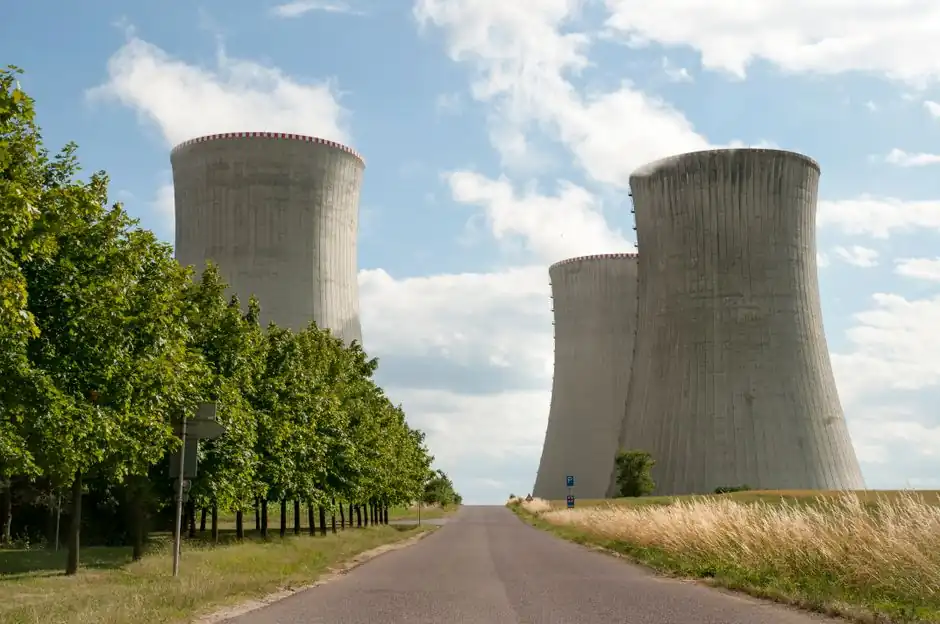
Power-plant pneumatic actuators in the 600-240000 N.m output torque band are built around two mechanical architectures, scotch-yoke and rack-and-pinion, with the scotch-yoke variant dominating quarter-turn duties on steam lines, turbine bypass, and hot reheat isolation [S1]. CE marking plus GB and NAMUR interface conformance is the baseline procurement spec held by integrated Chinese actuator plants [S1].
Output torque range, fail-safe spring return, double-acting configuration, and matched ball-or-butterfly valve interfaces are the four hard gates that determine whether a pneumatic actuator will survive 20-year service on a coal, combined-cycle, or nuclear balance-of-plant (BOP) loop.
Scotch-Yoke vs Rack-and-Pinion: Torque and Duty Mapping
Scotch-yoke pneumatic actuators convert piston linear motion into rotary torque through a sliding yoke, producing peak torque near the end of stroke where butterfly and ball-valve seat loads are highest, and the design is widely used where the working torque envelope sits between roughly 600 N.m and 240000 N.m [S1]. Rack-and-pinion actuators, by contrast, deliver a near-constant torque curve and dominate modulating service below the mid-torque band.
For a 24-inch Class 600 metal-seated butterfly on a feedwater isolation line, scotch-yoke is the common spec because end-of-stroke peak torque overcomes the larger seating/unseating breakout force; for a 4-inch Class 300 ball valve on a continuous modulating attemperator spray loop, rack-and-pinion gives smoother proportional control and longer seal life. Spring-return (fail-closed or fail-open) and double-acting configurations are offered in both architectures, with spring-return the default for ESD (emergency shutdown) and turbine-trip paths [S1].
Power-Plant Service Environments: What the Actuator Must Survive
Power-plant actuators on outdoor boiler platforms face ambient swings commonly quoted as -30 to +80 degC, plus dust, coal fly-ash, and salt-laden air at coastal installations; housing and seal selection must be specified against these bands, not against indoor comfort-air values. Inside the turbine hall, continuous vibration from 50/60 Hz rotating machinery and from mill and crusher drives accelerates wear on soft seals and on positioner linkages, which is why rack-and-pinion units on modulating loops are commonly rebuilt at 500000 to 1000000 cycle intervals in fossil service. [S3]
For a deeper reference on how the pneumatic supply chain, air-quality spec, and FRL (filter-regulator-lubricator) stack feed into actuator reliability, the pneumatic systems overview walks through the upstream design gates that govern downstream actuator life. On the actuator itself, the pneumatic valve actuator reference catalogues the spring-return vs double-acting trade-off in detail.
Procurement Spec Gates: CE, GB, NAMUR, and Interface Standards

A 4th gate, the supply medium, is fixed by plant instrument-air at a nominal 4-6 bar(g) with dew point below -40 degC.
Where the actuator couples to a modulating control valve, confirm the positioner and I/P converter are also rated to the same hazardous-area classification; a mismatch between the actuator's Ex rating and the positioner's rating is a common audit finding on retrofit projects. The pneumatic fitting reference covers the upstream tubing and connector spec that keeps the IP/NEMA rating of the actuator intact after field installation.
Application Split: Isolation vs Modulating Duty in Generation
In a typical 600 MW supercritical boiler, pneumatic actuators fall into two duty classes: on/off isolation (spring-return scotch-yoke on main steam, hot reheat, and feedwater isolation) and continuous modulating (rack-and-pinion on feedwater control, attemperator spray, and sootblower isolation). Isolation units may see only a few hundred cycles per year but must guaranteed-trip on demand, so spring-return with a stored-energy spring and a large-volume air reservoir is the standard design. Modulating units see millions of micro-cycles, so the spec shifts toward piston seals, positioner resolution, and travel-characterization curves (linear or equal-percentage) [S1][S2].
For combined-cycle gas plants, the same architecture split applies but the cycle count shifts: gas turbines ramp faster, so modulating actuators on the HRSG (heat recovery steam generator) feedwater and bypass valves see higher hourly cycle counts, while isolation actuators trip less often. Across both fleets, the same vendor-portfolio logic holds: Italian and Chinese manufacturers cover the bulk of the rack-and-pinion band, while Chinese scotch-yoke plants (e.g. integrated suppliers in the Yangtze River delta) cover the 600-240000 N.m band with CE/GB/NAMUR compliance [S1][S2].
Selection Criteria Comparison: Four Options Lined Up
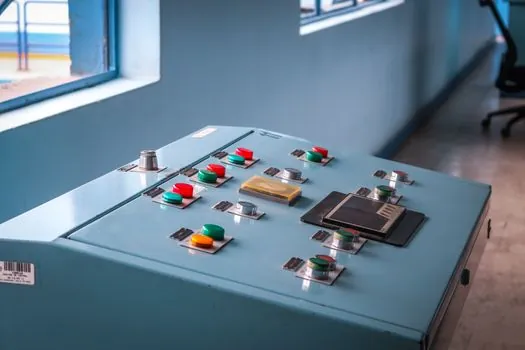
Lining the four common pneumatic actuator types up against four decision criteria clarifies the spec quickly: (1) Scotch-yoke spring-return: peak-torque at end-of-stroke, ESD/trip service, large butterfly and ball valves, 600-240000 N.m; (2) Scotch-yoke double-acting: same torque band, no fail-safe spring, used where a separate air reservoir or trip valve provides the fail-safe function; (3) Rack-and-pinion spring-return: constant torque curve, modulating and on/off on small to mid-size valves, typically up to ~8000 N.m in standard builds; (4) Rack-and-pinion double-acting: modulating control loops where continuous air is preferred over a mechanical spring and where a separate trip solenoid provides the safety function. Selection therefore reduces to: torque band, fail-safe mechanism (mechanical spring vs air-trip), duty (on/off vs modulating), and Ex zone rating [S1].
Integration With Cylinders, Conveyors, and Other Pneumatic Hardware
Within the same plant pneumatic network, actuators sit alongside pneumatic cylinders on damper drives, ash-handling gates, and sootblower carriages, and the same instrument-air spec (4-6 bar(g), -40 degC dew point) governs both. On the coal-handling side, pneumatic conveyors move fly-ash and bottom ash to silos, and the actuator-driven diverter valves that route flow between silos are commonly scotch-yoke units in the same 600-240000 N.m band as the steam-side isolation valves [S1].
A common integration mistake is to size the actuator based on the valve maker's nominal torque table without re-adding the safety margin for hot-service breakout (seized seat after a long idle period). For high-temperature steam valves, add at least 30% on top of the cold breakout figure, then select the next standard actuator size up.
Supply-Chain Map: Where the 2026 Volume Sits

As of 2026-08, the heavy-duty pneumatic actuator supply chain for power generation is concentrated in two clusters: a Yangtze River delta scotch-yoke cluster in China (Wuxi and surrounding cities) that exports CE/GB/NAMUR-certified units in the full 600-240000 N.m band, and a northern-Italian cluster that produces the bulk of European-spec rack-and-pinion units for nuclear and combined-cycle customers [S1][S2]. Chinese-made scotch-yoke units have closed most of the historical quality gap on European builds for non-nuclear duties, but for nuclear safety-related (1E) applications, the European supplier base still dominates the qualified-vendor list.
Trackable signals to watch over the next two quarters: new ATEX/IECEx dual-certified product releases from the Yangtze cluster, and any 2026-Q4 nuclear 1E recertifications from the Italian cluster that open a wider qualified-vendor list. For cross-industry comparison, the hydraulic power unit sizing reference walks through the same safety-margin logic applied to hydraulic drives in adjacent plant systems.