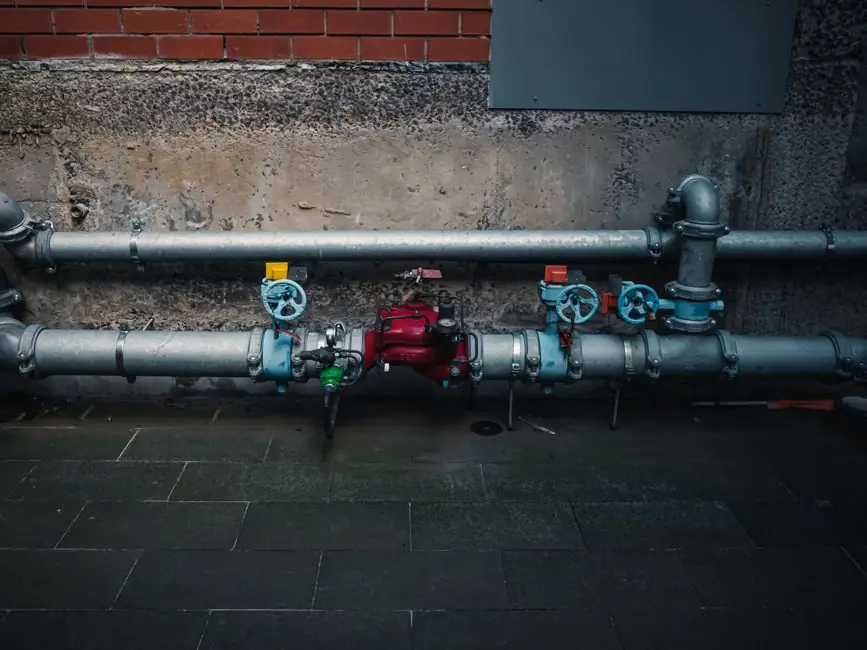
Ultrasonic, electromagnetic, turbine, and differential pressure sensors use different physical properties of moving fluid to produce an electrical signal [S1].
Selection begins with the measured quantity: volumetric flow such as L/min, m³/h, or GPM, or mass flow such as lb/h, followed by pipe size, fluid properties, pressure loss, and required output accuracy [S2][S4].
Direct and inferred measurement define the classification
Direct measurement technologies sense the movement of the fluid itself: paddle wheels detect rotor speed, while vortex sensors detect vortices shed by a bluff body [S5]. Inferred measurement technologies calculate flow from a related property, including force on a mechanical element, induced voltage in a conductive liquid, heat transfer, and pressure drop across an orifice plate or Venturi tube [S5].
A flow sensor is a device that measures the rate or volume of a fluid moving through a pipe, channel, or system and converts the physical property of that movement into an electrical signal [S1]. This distinction matters when a datasheet describes only a bare sensor versus an installation-ready meter with calibration and communications.
Common electrical outputs include a 4–20 mA current loop, pulse output, HART, or Modbus [S1]. Volumetric flow can be reported in liters per second or gallons per minute (GPM) [S2].
Fluid properties eliminate unsuitable sensor classes
Electromagnetic meters require a conductive liquid and cannot measure gases or non-conductive fluids [S1]. Differential pressure sensors infer flow velocity from the pressure drop across a fixed restriction [S1].
Pressure loss and moving parts drive the first comparison
Differential pressure transmitters infer flow from the pressure drop across a primary element such as an orifice plate or Venturi tube, while turbine sensors count the rotations of a spinning element driven by the flow [S1][S5]. This makes pressure loss and maintenance exposure two distinct selection criteria rather than interchangeable specifications.
Accuracy depends on the measurement objective
Differential pressure sensors infer flow from the pressure drop across a fixed restriction [S1].
Ultrasonic sensors send sound waves through a fluid and measure how the flow changes their travel time [S1].
Installation geometry can erase an otherwise suitable meter
Modern flow sensors incorporate electronics that can correct for varying pressure, temperature, density, nonlinearities, and fluid characteristics, and the sensor must be calibrated [S2].
Applications span process control, utilities, and medical systems
Industrial flow measurement supports chemical dosing, cooling circuits, compressed-air usage, process control, water treatment, HVAC, oil and gas, chemical processing, and food and beverage production [S1][S5]. Differential pressure devices are used for HVAC regulation, chemical manufacturing, and pharmaceutical production, while vortex meters serve chemical, petrochemical, water-treatment, and energy-management systems [S3].
Thermal flow measurement is especially useful at low flow rates because the electronics can vary heater power to maintain a fixed temperature difference between upstream and downstream sensors [S2]. Target sensors combine a target plate with a force or position sensor and can tolerate fluids containing some solids, although this does not make them suitable for every slurry [S2].
Medical applications include ventilators, where accurate airflow measurement supports respiratory monitoring and control [S4]. Automotive systems measure fuel and air flow, while HVAC systems measure air and refrigerant flow to regulate building conditions [S4]. These uses share the same engineering requirement: the selected principle must match the fluid and the accuracy needed by the control loop.
Engineering specification should close six open items
A defensible flow sensor specification should state the fluid, volume or mass basis, normal and minimum flow, maximum pressure and temperature, pipe diameter, allowable pressure loss, accuracy, output protocol, and hazardous-area classification. The application lists include compressed air, natural gas, nitrogen, steam, acids, slurries, cooling water, deionized water, and fluids containing solids, demonstrating why one universal sensor type is not a workable procurement strategy [S1][S5].
The final acceptance test should use the specified fluid, line size, and installation orientation. For a flow sensor, that means checking signal stability, zero-flow behavior, minimum-flow response, and calibration against the required engineering units. For a capacitive sensor used only as an adjunct for level or interface detection, document that separate measurement rather than treating it as a substitute flow meter.