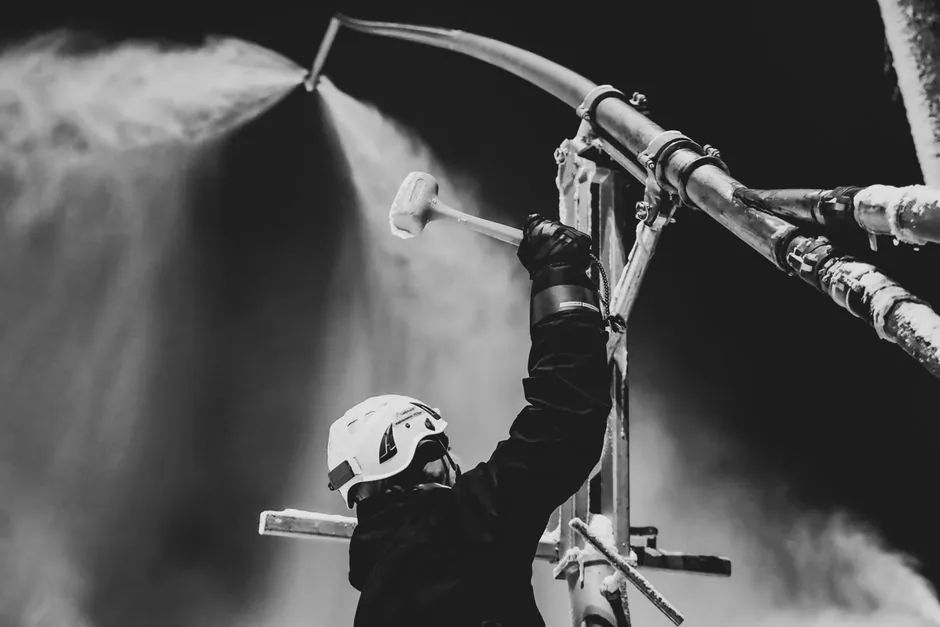
Outdoor emergency eyewash stations need a freeze-resistant water path, not merely an insulated bowl, because ice in the feed pipe, valve or standing water can disable the unit before flushing begins.
For an outdoor eye wash station, the design basis is year-round operation, 15-minute flushing capability, suitable flushing-fluid temperature, documented inspection and protection against the site’s lowest credible ambient condition.
What Freeze Protection Must Accomplish
OSHA’s archived interpretation ties the requirement to reliable emergency equipment: under 29 CFR 1910.151(c), flushing fluid must wash away injurious material without causing eye or body damage because of its temperature [S1]. A frozen line cannot meet that functional requirement, even when the bowl, push plate and signage remain intact [S1].
The archived interpretation cites ANSI Z358.1-1990 for freeze protection and identifies 113.6 L/min, or 30 gpm, as the historical minimum shower flow stated in that edition [S1]. Freeze protection must preserve the full spray pattern, not just keep the water unfrozen: a partially blocked or frozen shower cannot disperse the required flow [S1].
That interpretation is dated June 21, 1994 and is flagged as an OSHA archive document, so it should not be treated as a complete statement of 2026 policy [S1]. The enforceable site and jurisdiction requirements still need review, while the engineering lesson remains direct: cold-weather protection is part of equipment reliability, not a discretionary facility feature.
Compare The Three Protection Architectures
Three principal methods appear in available equipment: heat-traced and insulated piping, fully buried and self-draining lines, and electrically heated self-contained stations. The choice should follow climate severity, water-supply reliability and hazardous-area classification rather than a universal “outdoor” label. [S5]
Heat tracing maintains warmth around exposed feed lines. One supplier describes trace-tape heating for operation down to -25°C, while polar tank systems extend to -50°C [S5]. A self-contained, temperature-controlled alternative uses a 300 L tank, a 3 kW heater and a thermostatic mixing valve to support 15-minute delivery [S5].
Buried piping removes vulnerable components from the freezing zone, while full drainage removes water that could otherwise remain trapped. The GFR1902 station places its eyewash valve, shower valve and supply lines below the frost line, with 1/8 in IPS bleed outlets for post-use drainage [S3]. Electrically heated and insulated systems offer another route, but require power, temperature controls and verification that the protected volume contains no dead legs [S8].
Trace heating suits exposed runs in severe cold, burial suits sites with adequate trench depth and drainage, and heated tanks suit locations without dependable continuous water. None can be accepted on product type alone: the installation still needs a documented minimum temperature, supply assumptions and test method.
Buried And Self-Draining Systems

The GFR1902 uses a 3/4 in IPS freeze-resistant eyewash valve with a push plate, an 11-1/8 in diameter stainless-steel bowl and a 1/8 in IPS bleed outlet intended to drain standing water after use [S3]. Its separate shower valve is 1-1/4 in IPS, and the 10 in orange ABS shower head includes a 20 GPM flow control [S3].
The piping is Schedule 40 galvanized steel with orange polyethylene covers for visibility and corrosion resistance, while the eyewash supply connection is 3/4 in NPT female and the shower inlet is 1-1/4 in NPT male [S3]. The supplier requires the burial depth to be specified when ordering, making site geometry a mandatory procurement input rather than an installation detail [S3].
This design is intended to eliminate standing water after use, but complete drainage must be verified at the installed elevation [S3]. A buried supply still needs an above-ground push plate and accessible eyewash outlet, while the drain path must not create a secondary personnel or drainage-code problem.
Heated And Insulated Systems
Electrically heated outdoor units must keep the feed pipe, valve and discharge path in service without exposing workers to scalding water. One freeze-protected pedestal model is rated for 240 V and Class 1, Division 2 service, indicating that electrical-area selection belongs in the purchase specification [S6].
For self-contained units, heated blankets are used to keep the flushing fluid from freezing [S4]. Another product family uses an ABS showerhead with an AXION MSR eye and face-wash head, while electrically heated and insulated stations provide a combined shower and eyewash arrangement [S7][S8].
Heat-traced systems require more than energizing the heater. Reviewers should request the trace circuit, insulation type, wet-area boundary, control strategy, power rating and alarm or failure indication. The selected equipment must also deliver flushing fluid at a temperature that does not create a new injury risk, consistent with the OSHA interpretation cited above [S1].
Temperature, Water Quality And Flow Controls
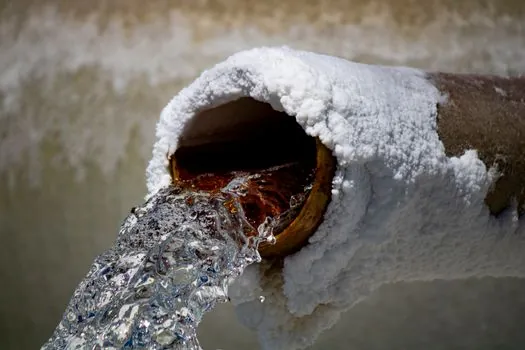
Freeze protection shifts the problem from cold fluid to warm fluid. The GFR1902 documentation calls for consideration of tempered water under ANSI Z358.1-2014, while the historical OSHA letter states that an installation hazardous because of elevated water temperature would violate 29 CFR 1910.151(c) [S1][S3].
Do not confuse freeze protection with tepid flushing-fluid delivery. Heat tracing, insulation, buried lines and self-contained tanks address ice formation; a thermostatic mixing valve addresses discharge temperature. A 3 kW heater and 300 L tank provide stored heated water, but the mixing arrangement still determines the temperature reaching the user [S5].
For comparison, a 1,500 L emergency tank shower is described as holding enough water for 15 continuous minutes, while the 300 L temperature-controlled unit is presented as a multi-shower supply option [S5]. Tank capacity, heater power, recovery rate and simultaneous demand must therefore be checked together, rather than selecting a tank solely by its litre rating.
Where Freeze Protection Is Not Enough
Freeze-resistant hardware does not solve access, visibility, drainage or maintenance. The GFR1902 includes an ANSI-compliant identification sign, but an emergency-light or other site-approved illumination may still be required where a chemical emergency occurs at night or in poor weather. [S3]
Outdoors, snow, ice, vegetation, vehicle impact and corrosion can obstruct activation or access. A unit may also appear functional while a remote valve, supply line or drain has frozen. The 15-minute flushing requirement makes activation time and sustained flow more important than a simple “wet pipe” assumption.
Marking is useful only when it identifies a unit that is accessible and usable. A warning sign should be placed as part of the site layout, but it cannot compensate for an obstructed station, frozen valve or supply that fails under test. Field verification remains the final control.
Procurement And Commissioning Checklist
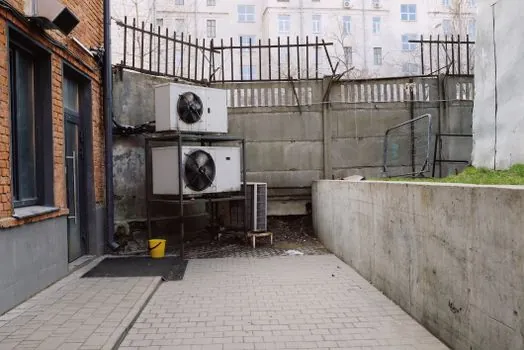
A freeze-protected eyewash specification should identify the minimum site design temperature, supply-water temperature range, available water pressure, trench or burial depth, drainage route, electrical supply and hazardous-area classification. The station model should then be checked against those inputs rather than described only as “freeze resistant.” [S3]
Require evidence that the valve, push plate, eyewash outlets and feed path have been protected as a system. For a buried design, specify the required burial depth and demonstrate complete drainage [S3]. For an electrically heated design, specify the voltage, heating load, circuit, controls, insulation and alarm arrangement. A 240 V, Class 1, Division 2-rated model illustrates how electrical duty should be recorded in the datasheet [S6].
Commission the installed station in the applicable cold-weather condition, exercise the push plate, confirm unrestricted flow and inspect the discharge pattern. Documentation should record the 1/8 in bleed-out operation on the GFR1902 type design, not merely the fact that water emerged from the bowl [S3]. For broader flushing-design context, Set Eyewash Stations for 15 Minutes of Continuous Flow examines the operating-duration decision.
The most trackable procurement signal is the completed datasheet: it should show a stated low-temperature limit, water-path design, drainage provision, temperature-control method and electrical classification. A product page that lists only “freeze protected” leaves too many site-critical variables unresolved [S2][S3][S6].