
A gas alarm controller coordinates multiple fixed detection points, while a standalone transmitter measures one selected location and can raise alarms without a central controller.
The choice depends on monitoring-point count, common visibility, external outputs, notification functions, and maintenance capacity, not on which architecture is described as more advanced.
Architecture and protection boundary
A standalone transmitter or analyzer operates as its own monitoring point: it measures gas at a selected location, displays concentration locally, and can provide alarms independently of a central controller [S1]. That makes it appropriate for one chemical storage room, one process point, or another single known hazard where personnel respond locally [S1].
A multi-point architecture connects several sensing locations through a common interface, allowing operators to review conditions across rooms or process areas without walking from instrument to instrument [S1]. The practical distinction is the protection boundary: a standalone gas detector transmitter protects or monitors one defined location, while a gas alarm controller coordinates a monitored system.
Do not confuse either fixed architecture with personal protection. Fixed detectors continuously monitor defined locations and can trigger automated responses, while portable instruments protect workers entering or moving through areas outside permanent coverage [S3][S4]. A fixed controller therefore does not replace a portable gas detector for confined-space entry, maintenance, or temporary work [S4].
Standalone transmitter: minimum effective scope
A standalone transmitter is strongest when there is one dominant gas, one detection zone, a local audible or visual alarm, and a defined local response. It can continue providing a safety function without relying on a central controller [S1]. Local alarm capability does not, by itself, guarantee remote visibility, historical records, or automatic actuation of ventilation, isolation, or shutdown equipment.
The detector choice remains separate from the communications architecture. A standalone fixed unit can be a fixed gas detector, a combustible gas detector, a toxic gas detector, or an oxygen detector, depending on the hazard and sensing method. A multi-gas instrument may also be used where one worker must evaluate several hazards, although single-gas instruments are generally more compact and lightweight than multi-gas devices [S8].
Standalone architecture is not suitable when several detectors must share one operating view, alarms must be escalated centrally, readings must be retained for review, or a common alarm must initiate coordinated equipment actions. The omission of these functions creates an operational gap even if each local sensor works correctly [S1][S6].
Gas alarm controller: multi-point operating value
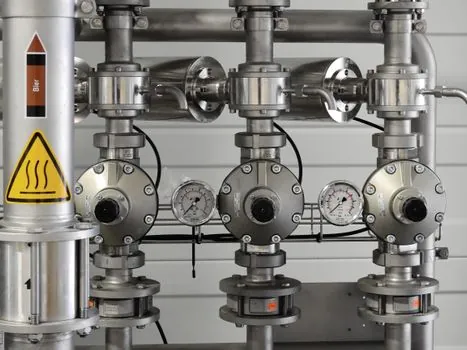
Interscan’s AccuSafe platform combines smart fixed-point sensors with centralized monitoring while still supporting independent operation when a single-point configuration makes more sense [S1]. This is a vendor-specific capacity, not a universal controller limit.
Interscan’s AccuSafe platform combines smart fixed-point sensors with centralized monitoring while still supporting independent operation when a single-point configuration makes more sense [S1]. AccuSafe provides centralized visibility and coordinated monitoring across a facility [S1].
The controller becomes valuable when the operating requirement is broader than “sound locally.” Connected gas detection is generally the more scalable architecture for larger installations, while standalone monitoring remains appropriate for limited points [S6]. For a detailed selection process, see Select Gas Alarm Controllers for Multi-Point Monitoring.
Decision matrix by operating requirement
The principal comparison is straightforward. Standalone transmitters win on simplicity and local independence for 1 monitored point. Multi-point controllers win on common visibility, shared records, coordinated notifications, and configurable outputs as the monitored point count rises. Neither can be ranked lower in alarm reliability without examining the installed equipment, power supply, outputs, and maintenance plan [S1][S6].
Compare the options against four criteria. First, scope: one selected location favors a standalone transmitter, while several rooms, process areas, or gases favor a controller [S1]. Second, visibility: local concentration display may be adequate for a single point, but centralized review is needed when operators must compare multiple locations [S1]. Third, integration: configurable I/O and communications can connect alarms and actuators, while local operation provides less coordinated integration [S1]. Fourth, lifecycle burden: independent equipment avoids a multi-point interface and common controller dependencies, but centralized records and diagnostics can reduce the difficulty of tracking several instruments [S1].
For workforce protection, add a separate fixed-versus-portable decision. Fixed systems monitor areas continuously and initiate unattended responses; portable detectors test atmospheres before entry and follow personnel during maintenance or confined-space work [S3][S4]. A balanced program commonly combines both [S4].
Hazards, sensor life, and failure constraints
Catalytic bead sensors detect combustible gas by measuring resistance change from oxidation on an active bead, but their reliability may decline in oxygen-deficient atmospheres [S3]. Electrochemical sensors provide rapid, relatively low-cost detection of target gases, yet many have a service life of 2–3 years, with some designs rated at 5–7 years depending on gas, exposure, and environmental conditions [S3]. Cross-sensitivity can also change the response to interferents [S3].
Infrared sensors require more power and are therefore more common in fixed installations than in portable instruments; they are also suited to oxygen-deficient environments and applications where resistance to sensor poisoning is important [S3]. A controller cannot compensate for unsuitable sensor technology, incorrect mounting, or an unmaintained sensing element. Architecture selection must follow the gas-specific detection strategy rather than substitute for it.
Standalone equipment can fail locally and remain isolated from other points, while a shared controller may simplify replacement and status visibility but becomes a common dependency. Power loss, communication failure, incorrect I/O configuration, controller capacity limits, and sensor aging must therefore be addressed in the design. Neither local alarms nor centralized displays should be treated as substitutes for tested automatic actions such as ventilation, emergency isolation, or shutdown.
Installation and ownership decisions
Fixed detectors must be positioned for the gas and hazard location. Practical guidance includes mounting a CO2 detector about 12 inches above the floor and an O2 detector about 48 inches above the floor, while display units may be placed at eye level near the room entrance or in a control room [S5]. These are application examples, not universal mounting distances, because the correct location depends on the gas properties, release geometry, and approved design.
Heavy gases such as CO2, propane, and refrigerants tend to accumulate near the floor, which can require extra sampling accessories or a different sensor position [S5]. Permanent fixed systems also need verification, alarm-response integration, and disciplined calibration or sensor replacement. Portable units add separate constraints: battery dependence, possible loss or damage, and dependence on daily checks, training, and consistent use [S5].
Choose a standalone transmitter when the hazard map is small and the response is local. Choose a controller when multiple points need one operating interface, common records, centralized alarm handling, or coordinated outputs. Specify the controller only after defining required point count, gases, outputs, notifications, power, interfaces, and maintenance responsibilities; vendor capacities such as 10 sensors or 10 gases do not establish suitability by themselves [S1].
Track two verification items during commissioning: confirm that every alarm state appears at the intended operator interface, and prove each connected ventilation, isolation, or shutdown action from the sensor through the controller and final actuator.