
The gas chromatograph remains the workhorse for separating and quantifying volatile and semi-volatile compounds, with 2026-vintage systems spanning benchtop laboratory units and dedicated process analyzers [S3][S5].
Specifying a GC in 2026 means picking a detector family (FID for organics, TCD for permanent gases, FTD for halogen/phosphorus/nitrogen, MS for unknowns), then matching injector, column chemistry, and oven ramp range to the analyte list — not the other way around. Detector choice alone shifts price by roughly an order of magnitude, as seen in current China-market listings that span US$3,000 to US$20,000 per piece for analyzers built around FID/TCD/FPD detector stacks [S6]. For a structured primer on the broader instrument class, see the gas chromatograph overview.
Detector stack: pick the sensitivity target first
FID, TCD, and FTD are the three detector options most commonly listed on 2026 high-performance GC platforms such as the Shimadzu Nexis GC-2030, with each target chemistries from hydrocarbons to permanent gases to halogenated species [S2][S3].
Flame ionization (FID) is the default for trace organics; thermal conductivity (TCD) handles permanent gases and refinery streams where universal response matters; flame thermionic (FTD) selectively detects nitrogen- and phosphorus-containing compounds at low levels. For full unknown identification, benchtop GC-MS configurations from Separation Systems and similar integrators add a mass-selective detector downstream of the column, with the integrator scope clearly visible in 2026 vendor offerings [S9].
Column chemistry: stationary phase drives selectivity
Column selection is the single most important decision in method development, because stationary phase polarity and film thickness set retention and resolution before any instrument parameter is touched [S8].
The 2026 Sigma-Aldrich technical guidance still treats the 5%-phenyl-methylpolysiloxane column as the workhorse for general-purpose separations, with polyethylene glycol (WAX) columns covering polar analytes and higher-phenyl or specialty phases reserved for very specific selectivity targets [S8]. For a broader refresher on the carrier-gas and detector interplay, see the industrial gas analyzer fundamentals entry.
Application envelope: laboratory, process, or online

Gas chromatography in 2026 serves four distinct markets — energy, petrochemical, chemical, and food/pharma — and Shimadzu explicitly markets the Nexis GC-2030 across chemical, pharmaceutical, environmental, and food-industry applications, in addition to laboratory and process use [S2][S3].
Process and online GCs differ from benchtop units in sample-conditioning, run-time autonomy, and detector ruggedization, and dedicated online suppliers such as Gassite segment their portfolio along those same market lines [S5]. Where a measurement feeds a control loop rather than a lab report, the analyzer selection problem starts to look more like a thermal mass flowmeter buying guide decision, with sample conditioning and signal output dominating the trade study.
Vendor and price landscape in mid-2026
Mid-2026 supply shows three clear price bands on the open market: a Chinese-volume band of roughly US$3,000–US$20,000 per piece for FID/TCD-based process units aimed at LNG/CNG and LPG analysis [S6], a laboratory-instrument tier exemplified by the Shimadzu Nexis GC-2030 (high-performance gas chromatograph with FID/TCD/FTD options) [S2][S3], and a higher-tier laboratory/online band from MS-equipped integrators such as Separation Systems [S9].
Market sizing data is dominated by global consultancies, with MarketsandMarkets publishing a 2025-forecast gas chromatography market report that captures segment, region, and growth framing used in most 2026 purchasing decks [S4]. At the low end, the Made-in-China listings for LNG/CNG calorific-value and Uop 960 LPG analyzers give a real reference for what a utility-grade GC actually costs before detector upgrades or shelter integration are added [S6].
Selection criteria: a 4-axis comparison
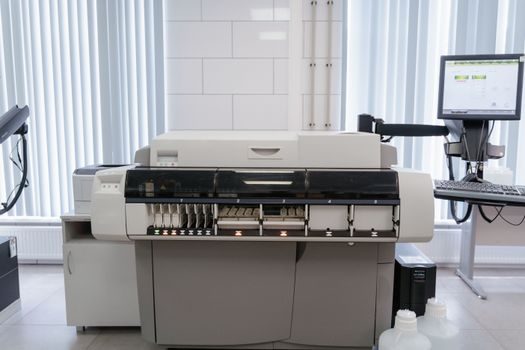
Before quoting, line the candidate GCs up against four decision axes: detector sensitivity for the target analyte list, oven/column temperature range, throughput (run time per sample), and total cost of ownership including consumables and carrier gas. [S1]
On a 4-axis scorecard, a Chinese-volume FID/TCD unit (US$3,000–US$20,000 range) wins on price and lead time but loses on detector flexibility and uptime guarantees; the Shimadzu Nexis GC-2030 wins on multi-detector flexibility (TCD, FTD, FID listed together) and pharmaceutical/environmental coverage but sits in a higher price band [S2][S3][S6]; MS-equipped integrators such as Separation Systems win on unknown-identification capability for forensic and environmental unknowns, at a premium over FID-only systems [S9]; specialized units like Waters ACQUITY UPC2 sit in a different category entirely — supercritical-fluid chromatography with FID and multi-detector options — and should only be considered when the method explicitly needs polarity gradients beyond conventional GC [S1].
Standards, methods, and validation hooks
Standardized GC methods anchor method validation, with ASTM D3452-2006 covering rubber identification by pyrolysis-gas chromatography as one example of a published, repeatable procedure used across the 2026 contract-lab market [S7].
Where the lab is producing data for regulatory submission, the standard reference (ASTM, ISO, EPA, or pharmacopeial) must be cited in the method SOP, and the column, detector, and oven program in the GC method must match the standard's published conditions within documented tolerances [S7]. For detector choice, the FID's carbon-number response, TCD's universal response, and FTD's selectivity for N/P compounds are well-documented characteristics that let a process engineer pre-pick the right detector class for a target analyte list.
Limitations and failure modes to plan for

Gas chromatography fails in three predictable ways: column bleed and contamination at the high end of the oven ramp, detector saturation on concentrated samples without proper split ratios, and carrier-gas contamination when lines or traps are not maintained. None of these are solved by buying a more expensive GC; they are solved by scheduled maintenance, gas-quality specification, and detector-range calibration. [S2]
For a comparison-style decision frame that mirrors how this spec is built in practice, the variable area flowmeter vs coriolis buying guide uses the same criteria-based selection logic and is a useful parallel when a process GC is feeding composition data into a flow computer. Online GCs and inline analytical instruments also share the same sample-conditioning and hazardous-area certification concerns discussed in the magnetostrictive vs capacitance level transmitter spec sheet.
Sourcing and signals to track
Trackable 2026 signals: the 2025-forecast MarketsandMarkets gas chromatography report (re-issued and updated into 2026 vendor briefings) [S4]; the continued listing of FID/TCD/FTD options on the Nexis GC-2030 product page through 2026 [S3]; and ongoing Chinese-volume supply at the US$3,000–US$20,000 price band for LNG/CNG and LPG analyzers [S6].
Verify any 2026 quote against the specific detector configuration and column chemistry the method requires, not against headline price, and confirm whether the application is laboratory (Shimadzu-class), online process (Gassite-class), or MS-equipped unknown identification (Separation Systems-class) before signing a PO [S2][S3][S5][S9].
For component-level specifications, see linear guide.