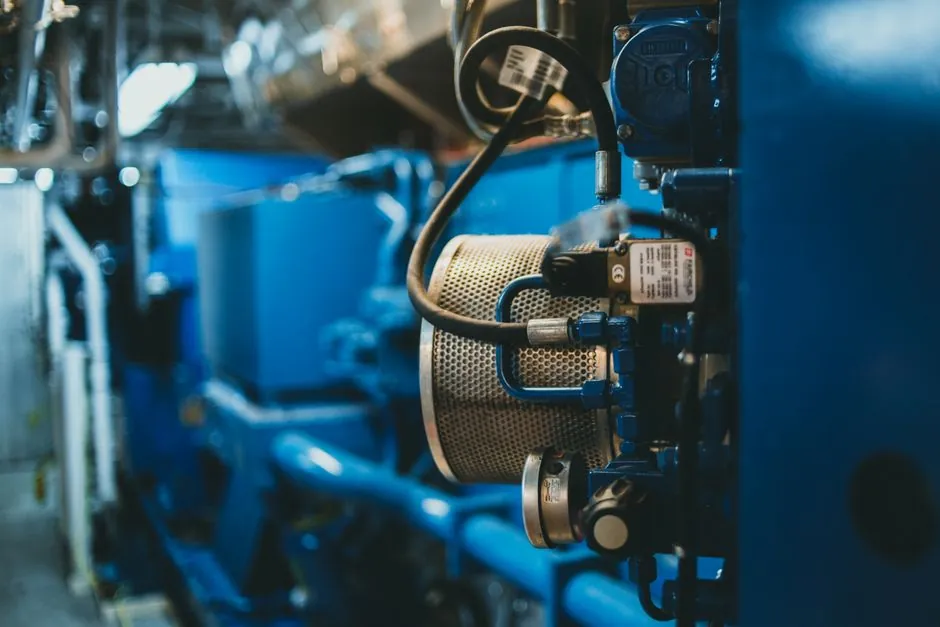
A 1800 rpm, 60 Hz natural gas genset at the entry tier lists at USD 5,000-5,380 FOB Shanghai on a 5-set minimum order, per a 2026-06-18 supplier listing on ECVV [S4]. Above that floor, price climbs with standby kW, emissions compliance tier, enclosure rating, and controller integration rather than the engine block itself.
Specifiers in 2026 are choosing between three engine families: micro-turbines in the 28-30 kW range (Capstone C30, 400-480 V three-phase stationary, air-bearing, no lube oil) [S1]; 4-cycle spark-ignited rich-burn sets on the QSJ2.4G platform covering 20-60 kW standby (25-75 kVA) at 60 Hz, air-cooled to 50 °C ambient, in an aluminum enclosure rated to 150 MPH wind, with NFPA 110 Level 1 single-step load acceptance [S2]; and high-output mtu/Atlas Copco gas sets for utility and data-center standby [S3][S5]. Each family has a different cost curve, and the per-kW figure on a quote can mislead if the specifier does not normalize for fuel, certification, and controls.
Entry tier: USD 5,000-5,380 per set, 1800 rpm, 50-60 Hz natural gas
The ECVV listing for a 1800 rpm 60 Hz natural gas genset shows an FOB Shanghai price of USD 5,000.00-5,380.00 per set on a 5-set minimum, with L/C or T/T terms and brand label EVOMAX [S4]. That is the realistic floor for a stationary industrial natural-gas genset in 2026 pricing, and it lines up with the lower end of the QSJ2.4G standby range (20 kW / 25 kVA standby in the C20N6 model) [S2]. Above that, kW price drops per unit but jumps per kW once you add enclosure, ATS, and emissions hardware.
For comparison, micro-turbine pricing sits in a different band entirely. The Capstone C30 is a 30 kW (40.79 hp) max, 28 kW (38.07 hp) min three-phase stationary unit at 400-480 V, with mechanical fuel injection and a factory protection plan of 5 or 9 years [S1]. Air-bearing architecture eliminates lube oil and coolant, which collapses scheduled-maintenance cost but raises unit capex versus a piston-engine set of equivalent standby kW. The economic case for the C30 hinges on hours-run, fuel cost, and the avoided cost of oil changes over a 9-year horizon.
Mid tier: 20-60 kW spark-ignited gas, NFPA 110 Level 1, 50 °C ambient
The Cummins QSJ2.4G product family covers C20N6 through C40N6 (and higher) at 60 Hz, 20-60 kW standby and 25-75 kVA, with EPA+ certification and North-America availability [S2]. The standard cooling package supports 50 °C (122 °F) ambient, which removes one common derating penalty in containerized or shelter installs [S2]. The PowerCommand 1.1 control ships standard with auto remote start/stop, precise frequency/voltage regulation, NFPA 110 Level 1 single-step full-load acceptance, and auto-shutdown on fault [S2].
At this tier the price differentiator is no longer the engine block; it is the alternator configuration, the enclosure wind rating (the QSJ2.4G aluminum enclosure is engineered for 150 MPH wind loads [S2]), and whether the unit ships with EU IIIA or EPA+ compliance. For specifiers comparing standby gas to standby diesel, the standby generator price 2026 reference breaks the parallel diesel-side cost stack (fuel, ATS, exhaust, foundation) onto the same axes, which is useful when a site is fuel-flexible between natural gas and diesel.
High tier: mtu and utility-scale gas sets, CHP, microgrid

Rolls-Royce Power Systems (mtu) markets gas generator sets under the Power Generation Products umbrella alongside diesel gensets, dynamic UPS, grid-scale energy storage, and the EnergetIQ control platform, with standby, continuous/CHP, and microgrid/hybrid configurations [S5]. Atlas Copco offers a parallel line of on-site industrial nitrogen and oxygen gas generators (PSA membrane technology) under the same product family, which is a different cost class from a kW-rated engine genset but often appears on the same RFQ when a plant is sizing its full gas-and-power utility envelope [S3].
For utility, data-center, and industrial CHP buyers, the cost stack is dominated by grid interconnection hardware, selective catalytic reduction (SCR) or oxidation catalyst for emissions, and the CHP heat-recovery skid. mtu groups these under its Microgrid & Hybrid Solutions and Automation & Control Systems lines [S5]. The relevant comparison axes for a 2026 high-tier spec are: standby vs continuous rating, methane number compatibility (biogas/landfill gas vs pipeline natural gas), NOx tier (EPA Tier 4 / EU Stage V), and whether the unit is paired with battery energy storage in a hybrid microgrid.
Cost drivers ranked: what actually moves the 2026 quote
In descending order of typical impact on a 2026 gas-genset quote: (1) standby kW rating, where the curve is non-linear because the engine block step-changes at platform boundaries (QSJ2.4 vs larger platforms, Capstone C30 vs C65 ICHP) [S1][S2]; (2) emissions tier, where EPA+ / EU IIIA is included on QSJ2.4G and pushes cost up sharply when Tier 4 final or Stage V is required [S2]; (3) enclosure and acoustic package, with 150 MPH-rated aluminum enclosures commanding a premium over open-skid [S2]; (4) controller and ATS integration (PowerCommand 1.1 with NFPA 110 Level 1 is the meaningful threshold, not a generic analog gauge) [S2]; (5) fuel system, where direct fuel injection with electronic air/fuel ratio control is the cost adder on rich-burn piston units [S2] and air-bearing oil-free architecture is the capex adder on micro-turbines [S1]; (6) remote monitoring, which on the C30 is a Factory Protection Plan option (5 or 9 year) rather than a standard feature [S1].
Volume tier also moves price more than specifiers expect. The ECVV floor price of USD 5,000-5,380 is conditioned on a 5-set minimum order [S4]. Single-set purchases at the same kW band typically run higher, and the capex gap between a 5-set volume order and a 1-set emergency buy is often larger than the gap between two adjacent kW ratings.
Total cost of ownership: fuel, maintenance, and compliance over 9 years
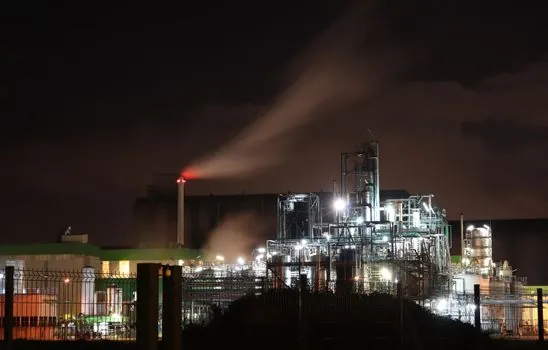
For a stationary gas genset, fuel is the largest lifecycle line item by an order of magnitude once annual run hours cross roughly 500-800 hours/year. Below that threshold, the per-kW purchase price and the maintenance contract dominate. The Capstone C30 collapses scheduled maintenance by removing lube oil and coolant via its air-bearing architecture, with 5-year and 9-year Factory Protection Plans as the contracted cost- certainty vehicle [S1]. The QSJ2.4G family carries conventional 4-cycle maintenance, with the aluminum enclosure and direct fuel injection aimed at uptime rather than maintenance reduction [S2].
Compliance carries a multi-year cost too. NFPA 110 Level 1 single-step full-load acceptance requires a specific controller, wiring, and test protocol; it is not a paperwork-only designation [S2]. EPA+ certification on QSJ2.4G models is a published line on the spec sheet, not a vendor promise [S2]. EU IIIA on the QSJ2.4G is a region-specific compliance option, distinct from EPA+ and not interchangeable [S2]. When a specifier is building a standby generator selection guide, these certifications are the gating decisions, not the kW number.
Comparison: micro-turbine vs spark-ignited piston vs utility-scale gas
Across the three engine families documented in 2026 listings, the decision pivots on run-hour profile, fuel cleanliness, and acoustic/site constraints rather than headline kW. The Capstone C30 micro-turbine (28-30 kW, 400-480 V, air-bearing, oil-free, ultra-low emissions, 5-9 year factory plan) wins on maintenance and emissions for high-hour combined heat-and-power or remote-site duty, at the cost of higher unit capex per kW [S1]. The QSJ2.4G spark-ignited piston family (20-60 kW standby, 25-75 kVA, 60 Hz, 50 °C ambient, NFPA 110 Level 1, EPA+ or EU IIIA, 150 MPH enclosure) wins on first cost and parts ubiquity for North-American standby and light-commercial duty [S2]. mtu and Atlas Copco high-output gas sets, including CHP, microgrid/hybrid, and on-site N2/O2 gas generators, win for utility, data-center, and process-plant utility envelopes where grid interconnection and heat recovery are part of the spec [S3][S5].
For a related diesel-side tradeoff that often appears in the same RFQ, the diesel generator set selection guide on ratings, cooling, and enclosure tradeoffs lines the diesel kW tiers and enclosure classes up on the same axes. Site constraints (gas pipeline availability, fuel storage code, runtime hours between refuel, allowable emissions tier) decide whether gas or diesel wins before the per-kW price is even on the table.
What to verify on a 2026 quote before signing
Before releasing a PO, three numbers on the quote must match the spec: (1) standby kW at the site ambient, not at ISO reference conditions; the QSJ2.4G is rated to 50 °C (122 °F) ambient without derating, and a unit quoted at a higher temperature with no derate note is misquoted [S2]; (2) emissions tier, written as a certification reference (EPA+, EU IIIA, or higher) and not a generic "low emissions" claim, since EU IIIA on QSJ2.4G is a distinct option from EPA+ [S2]; (3) enclosure rating with acoustic data, because the 150 MPH wind-rated aluminum enclosure on QSJ2.4G is a specific cost line and a substitute open-skid will change the install scope [S2]. On the micro-turbine side, the Factory Protection Plan term (5 or 9 years) and whether remote monitoring is included in capex or billed annually are the equivalent gating line items [S1]. On the high tier, the grid-interconnection scope, the heat-recovery interface, and the BESS hybridization boundary are the three lines that swing a microgrid gas-genset quote by double-digit percent [S5].
Track two signals over the next quarter: the FOB Shanghai entry-tier price on ECVV for 1800 rpm 60 Hz natural gas gensets, which moved within a USD 380 band on the 2026-06-18 listing [S4], and the published availability of EPA+ versus EU IIIA QSJ2.4G variants, which dictates whether a North-American-only spec can be served from a European-built inventory or requires a regional re-quote [S2].
The underlying component specifications are covered under lighting equipment and electric lamps, linear guide, and crossed roller guide.