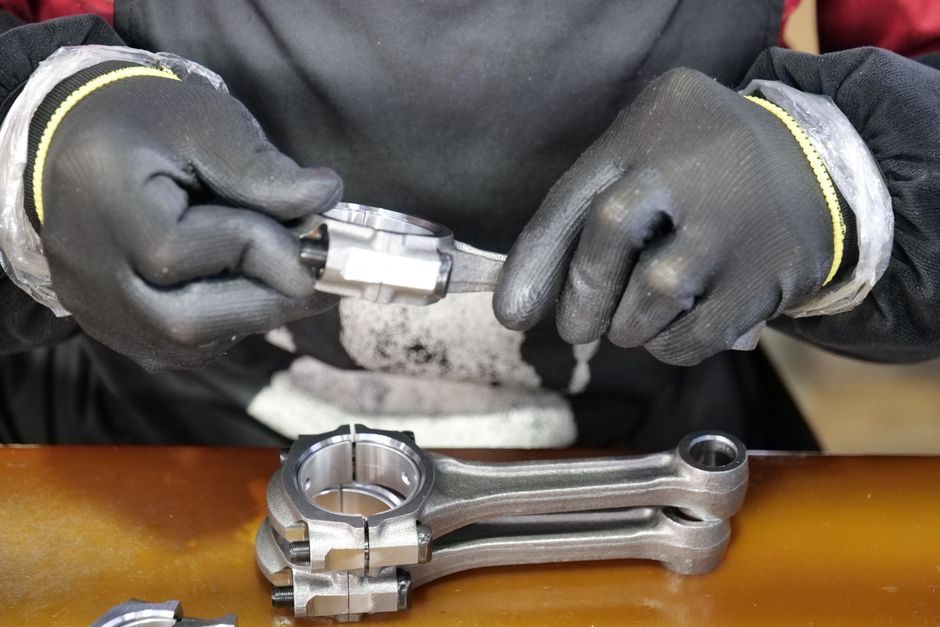
Isostatic graphite blocks carry a 2–4× price premium over extruded rod stock for the same machined volume, driven by finer grain (0.045–0.8 mm), higher bulk density (1.75–1.85 g/cm³) and lower ash (0.1–0.3%) [S2]. For most non-electrode machined parts, this is the cost floor engineers must accept when specifying fine surface finish or tight concentricity.
The biggest cost lever is rarely raw stock — it is machining time, fixture design and the dual-use export licence for orders leaving China, which adds 15–20 working days to the standard 7–12 day lead time on Qingdao/Tianjin-port shipments [S2]. Anyone quoting a graphite machined part should therefore split the BoM into material kg, machining hours, inspection, and export admin.
Cost Stack: What the Buyer Actually Pays
A machined graphite part cost is the sum of raw blank price + machining yield loss + tooling + inspection + export admin. Raw blank price itself depends on grade, grain and size: extruded rod stock published for 2026 quotes round diameter 5–1100 mm and length 1–3050 mm with square block up to 3050 × 1000 × 600 mm [S2]. The same supplier specifies bulk density 1.65–1.85 g/cm³, resistivity 6.0–11.0 μΩ·m, bending strength 18–36 MPa and compressive strength 36–75 MPa across the same rod family [S2] — a useful sanity check that the blank you were quoted actually matches the mechanical envelope you designed to.
For context, the Made-in-China isostatic graphite category page lists dedicated isostatic-grade suppliers separate from generic HP graphite electrodes, confirming isostatic is treated as a distinct, higher-value commodity class on B2B platforms as of 2026-06-10 [S1]. Bulk commodity graphite (powder, granules) is widely cited as "near zero per gram" once you strip away form factor and purity controls [S5]. Machined parts sit at the opposite end: form factor, grain control and tolerance convert a cheap raw material into a precision component.
Grade Selection: Isostatic vs Extruded vs Electrode
Pick the cheapest grade that survives the duty. Isostatic graphite — fine grain 0.045–0.8 mm, low ash, high density — is the default for semiconductor fixtures, EDM electrodes, and any part with <±0.05 mm tolerance or mirror-class surface [S1][S2]. Extruded rod (the Tennry/Feishine line) covers 3–900 mm diameter, 80–2100 mm length, with coarser grain and 1.75–1.85 g/cm³ density — the cost-effective choice for furnace heaters, heat shields, anodes and metallurgical moulds [S2]. UHP graphite electrodes (200–700 mm Ø, 1600–2400 mm length, 3–4 TPI nipples) are a separate commodity aimed at EAF steelmaking and are not typically the most economical blank for fine machined parts despite the raw tonnage price advantage [S4].
The mechanical envelope is the gate, not the price: extruded rod flexural strength is 24–36 MPa and compressive 48–62 MPa [S2], which is sufficient for most furnace furniture but borderline for any rotating or load-bearing structural part. When the design envelope requires more than ~60 MPa compressive, the conversation moves to isostatic or fine-grained specialty graphite, and the material line item alone can double.
Machining Cost Drivers and Tolerance Gates
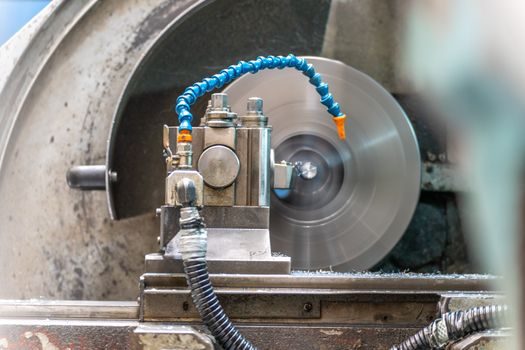
Graphite machines dry, brittle and dusty — feed rates, dust extraction and abrasive wear on tooling dominate shop time. Coarser grain (0.8 mm) blanks cut faster but chip at edges; fine isostatic grain (0.045 mm) tolerates thin walls and sharp corners but slows CNC feed. Pushing from ±0.1 mm to ±0.05 mm tolerance on a typical 200 mm billet routinely adds 30–50% to shop time, which on a low-cost blank becomes 60–70% of the finished-part price. [S1]
Buyers should also budget for post-machining purification. The 0.1–0.3% ash figure quoted on extruded rod [S2] is acceptable for furnace and metallurgical service, but semiconductor and lithium-ion cell applications typically demand halogen-plus-metal impurity specs in the ppm range, which require secondary high-temperature purification and add a measurable per-kg surcharge. The research material does not publish a numerical ppm-vs-price curve, so engineers should request lot-level ICP-MS data rather than estimating from grade name alone.
Specification Mapping Across Use Cases
Semiconductor / PV: fine-grain isostatic, low ash, often 1.81–1.85 g/cm³, machined to <±0.02 mm, halogen-cleaned [S1]. Metallurgical / vacuum furnace: extruded rod or block, 1.75–1.85 g/cm³, 0.1–0.3% ash, machined to ±0.1 mm, no purification [S2]. EAF steelmaking: UHP electrode grade 200–700 mm Ø with 3–4 TPI nipples — this is a different product line and not a precision-machined part category [S4]. Energy storage R&D: hydrothermally treated graphite disks coated with polyaniline have been demonstrated as inexpensive supercapacitor electrodes with areal capacitance 1490 mF cm⁻² at 2.0 mA cm⁻² in 1.0 M H₂SO₄ [S3] — relevant if the machined part is destined for an electrochemical cell, since binder/additive interactions with the substrate graphite can change surface specs.
For buyers who also spec metal or mechanical components in the same project, the same kg-vs-machining-hour logic used here applies to stainless vs alloy vs copper machined parts and to wire-rope assemblies, where raw stock is again a minority of the delivered cost.
Lead Time, Sourcing Logic and Export Admin

For 2026 China shipments from Qingdao or Tianjin port, a Tennry-type supplier quotes 7–12 working days for standard mass production and explicitly adds 15–20 working days when a dual-use items export licence is required for the graphite product [S2]. Samples ship in 3–10 days. This means a "two-week" quote is realistically three-and-a-half to five weeks if the part falls under dual-use controls, which most fine-grain machined graphite blanks do at commercial quantities. Engineers scheduling production trials should plan to the licence window, not the production window.
Pricing terms are FOB/CFR/CIF/EXW, packed in plywood cases or per customer requirement, and Tennry explicitly warns that Alibaba-listed prices are "rough" and the actual figure depends on raw-material cost, exchange rate, labour and order quantity [S2]. Treat any web-listed USD/kg as a starting point for negotiation, not a fixed contract benchmark. To cross-check that a supplier can actually deliver the geometry, ask for a sample of the largest-diameter round (up to 1100 mm) or thickest square (≤3050 × 1000 × 600 mm) blank in the catalogue, since the published envelope is the supplier's claim of capacity [S2].
Limits, Failure Modes and Where the Data Stops
The 2026 supplier data sets are explicit on mechanical and electrical ranges for extruded rod but go silent on fatigue, oxidation rate above 400 °C, and creep at temperature — all of which matter for long-life furnace furniture [S2]. Isostatic-grade data on the Made-in-China category page is offered as a buyer-facing RFQ funnel rather than a published spec table [S1], so engineers must request the actual mill sheet per lot. The PANI/HT-G supercapacitor work is R&D scale and does not translate to a commercial machining tolerance or unit price [S3]. Commodity graphite pricing per gram is "near zero" only at powder/granule form and rises sharply once you enforce grain, ash and geometry controls [S5].
Trackable next signals: (1) any 2026-Q3 update to dual-use export licence scope for fine-grain graphite from PRC customs, which would re-time the 15–20 day window [S2]; (2) supplier-published isostatic-grade spec sheets with ash <100 ppm and grain <10 µm, which would close the current spec gap between extruded rod data and what semiconductor buyers actually need [S1]. Until those land, the safest move is to specify extruded or isostatic against the published mechanical envelope, build lead time to the licence window, and request lot-level mill sheets before releasing payment.
For component-level specifications, see embedded part, linear guide, and crossed roller guide.