
Wire form parts are bent, coiled, stamped, or roll-formed from cold-drawn wire, and the selection gate that breaks first in service is almost always the upstream material/diameter pairing, not the bend geometry itself [S3][S4].
Buyers specifying custom wire formed components for OEM equipment, HVAC, medical, agricultural, or furniture assemblies should treat the decision as a five-gate map — material, wire diameter, forming process, dimensional tolerance, and end-use load/environment — because the same bracket geometry can pass in low-carbon steel and fail in 302 stainless under chloride exposure, with no change to the print [S3].
Gate 1 — Material Grade and Wire Chemistry
Low-carbon steel (typically 1008/1010/1018), cold-rolled or oil-tempered, is the default for non-corrosive, indoor, or paintable wire form brackets and frames; it bends cleanly, costs the least, and accepts most secondary finishes [S3].
Stainless 302/304 and 316 grades are specified for medical, food-contact, outdoor, and chloride-exposed applications because austenitic stainless holds dimensional accuracy after forming and resists the red-rust staining that disqualifies carbon steel parts in 6–24 months of field service [S4]. 316 carries higher nickel and molybdenum content than 304, which is the practical reason marine and chemical-process OEMs route 316 into wash-down zones while keeping 304 for general-purpose enclosures [S4]. Specialty alloys (Inconel, music wire / ASTM A228, chrome-silicon / ASTM A401) enter the conversation only when fatigue life, elevated temperature, or high tensile strength trumps cost [S2].
Gate 2 — Wire Diameter, D/d Ratio and Section Choice
Wire diameter sets the baseline section modulus: doubling the diameter raises bending stiffness by roughly 16× for a round section, so a 0.5 mm step between adjacent wire sizes is rarely a "small" change once it propagates into spring-back, tool wear, and finished-part stiffness [S2].
Round wire is the default; flat, square, and shaped wire (rectangular, half-round, edge-of-strip) are picked when the print needs a flat bearing surface, a low-profile clip, or a controlled edge radius that round stock cannot deliver [S2]. The D/d ratio — bend radius (D) divided by wire diameter (d) — should sit at ≥ 1× for general forming, ≥ 2× for hard-drawn or spring-temper stock, and ≥ 3× for austenitic stainless, which work-hardens aggressively and cracks on tight inside radii [S3]. Crossing below these floors is the single most common root cause of in-process wire fractures reported by custom wire form manufacturers [S3].
Gate 3 — Forming Process and Production Volume
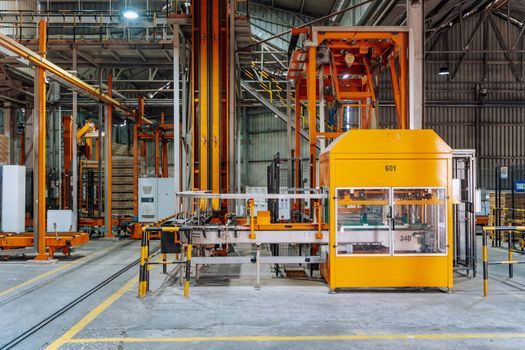
Four-slide / multi-slide forming is the workhorse for complex 3D wire forms with multiple bends, twists, and secondary features, because the tooling indexes the wire in four axes per station and removes most of the secondary hand operations that drive cost in low-volume runs [S3].
Power-press and punch-press forming suits flat 2D stampings or short wire blanks that need coined holes or pierced features; CNC wire bending fits prototype and low-volume runs (typically 1–500 pcs) where tooling cost cannot be amortised; spring coilers and torsion winders are the dedicated path for helical and torsion springs; mesh welders and rebar processors cover their own segments and are usually sourced separately [S2]. For buyers, the practical volume breakpoints look like this: prototypes and pre-production samples route through CNC bending, runs from a few hundred to tens of thousands go to four-slide or stamped/formed, and sustained annual volumes above ~50,000 pcs typically justify dedicated hard tooling with in-house die maintenance to keep lead time inside five business days [S3].
Gate 4 — Dimensional Tolerance, Finish and Tooling
Standard wire form tolerance bands for general commercial work run roughly ±0.005 in (±0.13 mm) on linear features for wire under 0.125 in diameter and ±0.010 in (±0.25 mm) above that, with tighter bands (±0.002 in) achievable only on dedicated four-slide tooling after a first-article approval cycle [S3].
Surface finish options — black oxide, zinc plating, electro-galvanising, powder coat, e-coat, passivation for stainless — should be specified together with material, because galvanic couples between a zinc-plated carbon-steel wire and a stainless mating part will eat the zinc in weeks under wet service [S3][S4]. Onsite tooling capability is a non-trivial buying criterion: wire form manufacturers that build and maintain tooling in-house cut production interruptions and reduce per-part cost, while vendors that outsource tooling add 4–8 weeks of lead time and a second quality boundary that the buyer does not control [S3].
Gate 5 — Load, Environment and Certification
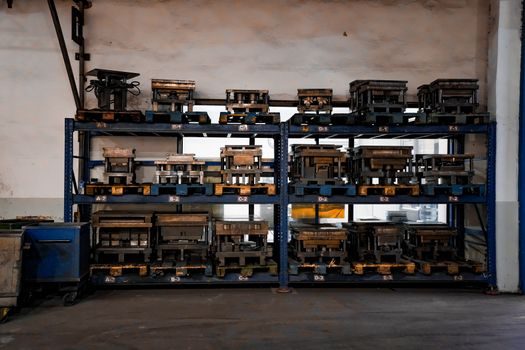
Working-load rating, fatigue life, and operating environment are the gates that decide whether a given material/process pairing is fit for service: a furniture bracket in 1018 steel, an HVAC clip in 304 stainless, and a medical device spring in 316 stainless or music wire each live in different load-environment cells and cannot be cross-substituted without a print change [S3][S4].
Buyers in regulated sectors (medical ISO 13485, automotive IATF 16949 via the supply chain, aerospace AS9100) should verify that the supplier's quality system actually covers the part family, not just the certificate on the wall: ISO 9001 and ISO 14001 certification is the baseline most custom wire form manufacturers hold, and the certificate scope should be read against the exact process being quoted [S3]. For wire that also doubles as an electrical conductor or sensor element — common-mode chokes, draw-wire sensors, and embedded sensing leads — the spec expands into electrical parameters: a representative AMCW3225P-series wire-wound common-mode choke, for example, is rated 500–2400 Ω impedance at 100 MHz, 0.18–0.30 Ω max DCR, 640–800 mA rated current, 50 VDC, and 10 MΩ minimum insulation resistance, with AEC-Q200 verification for automotive power-line noise filtering [S1].
Selection Comparison: Material × Process × Best-Fit Use
Three reference pairings cover most OEM wire form sourcing decisions: (1) low-carbon 1008/1018 round wire, 2–6 mm diameter, four-slide formed, zinc-plated — best for furniture, agricultural, and outdoor-power brackets where cost and stiffness dominate; (2) 302/304 stainless round or flat wire, CNC or four-slide formed, passivated — best for HVAC, indoor appliance, and general-purpose clips where corrosion and appearance matter; (3) 316 stainless or ASTM A228 music wire, dedicated four-slide with in-house tooling, plus ISO 9001/13485-certified process control — best for medical, food-contact, marine, and high-cycle spring applications where field failure is not acceptable [S3][S4].
The decision criteria the buyer should hold against any quote are: (a) material grade and D/d ratio printability, (b) achievable tolerance band on the chosen process, (c) annual volume vs tooling amortisation, (d) finish and galvanic compatibility with the mating part, and (e) certification scope of the supplier [S3].
Common Failure Modes and Sourcing Constraints
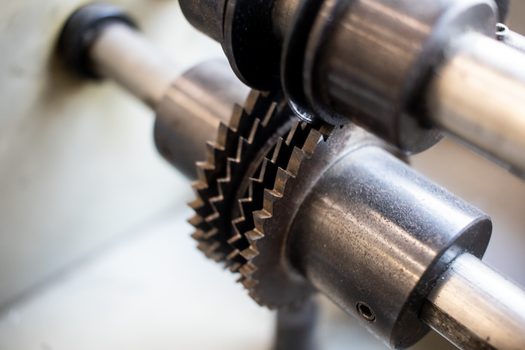
Three failure modes account for the majority of wire form rejects: in-process wire fracture from D/d below the material floor, red-rust staining on carbon-steel parts routed into chloride-exposed service, and spring-back on spring-temper stock that the supplier "solved" with hand straightening — which trades dimensional accuracy for cosmetic flatness [S3][S4].
Sourcing constraints worth pricing in: most contract wire form manufacturers quote 4–6 week lead time on first articles for hard tooling, with delivery in five business days achievable only on established part numbers inside a Kanban or blanket-order program; this is why WireTech Fabricators publicly advertises a 1 million lbs/month wire throughput and 15 million components/year capacity against 300+ active part numbers, and routes EDI/ERP-integrated customers into a five-day-or-less delivery lane [S3]. New entrants into custom wire forming face the opposite constraint — long first-article lead times until tooling stabilises — so the early RFQ should ask specifically for the supplier's first-article lead time and PPAP or first-article inspection sample policy.
Related Specs to Pull Into the Same RFQ
Wire form parts rarely travel alone: a wire bracket often co-specifies a sealing washer or rubber grommet for weatherproofing, and a wire spring frequently sits inside a wire rope sling assembly on the same BOM, so the spec map extends beyond the wire form itself. [S1]
For buyers building a broader mechanical-assembly spec pack, the industrial spring selection map covers the load/material/duty-cycle gates for helical and torsion springs, the sealing washer four-gate spec map covers the washer side, and the wire rope sling selection guide covers the larger-diameter wire side of the same engineering family. Inside our reference set, wire rod explains the upstream cold-drawing feedstock, draw-wire sensor covers the sensorised wire branch where wire doubles as a measurement element, and embedded part covers inserts that often co-form with a wire bracket. Trackable next signals: monitor the Spring 2026 and Winter 2026 issues of Wire Forming Technology International for new forming-equipment and heat-treatment coverage that will move the tolerance and material tables discussed here [S2].