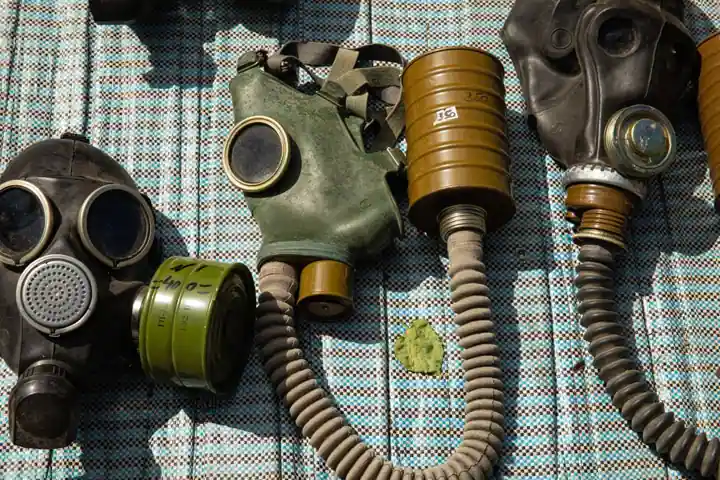
An elastomeric half-mask respirator has an OSHA assigned protection factor of 10, compared with 50 for a reusable elastomeric full-facepiece respirator [S1][S4].
Both are negative-pressure air-purifying respirators that require fit testing, and neither supplies oxygen; selection must also match the contaminant, concentration, filter, and work environment [S1][S4].
Protection Factor Decision Matrix
OSHA’s assigned protection factors quantify facepiece performance in a compliant respiratory-protection program, but they apply only when the respirator is properly selected, maintained, fit tested, and used under the complete 29 CFR 1910.134 program [S1].
The principal comparison is straightforward: a reusable elastomeric half mask provides APF 10, covers the nose and mouth, and uses replaceable filters, cartridges, or canisters; a reusable elastomeric full-facepiece provides APF 50, covers the entire face, and provides respiratory and eye protection [S2][S4].
For practical screening, the half mask offers lower equipment burden and a lower face-seal burden but no eye protection, while the full facepiece provides five times the assigned protection factor and broader facial coverage at the cost of greater bulk, weight, and possible fogging [S1][S4].
Neither option is suitable for oxygen-deficient atmospheres because neither supplies oxygen [S4]. Their use is also constrained by the selected filter or cartridge, the contaminant concentration, and the workplace respiratory-protection program [S1][S4].
Where Half-Mask Protection Is Adequate
Choose a reusable elastomeric half mask when the exposure assessment supports APF 10, eye protection is not required, and the wearer can maintain a tight seal while communicating, looking downward, and performing the task [S2][S4].
An elastomeric half-mask respirator uses a reusable synthetic or natural rubber facepiece covering the nose and mouth, with replaceable particulate filters or chemical cartridges [S2]. NIOSH states that elastomeric respirators can protect against gases, vapors, or particles when equipped with the appropriate filter, cartridge, or canister [S2].
Half-mask models have a lower assigned protection factor than full-face models, but they remain reusable and can be cleaned and disinfected [S2][S4]. A published evaluation found that elastomeric half-mask respirators had the same OSHA APF as filtering facepieces, APF 10, and offered at least the same protection as an N95 filtering facepiece (2021) [S3].
The limitations are operational rather than cosmetic. Half masks can interfere with communication and downward gaze, require cleaning and disinfection, and need secure storage between shifts [S2]. They also do not provide adequate eye protection, and contaminated air can leak inside if the facepiece is not correctly sealed or maintained [S4].
When a Full-Face Respirator Is Required

Use an elastomeric full-facepiece respirator when the exposure assessment requires APF 50, the contaminant can irritate or damage the eyes, or facial coverage is necessary to control exposure beyond the nose and mouth [S1][S4].
The reusable elastomeric full-facepiece combines a facepiece covering the entire face with replaceable respiratory protection, providing both inhalation protection and eye protection [S2][S4]. Its OSHA APF is 50, compared with APF 10 for the reusable elastomeric half mask [S4].
Full-face respirators still do not supply oxygen and must not be used in low-oxygen environments without an appropriate supplied-air or self-contained arrangement [S4]. Fit testing remains mandatory, and some contaminated air can still leak into the facepiece where the seal is compromised [S4].
Operational drawbacks include possible fogging and difficult communication [S4]. A full-facepiece can therefore be unsuitable for tasks requiring clear vision, unrestricted head movement, or dependable verbal communication unless the selected configuration addresses those issues.
Contaminant, Filter, and Exhalation-Valve Controls
An APF does not make a respirator universal: the facepiece, filter class, cartridge, canister, and target contaminant must match the hazard and concentration [S1][S2].
Elastomeric respirators can use the same nine particulate filter classes as filtering facepiece respirators, while additional cartridges or canisters address gases and vapors [S2]. EHMRs with an exhalation valve or exhalation-valve filter can be configured for gases, vapors, or particles with the proper filter or cartridge; Elastomeric respirators protect against gases, vapors, and particles when equipped with the appropriate filters, cartridges, or canisters.
Exhalation valves can improve comfort by reducing breathing effort, moisture, and carbon dioxide inside the facepiece [S2]. A valve can also allow unfiltered exhaled air to escape, so it requires assessment in sterile or source-control settings [S2][S3].
Those fit-test limits differ from the workplace APF, which is selected through the broader respiratory-protection program [S1].
Programs, Inspection, and Reuse

Neither an APF of 10 nor an APF of 50 creates a stand-alone respirator; OSHA states that APFs apply only within a program that meets 29 CFR 1910.134, including selection, medical evaluation, fit testing, training, maintenance, inspection, cleaning, and evaluation [S1].
Elastomeric half masks are reusable devices with exchangeable filters or cartridges, and their rubber facepieces are intended for repeated cleaning, disinfection, storage, and reuse [S2]. NIOSH identifies cleaning and disinfecting, storage between shifts, communication, and downward viewing as practical challenges for half-mask use [S2].
NIOSH requires fit testing for elastomeric respirators because they must form a tight seal against the wearer’s face [S2]. Employers should follow the facepiece manufacturer’s cleaning, sanitizing, storage, and inspection instructions; OSHA supplies general cleaning guidance where manufacturer instructions are unavailable [S2].
For criteria-based selection, use a half mask for routine particulate or chemical tasks where APF 10 is adequate, eye exposure is controlled separately, and wearer performance is acceptable. Use a full-facepiece where APF 50 is required or eye protection is integral to the risk control, while accounting for fogging, communication, fit, and oxygen-deficient conditions [S1][S4].
Further selection detail should be cross-checked against the respirator and safety glasses decision guides, with the final choice tied to a documented exposure assessment rather than APF alone.