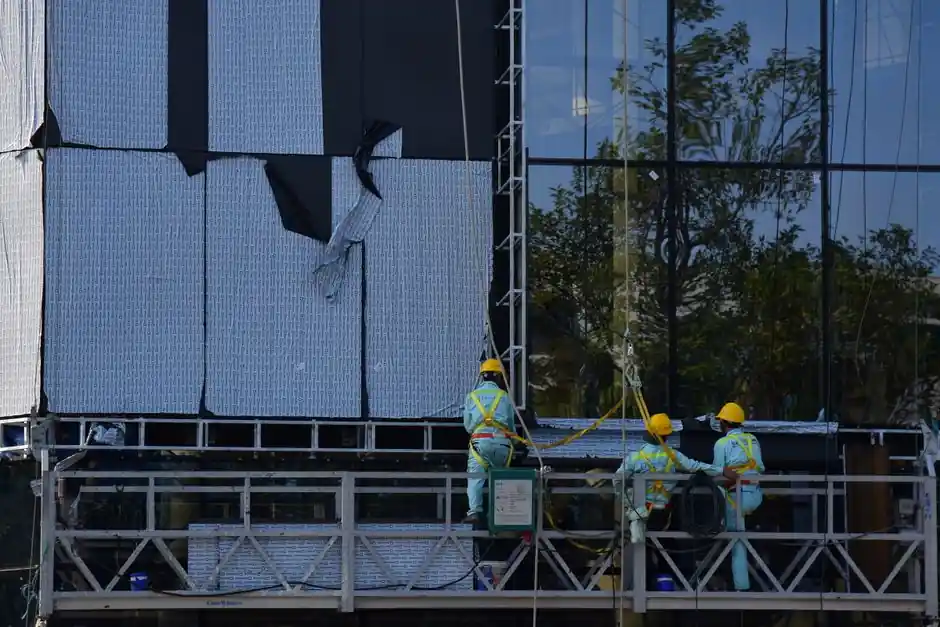
Full-body harnesses distribute fall-arrest loads across the shoulders, upper thighs, chest, and pelvis, while positioning belts concentrate support around the waist [S1][S2].
The decision depends on the task: a full-body harness is the default for arrest, restraint, and rescue exposure, whereas a positioning belt is intended only for positioning with continuous fall restraint.
Fall Arrest Decision: Harness, Not Positioning Belt
A full-body harness uses shoulder, chest, back, hip, and thigh straps to distribute arrest forces and help keep the worker upright after impact [S2].
A positioning belt wraps around the waist and provides support at a work position, but it does not provide the upper- and lower-body support needed for arrest. FallTech states that body belts concentrate force around the waist, while full-body harnesses distribute force across the body [S2]. Full-body harnesses help keep workers upright after a fall, which can support rescue and reduce suspension-related risks [S2].
For the wider PPE system, a harness is only one component; compatible connectors, anchorage, and rescue provisions must be specified with it. Where respiratory or facial exposure is also credible, evaluate a dust mask or face shield separately rather than treating those controls as substitutes for fall arrest.
Decision Matrix by Task and Risk
Compare the options on fall-arrest capability, load distribution, suspension support, and permissible function.
Do not select by product name alone. Confirm the attachment rating, intended application, worker mass range, strap adjustability, and certification marking.
Harness Anatomy That Controls Performance
Effective load distribution depends on the webbing path, not merely the presence of a chest strap. Shoulder straps spread arrest loads, leg straps stabilize the lower body, a chest strap keeps the shoulder straps together, back web supports the dorsal ring, and a sub-pelvic strap helps prevent the wearer from slipping through the harness [S3]. Harness webbing may be made from polyester or nylon [S3].
Connection-point selection changes function. The back web holds the dorsal D-ring and ties the harness system together [S3]. For repeated adjustment, five-point adjustment and the difference between five-point and four-point configurations are detailed in 5-Point vs 4-Point Fall Arrest Harness Adjustment.
Comfort is a performance control, not a cosmetic preference.
Positioning System Requirements
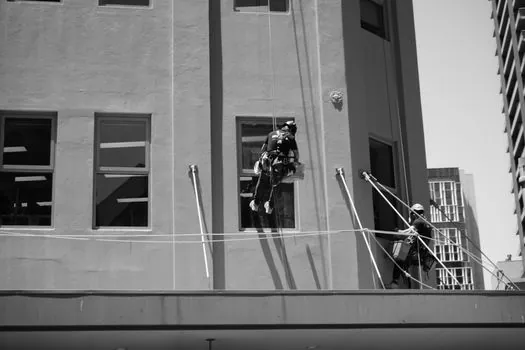
Positioning requires prevention of a free fall rather than arrest after one occurs. The worker remains connected to an anchor through a positioning restraint, with the belt used only where the equipment rating and manufacturer permit it. A body belt concentrates the load at the waist and is unsuitable when arrest may occur [S2].
Any positioning setup must remain consistent with the rated anchorage, connector, and restriction geometry. A belt should not be used to bridge a gap between a worker and an unprotected edge, and it must not be treated as a backup for a fall-arrest lanyard. If the task can expose the worker to a fall over an edge, use a full-body harness with an arrest-rated dorsal connection and the required restraint arrangement [S1][S3].
Clear the working envelope before positioning. Uncontrolled swing can create a secondary fall hazard, so the anchor position must limit movement without generating shock loading. Side D-rings are provided on positioning-capable harnesses for hands-free work near a vertical surface, but their presence does not make a waist belt suitable for arrest [S1][S3].
Fit, Inspection, and Removal Criteria

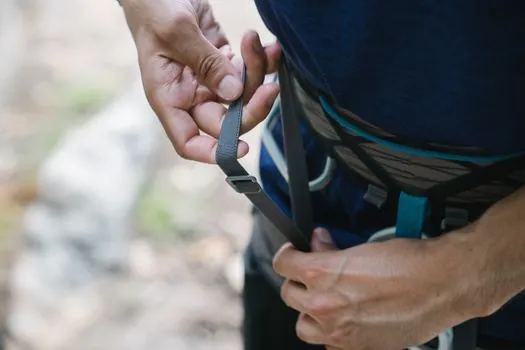
A harness must fit the worker because standardized strength cannot compensate for poorly adjusted webbing. Adjust the shoulder and leg straps, secure buckles, and position the dorsal D-ring between the shoulder blades.
Inspect before each use and remove equipment from service when damage or deployment is observed. Visual impact indicators may deploy during arrest loading, including through deforming stitches or color-changing elements; a deployed indicator requires removal from service [S3].
After a fall, do not return the harness to service on the basis of appearance alone. Record the event, identify every item exposed to impact, obtain the applicable manufacturer disposition, and replace or quarantine components as directed. This also prevents impact indicators or damaged webbing from being overlooked during later inspections [S3][S5].
Suspension and Rescue Planning
A full-body harness can still create suspension trauma when a worker remains hanging, so rescue must begin without delay. Historical suspension data cited for body belts showed survival times of about 2.5 minutes for an average-sized woman and 32 seconds for an average-sized man, while a harness-supported worker could survive approximately 20–30 minutes before suspension effects became critical [S2][S5].
These figures describe the urgency of rescue, not a guaranteed survival window. Every site needs a documented rescue method, trained responders, suitable retrieval equipment, and a means of contacting medical assistance [S5]. Trauma-relief straps can help maintain circulation after a fall, but they do not replace prompt rescue or suitable protective clothing selected for the task and environment.
For lower-height work where a controlled descent is planned, select a descent harness with the required front, rear, or shoulder attachment points and connect it to the specified descent device. A general work-positioning belt should not be upgraded into a descent system by adding a lanyard [S1][S3].
Standards, Procurement, and System Fit
For United States applications, OSHA 1910.140 governs personal fall-protection-system requirements, and OSHA 1910.136 addresses fall-protection criteria [S3]. Full-body harnesses are identified for fall protection, while body belts are not accepted for arrest [S2][S3]. The product standard cited for the full-body harness category is ANSI/ASSP Z359.11-2021 [S3].
Verify the certification label against the intended application and applicable jurisdiction rather than relying on a generic “safety harness” description. Procurement records should identify the harness model, worker mass range, attachment points, webbing and hardware materials, adjustment range, standard marking, manufacturer instructions, and inspection interval. One product reference lists full-body harness capacities of 130–310 pounds [S3].
Price the complete system, not the wearable alone. Include the rated anchorage, connector, lanyard or SRL, the applicable fall-arrest harness, rescue provision, training, and replacement stock. Quick-connect buckles may improve donning and adjustment, but their benefits and limitations should be checked against the selected harness design and work sequence.
Use a full-body harness whenever arrest, restraint, rescue, climbing, or possible suspension is involved. Use a positioning belt only when the task is supported positioning and no arrest exposure exists. Confirm fit, ratings, standards, inspection status, anchorage, and rescue readiness before each deployment.