
An engineering prototype of a handheld remote methane leak detector (RMLD) permitted remote detection of natural gas leaks from pipelines and service connections at distances up to 30 meters.
The RMLD prototype used TDLAS-based line-of-sight absorption of a 1.65-micron diode laser to measure methane concentration between the operator and a target.
How handheld laser methane detection works
Remote Methane Leak Detector development used tunable diode laser absorption spectroscopy at 1.65 micrometres to measure methane along a line of sight between the operator and a survey target [S1].
The RMLD used tunable diode laser absorption spectroscopy at 1.65 microns, with methane's unique absorption lines used to measure concentration along the line of sight.
The project aimed to demonstrate the prototype RMLD's ability to function on a mobile platform.
Range, coverage and survey speed
The earlier PSI engineering prototype supported remote natural gas leak detection from pipelines and service connections at distances up to 30 m [S1].
These figures describe different operating configurations rather than one universal instrument specification. Buyers must verify whether quoted range applies to a handheld, vehicle-mounted or turret-based configuration, and must obtain detection thresholds under defined release, distance and weather conditions before assigning survey coverage.
Laser versus contact and near-field survey methods
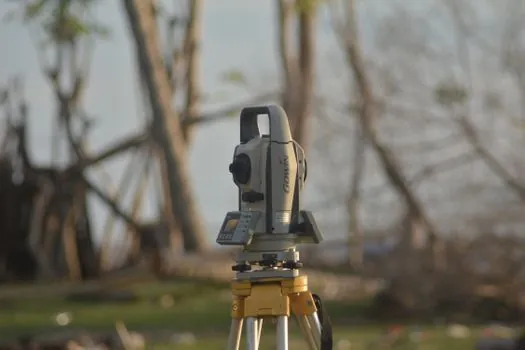
Handheld laser systems differ from flame ionization detectors, combustible gas indicators, soap-bubble testing and optical gas imaging in range, operating geometry and measurement output [S1][S4][S5].
The RMLD measured methane concentration anywhere between the operator and a target using line-of-sight absorption.
Most operators perform site inspections and verify leak repair using optical gas imaging cameras or Method 21 techniques.
Application and controlled-release performance
EPA has included a pathway for using advanced methane-detection technologies and recognizes advanced methane-detection technologies.
These frequencies apply to the regulatory screening framework described by METEC, not automatically to every handheld laser model. Detection threshold, release rate and survey coverage still require model-specific validation.
Selection criteria for pipeline leak survey equipment
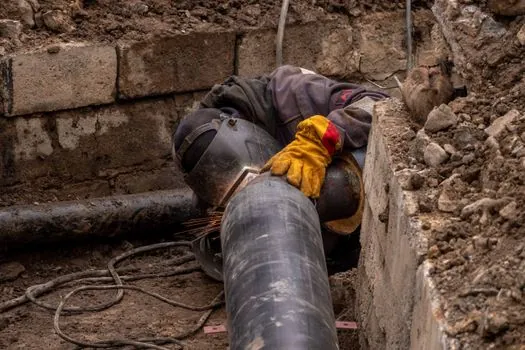
Detection threshold must be evaluated against the smallest leak that the survey program must find, rather than against a manufacturer's maximum range alone.
Range should be tied to practical line-of-sight geometry. A 30 m capability can cover a wider corridor or allow a surveyor to remain farther from a suspected plume, but vegetation, terrain, buildings and other obstructions can limit the optical path [S1].
Measurement output also matters. A concentration-times-path-length product supports remote methane indication, but it does not by itself establish the leak mass flow rate [S1]. Operators needing emission quantification must specify the required output, release-rate correlation and calibration procedure.
Additional procurement criteria include survey speed, operator training, data logging, waypoint mapping, instrument classification for the intended area, battery endurance, ambient-temperature performance and service support. These criteria must be verified for each model rather than inferred from laser technology.
Where laser surveys fit, and where they do not
Handheld laser methane detection is well suited to transmission-pipeline corridors, service connections, well sites, centralized production facilities and compressor stations where remote screening can cover exposed equipment and open right-of-way [S1][S3].
It is less suitable as the sole method where dense vegetation, heavy cover, buildings or operating obstructions block the optical path, or where a survey specification requires direct leak-rate quantification. Mobile RMLD development still required further work on operating procedures in the presence of physical obstructions [S1].
Optical gas imaging is more practical for component-level visual confirmation, soap-bubble testing can validate an accessible fitting, and AVO inspection remains useful for visible damage, unusual sounds or other physical indicators [S5].
A defensible survey program can therefore use a laser detector for route screening, follow with close-range confirmation, and retain combustion or personal gas monitoring where the task requires immediate hazard assessment. The laser detector should not be treated as a substitute for all safety instruments.
Operating constraints and procurement verification
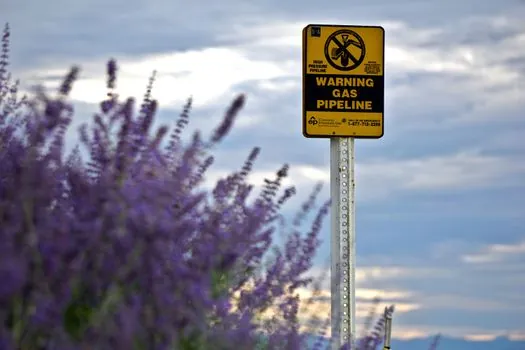
The NETL mobile prototype demonstrated feasibility for transmission-pipeline surveys and the sensitivity needed to locate municipal gas distribution leaks, but permanent vehicle packaging and obstruction-handling procedures still required additional development [S1].
Laser detection depends on a clear methane path. Vegetation, poor alignment, weather and site configuration can change the effective detection distance, so the published 30 m or 35 to 50 ft values should not be treated as guaranteed performance under every condition [S1].
Eye safety is central to product selection. The NETL research describes a low-power, eye-safe telecommunications-grade diode laser operating at 1.65 micrometres [S1]. Procurement documents should still request the applicable laser safety classification, exposure controls and operating instructions for the exact instrument.
Before acceptance testing, operators should establish test points across the required distance, leak rates and survey speeds; repeat tests around obstructions; confirm logging and navigation; and compare detections with an established reference method. The METEC program demonstrates that controlled releases, multiple surveyors and repeated testing are necessary to characterize field performance [S3].