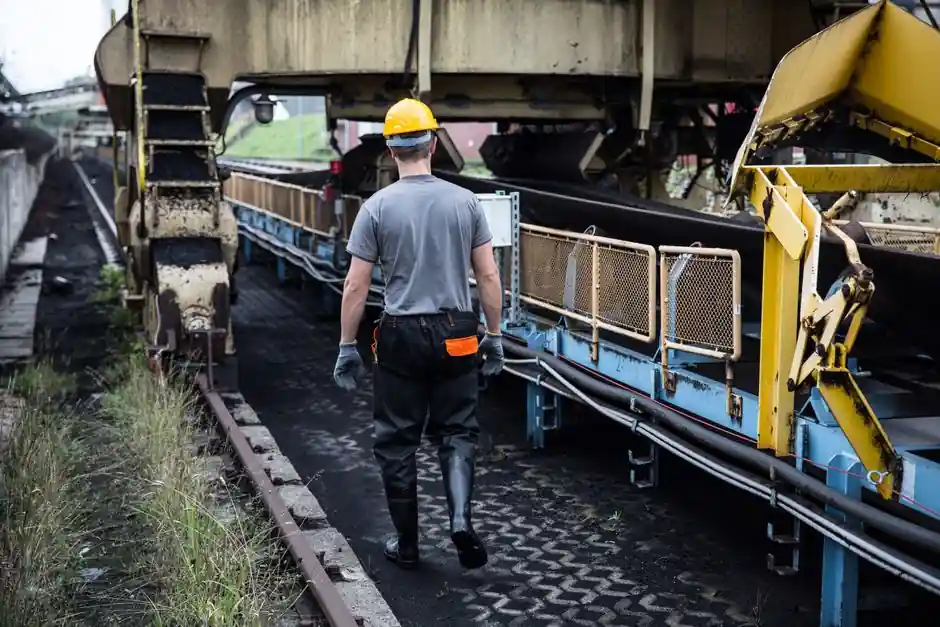
Specifying a hopper scale is not a catalog exercise. The unit has to survive the hopper's own dead load, the impact loads of refill, the dust and temperature of the process, and, where the reading drives a commercial invoice, a national legal-for-trade regime such as the U.S. NTEP program administered by NCWM under NIST Handbook 44 [S5]. The vendor landscape splits cleanly between batch dosing machines like the Bühler MSDM dosing hopper, which carries an installed base of more than 75,000 units and is shipped at roughly 3,000 new scales per year [S1], and weigh-only hoppers or silos where the load-cell module, mount, and indicator are specified separately.
Below is the spec-first map I would walk any process or maintenance engineer through before they call a vendor. It pulls from the May 2026 Bühler MSDM product sheet, the July 2026 MLC212 hopper-scale load cell datasheet, the July 2026 TSH S-type load cell listing, the 2026 FUTEK tank/hopper application note, and the 2026 METTLER TOLEDO tank-silo-hopper terminal page [S1][S3][S4][S6][S7].
Define the duty before the part number: batch dosing vs. weigh-only inventory
A dosing hopper such as the Bühler MSDM is a fully automatic batch scale that combines a machine controller, high-precision load cells, and dosing algorithms to weigh and discharge powdery or granular product on a recipe basis; its published track record is more than 75,000 installations with about 3,000 new units shipped annually [S1]. A weigh-only hopper, silo, or bin terminal is a different animal: the scale indicator only displays the weight from the load cells on the structure, with optional 4-20 mA, digital I/O, or fieldbus output to the plant DCS, and no inherent dosing sequence is required [S7]. FUTEK's application note makes the engineering point bluntly: weighing the tank, hopper, or silo is "counting molecules", and the mass reading is unaffected by density, temperature, viscosity, or material aeration, unlike level or volume sensors [S6].
If your application is recipe-driven batching of flour, grain, feed additives, or industrial powders, the dosing hopper is the right architecture. If you only need live mass for inventory, loss-in-weight control, or custody transfer of the entire vessel, a weigh-only electronic scale architecture built from discrete load cells and a tank/hopper/silo/bin terminal is the lower-cost path.
Load cell selection: capacity, accuracy class, and material
The load cell is where most hopper scales win or lose. Two real-world parts illustrate the trade. The MLC212 hopper-scales load cell, documented in July 2026, is rated 2 to 5 tonnes with OIML C3 accuracy, 150% or 200% safe overload, alloy steel, stainless steel, or alloy aluminum body, 2.0 ± 0.005 mV/V output, 350 ± 10 Ω input and 352 ± 5 Ω output resistance, IP66 and IP68 sealing, ±1%FS zero balance, 0.05%FS combined error, 0.05%FS non-linearity and hysteresis, 0.03%FS repeatability, 0.03%FS/10 min creep, 9 to 12 VDC excitation, and a use temperature of -20 to +55 °C with a -10 to +40 °C compensated window [S4]. The TSH S-type load cell, also from July 2026, covers 200 to 5,000 kg in alloy steel, accepts both tension and compression with symmetric output, and is explicitly catalogued for electromechanical scales, crane scales, hopper scale installations, and process scales [S3].
The selection logic I would write on a Pugh matrix for a typical 5-tonne flour or grain dosing hopper: MLC212-class S-type or compression cells in stainless steel, 3 or 4 cells per vessel, with C3 accuracy, IP66 minimum and IP68 if the area is washdown. For higher-temperature or outdoor silos, the same accuracy class with a wider compensated window, and compression-only mounting (discussed under mounts) to avoid thermal side loads.
Mounts, support, and the legal-for-trade trap
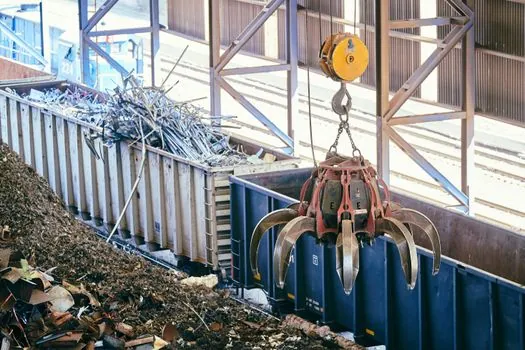
The single most common mistake I see is treating NTEP load cells plus an NTEP indicator as an NTEP scale. It is not. The whole weighing system, including the frame and the mounts, must be evaluated and certified; this is the explicit point the NTEP program publishes under NCWM Publication 14, with the requirements anchored in NIST Handbook 44 [S5].
Mechanically, three mount families dominate: S-type tension/compression cells on a weigh frame for small to mid-size hoppers [S3]; double-ended shear-beam bridge cells on self-resetting, side-force-resistant modules for tank and silo legs (the QSF50-75k lb family documented for truck and silo duty is a representative geometry) [S3]; and compression-only canister or rocker-column cells under the hopper legs for large vessels where vertical load only is the design case. The MLC212 family supports all three, with 2-5 t capacity and IP66/68 sealing for the harshest locations [S4]. For very large vessels the MLC403 compression load cell in 25 to 90 t sizes enters the comparison [S4].
Indicator, controller, and integration choices
The indicator or terminal is where mass becomes a process variable. Modern tank/silo/hopper/bin terminals are programmable for material-specific tasks, can be located remotely from the vessel for ergonomic reasons, and support connection to a control system, typically via analog 4-20 mA, Ethernet/IP, PROFINET, Modbus TCP, or PROFIBUS depending on the vendor [S7]. For a dosing hopper the indicator is replaced or supplemented by the machine controller that runs the batch sequence; the MSDM integrates that controller with the load cells and the dosing algorithm, with intuitive operator UI and minimum moving parts to keep maintenance inside a general technician's skill set [S1].
For inventory-only duties the platform scale or weigh-module indicator approach is enough; for recipe-driven dosing you are buying a dosing machine, not a scale, and you should evaluate the controller, recipe memory, audit trail, and fieldbus support as primary specs.
Comparison matrix: four real options against four decision criteria
To make this concrete I score four common architectures on capacity fit, accuracy, environment, and commercial-grade certification. The four are: (1) MLC212 S-type or compression cell set with a generic indicator, (2) TSH S-type cell set on a small dosing frame, (3) Bühler MSDM dosing hopper with built-in controller, and (4) a weigh-only truck scale-class shear-beam module retrofit on a silo. [S3]
Capacity fit: MLC212 covers 2-5 t, TSH covers 200-5,000 kg, MSDM is sized for powder and granulate batch dosing typically in the hundreds-of-kg range, and the shear-beam module scales from 50-75k lb up [S1][S3][S4]. Accuracy: MLC212 is OIML C3 with 0.05%FS combined error; TSH S-type shares the same load-cell-class envelope; the MSDM inherits the controller's repeatability and is sold on dosing accuracy and repeatability rather than a single FS number [S1][S3][S4]. Environment: MLC212 is IP66/68, -20 to +55 °C use, -10 to +40 °C compensated; TSH is alloy steel and suited to mechanical and electrical scale environments; MSDM has hygienic cleaning openings and minimum moving parts for food and feed [S1][S4]. Legal-for-trade: none of the four is NTEP by default; the system integrator has to certify the complete scale against NIST Handbook 44 via NCWM Publication 14 [S5].
The shortlist logic: pick the MLC212 or TSH-based architecture for weigh-only inventory up to 5 t; pick the MSDM when recipe-driven dosing and a 75,000-unit field reference outweigh the premium; pick the shear-beam module above 25 t or on outdoor silos; and only call the system NTEP legal-for-trade after the complete frame and indicator have been evaluated, not just the cells.
Who should not pick the mainstream dosing hopper
A Bühler-class dosing hopper is the wrong choice for vessels above roughly 5 t of gross weight where the duty is inventory, not batch dispatch. It is also the wrong choice where the indicator is already integrated into the plant DCS, because the controller is part of the value proposition. For high-temperature service above the -10 to +40 °C compensated range of a typical S-type cell, the indicator output and the cell both need to be re-evaluated, and the MLC403 compression family or a temperature-extended compression cell becomes a more defensible answer [S4].
For very low capacity, sub-200 kg dosing of expensive additives, a bench scale or small crane scale-class load cell with a higher-resolution indicator can be more accurate per dollar than retrofitting a hopper that does not need a 5 t cell.
Standards, certifications, and the next spec to lock down

In the United States the controlling reference is NIST Handbook 44, with NTEP certification issued by NCWM and the test procedures published in NCWM Publication 14 [S5]. Internationally, OIML R76 governs non-automatic weighing instruments and defines the C3 accuracy class referenced on the MLC212 datasheet [S4]. Hazardous-area hoppers require an ATEX or IECEx-certified load cell, indicator, and junction box, and the certification must cover the assembly, not just the individual cell; the MLC212 datasheet does not list an Ex rating, so a general-purpose cell set must be re-selected for Zone 1 or Zone 21 duties [S4].
Lock the gross weight of the hopper plus product, the desired legal-for-trade division, the maximum impact load during refill, the IP rating of the washdown or dust zone, the fieldbus needed by the plant DCS, and the calibration and re-verification cadence. Cross-check the next decision node against a flow meter selection guide if the hopper is feeding or receiving a metered line, or a magnetic level gauge brief if you also need a high-level alarm independent of the mass reading.