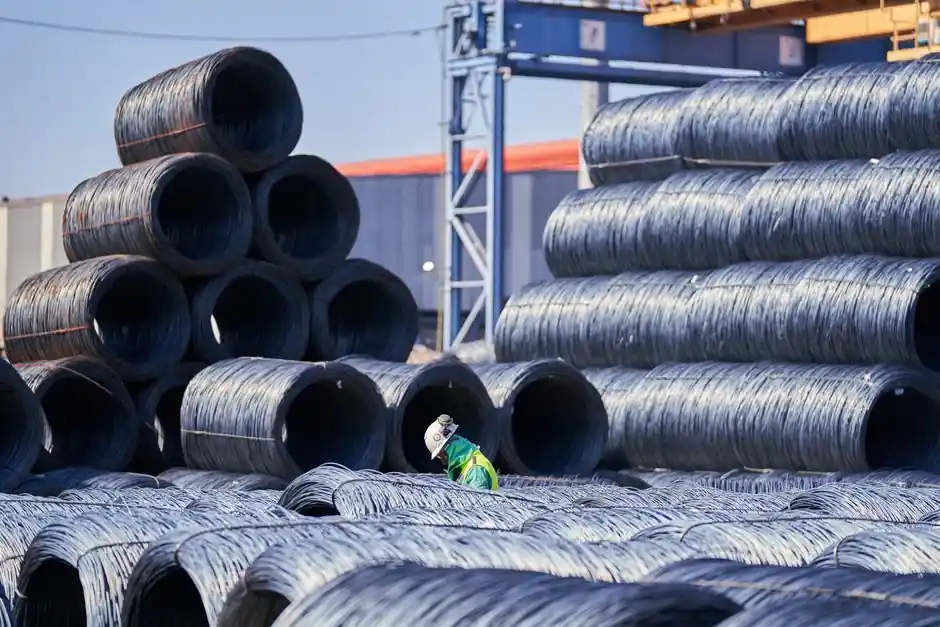
U.S. hot-rolled coil rose from about $800 to roughly $1,200 per short ton in the year to August 2026, exposing machine builders without fixed-price material terms to a material-cost increase of about 50% [S5].
Exposure depends on steel content, procurement timing, contract structure, and inventory depth, with spot buyers carrying the greatest price volatility [S2].
Where Machine Builders Carry the Most HRC Exposure
A builder that buys steel after accepting a customer price has already transferred procurement risk to its own margin and delivery schedule.
Risk also rises when a machine contains a large steel mass relative to its selling price. A builder may experience a manageable percentage rise in material cost but a much larger percentage reduction in gross profit if equipment sales are thin or highly competitive. The hot-chamber machine, hot-box core machine, and aluminum die-casting machine categories illustrate why material mix matters: steel-heavy welded structures respond differently from aluminum-intensive machine frames.
Contract Type Changes the Exposure
A fixed-price order transferred to a builder after HRC has been purchased creates a mismatch between the customer price and the steel invoice. If the mill adds $400 per ton, the loss depends on the machine's steel mass, yield, purchased quantity, and original gross margin [S5].
Four procurement structures behave differently:
Spot purchasing offers maximum flexibility but maximum volatility [S2]. A formal price-adjustment mechanism is preferable when HRC represents a material share of the machine cost and the delivery period extends beyond the validity of the original quotation.
The Price-Dependent EOQ with Distinct Holding Costs method provides a structured way to compare purchase volume, carrying cost, and reorder exposure when material prices change.
Cost Drivers Behind an HRC Price Movement

Hot-rolled coil is rolled above roughly 1,700°F and serves as the starting material for much flat steel, including sheet and plate used in industrial fabrications [S5]. Its cost is driven by steelmaking inputs, mill operating rates, order lead times, inventory, import availability, and the spread between domestic and imported material.
Tariffs can create a price umbrella by making imported coil more expensive and allowing domestic mills to price below the duty-loaded import cost [S5]. The U.S. Section 232 steel tariff increased to 50% on June 4, 2025, while domestic HRC pricing was described as reaching a four-year high by August 2026 [S5].
External drivers also include energy costs, scrap pricing, weather, geopolitical conflict, trade policy, and global supply-chain instability [S2].
Machine builders should not treat an HRC increase as a simple 50% increase in steel cost. The percentage applies to the benchmark material price, not necessarily the finished machine. Yield, fabrication labor, welding consumables, coating, hardware, freight, overhead, and contractual margin determine how much reaches the machine price.
Specifying for Cost and Lifecycle Performance
The quality of hot-rolled coils influences the integrity, durability, and performance of end products.
That quality premium can be rational when the product depends on dimensional stability, wear resistance, corrosion resistance, or deformation resistance. It is less defensible where the component is noncritical, replaceable, and isolated from demanding service conditions.
Engineers can reduce material exposure through right-sizing, nesting, common gauge and grade selection, and design changes that reduce weldment mass. The core machine category is relevant to this decision because sand-coring equipment contains both repetitive welded frames and separately selected process materials, making a blanket cut in steel grade a poor response to HRC volatility.
Specification decisions should preserve mechanical requirements. Cost reduction should remove noncritical material, improve yield, or standardize procurement rather than silently reducing thickness, grade, weldability, or inspection coverage.
Total Cost Rises Beyond the Steel Invoice
The lowest HRC price does not produce the lowest total machine cost.
For the builders, total-cost exposure includes steel purchase price, freight, receiving and inspection, cutting and welding yield, coating preparation, installation labor, spare parts, maintenance, and machine downtime. A 50% HRC benchmark increase therefore has different effects from a 50% increase in the complete machine budget.
Electric arc furnace steelmaking adds another cost layer because a 150-ton batch is described as requiring about 75,000 kWh, or approximately 500 kWh per ton [S5]. Electricity, scrap, and electrode costs can therefore reinforce or offset mill pricing, depending on the production route and energy environment.
Buyers with firm order books should model at least three material cases: the quoted HRC price, a higher cost for constrained spot availability, and a lower price supported by softer demand or easier imports. Each case should carry procurement lead time and fabrication yield, not just dollars per ton.
Inventory, Forecasting, and Supplier Control
Longer lead times, mill utilization, and inventory levels remain major price-risk variables, and their effects can appear gradually over weeks or months even when headline prices look stable [S2]. Buyers should compare the carrying cost of extra steel with the probability and cost of a delayed mill slot or missed production window.
Forecasts should be reconciled against actual HRC consumption, not made only from sales revenue. Each machine order should generate a bill of materials with steel mass, grade, thickness, coating status, estimated nesting yield, and planned purchase release. That data allows procurement to distinguish a normal price move from a shortage and align material arrival with fabrication capacity.
Supplier control should include mill and distributor qualification, secondary sources, mill lead-time confirmation, and a defined mechanism for quality claims. Spot exposure becomes more manageable when an approved source list can shift between mills without redesign, provided that mechanical properties, thickness tolerances, surface condition, and welding requirements remain equivalent.
Two practical indicators are worth tracking: the spread between spot HRC and contracted mill pricing, and the lead time needed to obtain the specified grade and gauge. The wider the spread and the longer the lead time, the more valuable forward commitments become. The How Steel Buyers Time Purchases Around Price Announcements workflow adds a purchasing sequence to that exposure assessment.
Machine builders can control HRC risk by separating material indexation from machine price, reducing exposed steel mass, preserving specification quality, and buying inventory against confirmed production demand rather than an unverified price forecast.