
A dissolved oxygen (DO) meter is selected on five independent axes: sensor technology, body format (handheld/portable/benchtop/inline), output protocol, maintenance interval, and accuracy at the working concentration range [S1][S3][S7].
Most industrial buyers narrow the shortlist within 10 minutes by ruling out one of the three sensor families, then checking the datasheet against the actual ppm or %-saturation window the process runs in. The wrong sensor in the right housing still gives bad data.
Three Sensor Families, Three Operating Profiles
Optical, polarographic, and galvanic DO sensors cover roughly 90% of shipped units, and each one trades a different pair of parameters [S1][S7]. Optical sensors excite a luminescent dye and read the lifetime quenching caused by O2; they need no warmup, hold calibration for months, and tolerate long unattended deployments, but they cost more up front and draw moderate power (e.g. 8-36 VDC on the In-Situ RDO PRO-X) [S5].
Polarographic (Clark-type) membrane sensors apply a fixed polarization voltage and measure the reduction current; they need about a 10-minute warmup before readings settle, but they respond faster than optical sensors and cost less [S3]. Galvanic membrane sensors generate their own driving voltage from the electrode couple, so they read instantly with no warmup, at the price of a shorter membrane life than polarographic types [S3][S7]. For a process overview of how oxygen enters and leaves water, the dissolved oxygen meter encyclopedia page lays out the chemistry behind the three families.
Comparison: Optical vs Polarographic vs Galvanic
Use this criteria table to shortlist in under five minutes. All three families typically express results in mg/L (ppm), %-saturation, and sometimes %-volume, with built-in compensation for temperature, salinity, and barometric pressure on any modern instrument [S2][S5].
Optical wins on maintenance interval (cap replacement roughly once per year vs bi-monthly membrane swaps on electrochemical types) and on low-end accuracy, and it is stir-independent, so it suits field sondes, aquaculture, and municipal aeration basins [S3][S5]. Polarographic wins on response time and lower acquisition cost, so it fits lab BOD work and rapid grab sampling. Galvanic wins on zero-warmup portable use, so it is the default for technicians walking a plant with a handheld probe. The general-purpose oxygen detector reference page covers how the same oxygen-chemistry principles apply to gas-phase monitors.
Five Selection Criteria for a Handheld or Portable DO Meter
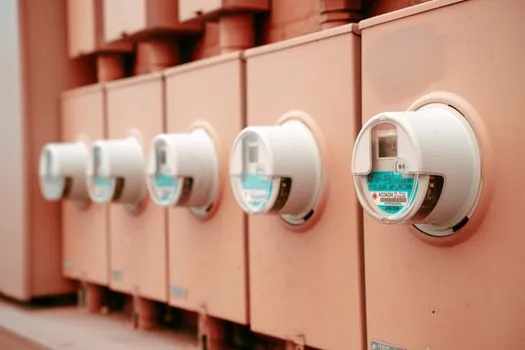
Five factors decide a portable DO meter shortlist: sensor technology, additional parameters, durability/IP rating, cable and connector type, and data handling [S3][S6]. On a municipal wastewater walk-through, the same five factors apply, but IP67/IP68, replaceable cable, and USB or Bluetooth export jump to the top of the list.
Multi-parameter capability matters more than raw DO accuracy in mixed-use plants. A handheld that also reads pH, conductivity, ORP, turbidity, and temperature lets one technician cover the aeration basin, the clarifier, and the effluent with one calibrated body, which is the model YSI's Pro-series handhelds follow (Pro20, Pro1020, Pro2030, ProSolo) [S3]. For cross-reference on the conductivity half of that stack, the conductivity meter encyclopedia entry covers probe constants, cell factors, and temperature compensation in detail.
When NOT to Pick the Mainstream Optical Sensor
Skip optical DO in three real cases: sub-ppm trace oxygen in laboratory BOD blanks, where polarographic still sets the noise floor; ultra-low-power remote deployments where the optical dye excitation current is too high for a small battery or solar harvester; and grab-sample work where a 10-minute warmup is acceptable and a cheaper membrane probe does the job [S3][S5].
Skip polarographic where there is no time or staff to swap membranes on the published interval, where the probe will sit untouched in a river for months, or where hydrogen sulfide, chlorine, or other reducing gases poison the cathode faster than the maintenance schedule. Skip galvanic when the deployment is long enough that membrane replacement cadence (typically shorter than polarographic) becomes the dominant operating cost [S3][S7].
Output Protocols, Power, and Integration
Inline and process DO probes need an output the rest of the plant can read. Optical sondes commonly expose Modbus RS485, 4-20 mA, and SDI-12 on the same head, which is what the RDO PRO-X ships with, allowing direct tie-in to a SCADA tag, a data logger, or a wireless telemetry unit without an external transmitter [S5]. Handhelds usually log to internal memory and export CSV via USB or Bluetooth, which is enough for compliance reporting.
For a buyer who already standardises on HART or Foundation Fieldbus, verify the specific probe model carries that protocol before assuming it does; sensor families are independent of the bus. Power budget is the second integration trap: optical sensors typically want 8-36 VDC at moderate draw, while a handheld optical probe running on AA cells may only last a few long shifts before the duty cycle collapses [S5].
Calibration, Maintenance, and Total Cost
Total cost of ownership over a 3-5 year window is dominated by membrane or cap replacement, calibration solution, and technician time, not by the purchase price.
Plan the calibration routine before picking the model: a probe that needs a 10-minute warmup before air-cal is fine for a lab bench, but a process instrument on a swing shift should auto-hold last calibration and expose a one-point air-cal command. For plants that already run an electrical test regime on portable instruments, the clamp meter encyclopedia page is a useful cross-reference on handheld instrument discipline and safety category ratings.
Verdict: Match Sensor to Duty, Then Verify the Datasheet

Pick optical for low-maintenance, long-interval field or municipal aeration duty; pick polarographic for fast-response, cost-sensitive lab and grab sampling; pick galvanic for zero-warmup portable spot checks. Then check IP rating, membrane or cap interval, output protocol, warmup time, and the concentration range the datasheet actually certifies, not the headline range. Confirm the probe carries the certification the site requires (ATEX/IECEx zone rating for hazardous areas, or NEMA 4X/IP67 for washdown) and that the calibration routine fits the shift pattern. [S5]
Trackable signals to watch over the next buying cycle: vendor disclosures of cap life in months at typical field temperature, expansion of multi-parameter handheld lines (pH/DO/conductivity/turbidity in one body), and any new low-power optical probe aimed at solar-powered remote deployments [S3][S5]. For broader 2026 spec-driven procurement context across industrial product lines, the Lithium Battery Procurement workflow walks through the same datasheet-first shortlist logic applied to a different category.