Gas analyzer selection runs measurement-first, not brand-first: define the target gas, full-scale concentration, required accuracy, response time, and hazardous-area classification before matching a sensing technology [S2][S4][S8].
Process, emissions, and laboratory gas analyzers share four dominant sensing platforms: tunable diode laser spectroscopy (TDLS), non-dispersive infrared (NDIR), zirconia oxygen, and gas chromatography (GC), with continuous emissions monitoring systems (CEMS) as a packaged variant for stack-gas duty [S1][S7]. Choosing the wrong pairing of range, sample conditioning, and detector is the single most common cause of analyzer failure, drift, and unreadable data [S6][S8].
The 10-Step Selection Framework and Where Sizing Begins
Step one is naming the target gas and its expected concentration window, because the measurement requirement and range drive sensor technology selection rather than the other way around [S4][S8]. Step two freezes the required accuracy, stability, and repeatability, typically expressed as ±1% of full scale for process duty and ±2% for emissions compliance reporting [S2][S7]. Step three is response time: T90 under 1 s is feasible for in-situ TDLS, while extractive GC loops run 2–10 min per cycle [S1][S6]. Step four is sample conditioning: dirty, wet, or particulate-laden streams need a knockout pot, coalescing filter, and chiller, and that conditioning budget often exceeds the analyzer cost on refinery and cement service [S6][S8]. Step five is hazardous-area classification: ATEX/IECEx Zone 1 or Class I Div 1 dictates explosion-proof or intrinsically safe housings, and it is non-negotiable for offshore, refinery, and hydrogen service [S1][S7]. Steps six through ten cover installation footprint, I/O, calibration philosophy, vendor support, and total cost of ownership [S2][S4]. A good gas analyzer datasheet publishes all ten answers in its first three pages; if any are missing, treat it as a sizing red flag [S8].
Comparing the Four Core Sensing Technologies
Tunable diode laser spectrometers (TDLS) deliver narrow-line near-IR absorption at one specific gas line, which gives sub-ppm detection limits, T90 under 2 s, and minimal cross-interference, with in-situ probe variants eliminating the sample line entirely [S1]. The trade-off is the upfront laser cost and a discrete gas target per instrument, so a TDLS that measures O2 cannot simultaneously read CO [S1][S8].
Non-dispersive infrared (NDIR) analyzers use a broadband IR source and a gas-specific detector cell, supporting multi-gas stacks such as CO/CO2/CH4/NO/SO2 in a single bench, with typical ranges from 0–100 ppm up to 0–100% volume and ±1% FS accuracy [S1][S7]. NDIR cannot read homonuclear diatomics like O2 or H2, which is the structural reason it is paired with a zirconia or paramagnetic O2 channel rather than substituted for it [S1].
Zirconia oxygen analyzers exploit the Nernst voltage across a heated zirconia cell, delivering 0–25% O2 with ±1% FS and T90 around 4–10 s, and they are the workhorse for combustion control and inerting blanketing [S1]. They require a reference gas (typically instrument air) and drift if the cell is exposed to reducing atmospheres below ~100 ppm O2, so ultra-low-ppm O2 duty moves to a separate ppm-class zirconia or to a fuel-cell sensor [S1][S8].
Process gas chromatography (GC) physically separates components on a column before detection, so it is the only technology that returns a full composition of a multi-component refinery or natural-gas stream in a single analytical cycle [S1][S6]. The cost is analysis time: 2–10 min per cycle, scheduled maintenance on valves and columns, and a heated enclosure footprint, which is why GCs sit on slipstreams rather than in-situ probe heads [S1][S6].
Continuous emissions monitoring systems (CEMS) package an extractive sample train, NDIR/paramagnetic analyzer bench, and a data acquisition system with regulatory reporting, specifically sized for stack-gas duty on combustion sources [S1]. CEMS and linear guide sample-probe positioning both hinge on representative sampling: the analyzer is only as honest as the point in the duct where the probe sits [S1][S7].
Sizing the Range, Accuracy, and Calibration Loop
Full-scale range should sit 2–3× above the normal operating concentration, with a separate low range for emissions compliance near the regulatory limit, because running a 0–100% O2 sensor at 3% O2 wastes resolution and inflates relative error [S2][S4]. Zero and span drift budgets for compliance analyzers typically fall within ±2% of FS per week, with mandatory daily/weekly calibration cycles driven by the local standard (for example US EPA PS-1 for cement, 40 CFR Part 60 for utility boilers) [S2][S7].
Calibration gas cost is a real line item, not a footnote: a 0–1000 ppm CO standard at $200–$400 per cylinder, consumed quarterly on a multi-point check, is dwarfed by the labor to certify every cylinder and the downtime of running a failed span check [S4][S6]. Built-in auto-calibration with permeation tubes or gas-phase titrators is the standard answer for unmanned sites, and it is one of the most concrete value-engineering moves available to a specifier [S1][S8].
Sample Conditioning: The Half of the Job That Gets Cut From Budgets
A refinery gas analyzer on a wet, sour stream needs a heated probe, a membrane separator or coalescing filter, a chiller dropping the sample to 2–5 °C, and a fast-loop bypass with low flow to the analyzer, and the sampling system is the dominant failure mode when it is undersized [S6]. The rule of thumb is to keep the analyzer at the measurement temperature, not the process temperature, and to push conditioning upstream of the analyzer, not downstream of it [S6][S8].
Response time is set by the loop, not the bench: a 50 m sample line with 1/4″ tubing at 1 L/min adds roughly 30 s of transport delay before the analyzer ever sees the gas, which will silently corrupt any closed-loop combustion control trying to use the reading [S1][S6]. For fast loops, in-situ TDLS or crossed-roller guide-style direct-mount heads remove the transport delay entirely, but they trade the ability to condition the sample before measurement [S1].
Refinery and Stack-Gas Use Cases, Plus Who Should NOT Pick the Default
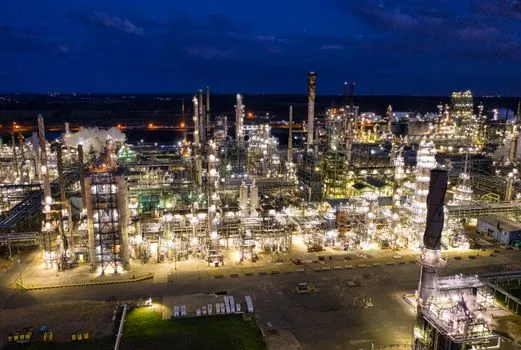
A refinery needs speed, accuracy, and reliability in one package, and the standard answer is a process GC on a conditioned slipstream for full composition plus a TDLS for fast H2S or H2O in critical streams [S1][S6]. A stack-gas application under US EPA or EU IED needs a CEMS with extractive NDIR/paramagnetic benches, automated zero/span checks, and a data acquisition system matched to the local reporting cadence [S1][S7].
Do not default to a general-purpose NDIR when the duty is sub-ppm H2S, ultra-low O2 in hydrogen, or trace HCl in semiconductor exhaust: these require a technology selected for the chemistry, not the catalog number [S2][S4][S8]. Do not pick a process GC if the application only needs one or two gases at 1 Hz, because the capital, maintenance, and skilled-labour cost will swamp the value of the extra composition data [S1][S6].
Standards, Sourcing Signals, and Next Steps
Hazardous-area selection follows ATEX 2014/34/EU in the EU and IECEx internationally, with US sites using NEC Class I Div 1/2 zoning, and the analyzer certification must match the zone, not just the gas group [S1][S7]. Stack-gas reporting in the US runs under 40 CFR Part 60 / PS-1 / PS-2, while EU installations fall under the Industrial Emissions Directive 2010/75/EU with EN 14181 QAL1/QAL2/QAL3 for ongoing quality assurance [S1][S7]. For reference, the Yokogawa TDLS8000, ZR22G zirconia, and IR800G NDIR product lines, the Mettler Toledo Thornton process gas analyzer family, and the ADInstruments ML206 lab gas analyzer illustrate how published datasheets answer the ten selection steps in the same order [S1][S2][S5].
Next node: lock the spec sheet around target gas, range, accuracy, T90 response, hazardous-area class, and sample-conditioning sketch before requesting a quote, and refuse any vendor submission that does not explicitly address those five lines. Trackable signal: Q3–Q4 2026 OEM releases around in-situ TDLS multi-gas heads and ATEX/IECEx dual-certified extractive CEMS, which would compress multi-component emissions analyzer footprints and lower installed cost for new European chemical-plant builds.
Background reading: Conductivity Meter Sizing: Cell Constant, Electrode, Output.