A multi-gas detector is a portable instrument that samples air continuously and displays readings for two to six gases at once, typically LEL combustibles, O2, CO, and H2S, with optional slots for SO2, NO2, NH3, HCN, or VOC [S1][S3]. Units in the 2026 compact class weigh 3.52 oz (RKI GX-3R) to roughly 12 oz, clip in the breathing zone, and run 18–25 hours on a single lithium-ion charge [S4].
Selection is a hazard-driven exercise, not a brand comparison: write down the credible gas list, the task profile (routine patrol, confined space, demolition, refinery turnaround), the alarm response you actually run, and the certification regime the site sits under (ATEX, IECEx, CSA, UL) before you open a catalog [S1][S5][S2]. The unit you pick has to map to that profile, not the other way around. For the broader portable instrument category, see the portable gas detector reference.
Core Hazard Categories and Sensor Mapping
Every credible multi-gas list starts with the same four core hazards: LEL combustible gas (catalytic bead or IR), O2 (electrochemical, 0–30% vol typical), CO (electrochemical, 0–500 or 0–1000 ppm), and H2S (electrochemical, 0–100 ppm) [S1][S4]. A fifth and sixth slot is then filled from site-specific risk: SO2, NO2, NH3, HCN, Cl2, or a PID sensor for volatile organic compounds [S1].
Common industrial hazard gases include CO, HCN, HCL, H2, CO2, NH3, ClO2, and assorted VOCs; each one carries a different TLV, STEL, and IDLH, which sets the alarm setpoints the monitor must support [S1]. Sensor technology choice also matters: electrochemical cells handle most toxics, NDIR (non-dispersive infrared) reads CO2 and hydrocarbons without oxygen dependence, catalytic bead covers LEL in a cost-effective package, and a PID (photoionization detector) is the only practical way to flag low-level VOC exposure [S2][S8]. For a primer on the family of toxic-targeting instruments, see the toxic gas detector encyclopedia page.
Multi-Gas vs Single-Gas vs Fixed: Who It Is For
Multi-gas detectors are the right call when the credible gas list contains three or more targets, when the situation is unknown (unknown leak, arson investigation, landfill, demolition of old structures), or when a single device has to cover multiple tasks across a shift [S3]. Single-gas detectors remain the leaner choice where one hazard dominates, e.g. CO-only monitoring for routine fire calls, or a dedicated H2S unit at a known sour-gas point, because they are smaller, cheaper per unit, and simpler to train on [S3].
Fixed gas detectors belong on the perimeter of a plant, in analyzer houses, and at the boundaries of classified hazardous areas; they are not worn by a worker, and a multi-gas personal monitor is not a substitute for a fixed safety instrument [S2]. Crowcon makes the same point: personal monitors, handheld leak detectors, and area monitors are three different categories, and buying the wrong one is the most common selection error [S5]. A full comparison of permanently-installed options is in the fixed gas detector entry.
Criteria-Based Comparison of the Main Compact 4-Gas Options
Three compact four-gas models dominate the 2026 shortlist for general industrial and confined-space work; the table below lines them up against the criteria a safety manager actually filters on [S4].
RKI GX-3R: 3.52 oz, 2.2 in W x 2.55 in H x 1.02 in D, IP66/IP68, 25-hour Li-ion runtime, three-year warranty, two-button operation, LEL/O2/CO/H2S, audible-visual-vibration alarms. Honeywell BW MicroClip Series (incl. X3 and XL): four-gas, IP68, 18-hour runtime, one-button operation, IntelliFlash visual compliance indicator, three-year warranty on the X3. MSA ALTAIR 4XR: rugged four-gas with XCell rapid-response sensors, Bluetooth pairing to the ALTAIR Connect app for real-time incident awareness [S4].
Selection logic: if minimum size and weight are the priority, pick the GX-3R; if fleet standardization and a familiar one-button workflow matter more, pick the MicroClip X3; if the site already runs MSA and needs Bluetooth man-down and incident telemetry, pick the ALTAIR 4XR [S4]. The trade-off in all three is the same: smaller and lighter typically means a shorter sensor warranty, fewer expansion slots, and a higher unit cost. For the broader personal-monitor landscape, the portable gas detector encyclopedia entry is the right starting point. For a deeper dive on gas count and sensor type matching, see Portable Gas Detector Sizing and Selection: Gas Count, Sensor Type, and Duty Match.
Selection Criteria That Drive the Final Shortlist
Eight criteria separate a workable spec from a wasted purchase, and the order matters [S1][S2][S5]. First, define the credible gas list and tie it to actual process steps, not a generic hazard inventory [S1][S5]. Second, set the sensor count (4 vs 5 vs 6) and confirm each slot is field-replaceable so a failed sensor does not retire the whole instrument [S1]. Third, check ingress protection: IP66 handles jet wash and rain, IP66 plus IP68 covers submersion, and sites with routine wash-down or marine exposure need both [S4].
Fourth, battery runtime must cover the worst shift plus calibration and bump-test overhead, with 18–25 hours the realistic band on current compact Li-ion packs [S4]. Fifth, alarm presentation has to be three-mode (audible, visual, vibration) and should support programmable text actions such as EVACUATE or VENTILATE, not just a tone [S1]. Sixth, the unit has to carry the certification the site sits under: ATEX for EU zones, IECEx for IEC member countries, CSA or UL for North America, and IP66/67 for wet or outdoor locations [S2]. Seventh, decide whether you need connected features (Bluetooth, cellular, GPS, man-down, cloud fleet dashboards) or local-only alarms [S4]. Eighth, plan the maintenance path: bump testing, calibration, charging, and firmware updates either run on a docking station (e.g. Industrial Scientific DSX) or are done by hand, and that workflow determines daily labor cost [S1].
Real Use Cases and the Limits of a Multi-Gas Monitor

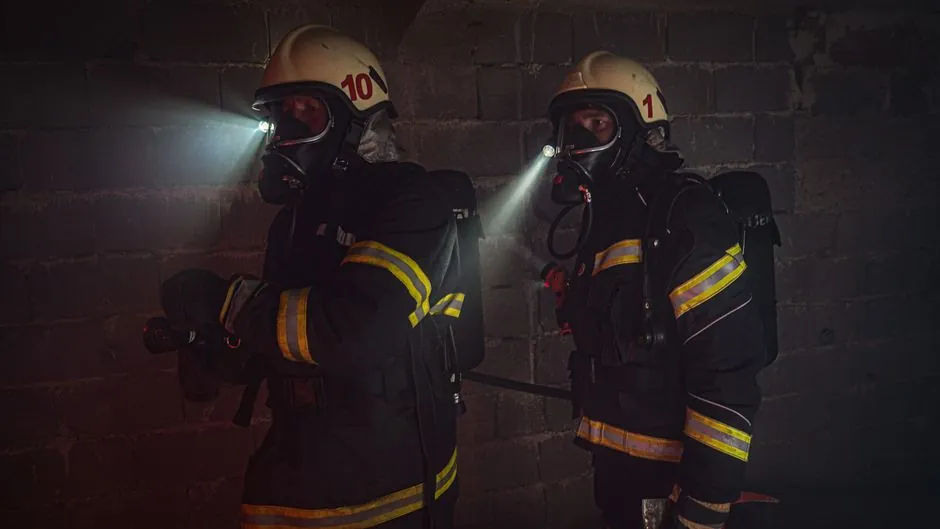
Typical deployments for a 4- to 6-gas monitor include confined-space entry (LEL, O2, CO, H2S as the baseline), refinery and petrochemical turnaround work, demolition of structures with unknown history, fire and hazmat response, landfill and wastewater monitoring, and pharmaceutical or R&D labs handling CO2 incubators, liquid nitrogen, and solvent vapors [S3][S5][S7]. In R&D and lab service, a four-gas monitor should match the gases the lab actually stores and uses, with CO2 incubators and cryogenic nitrogen driving an IR CO2 or a dedicated O2 sensor in many cases [S7].
Limits are equally concrete. Multi-gas personal monitors are not a substitute for a fixed safety instrument, are not designed for atmospheres where high gas levels are present continuously, and do not replace a properly calibrated area monitor in a permit-required confined space [S3][S5]. A detector that routinely sees background VOC levels above its PID range will give constant false alarms; an LEL sensor starved of oxygen (e.g. a purged enclosure) will under-read, which is why NDIR is sometimes paired with catalytic bead for LEL when oxygen depletion is possible [S2]. Redundancy is also a real engineering option: dual-sensor configurations for the same target gas (e.g. Industrial Scientific DualSense Technology with two sensors on one channel) remove the single-point sensor-failure mode without doubling the device count [S1].
Common Failure Modes and Selection Mistakes
The most expensive mistake is buying the wrong category entirely: a personal monitor where a fixed system is required, or a single-gas unit where the credible gas list contains three or more targets [S3][S5]. The second is sensor poisoning, where an H2S or electrochemical cell is exposed to an incompatible compound (silicone vapors, high H2S for too long, leaded gasoline on a catalytic bead LEL) and the cell loses sensitivity permanently; the only fix is sensor replacement [S1].
The third is skipping bump testing, which is a short, controlled gas exposure to confirm the sensor responds, and confusing it with calibration, which is a quantitative span adjustment against a certified gas standard. Both are required, and both are easier to enforce when the fleet runs through a docking station that automates the cycle and flags out-of-tolerance units [S1]. The fourth is ignoring ergonomics: a monitor that pulls on a lapel or forces the worker to remove gloves to read the screen will get pulled off, and an un-worn monitor is no monitor at all. The fifth is under-specifying alarms: a unit that beeps but does not vibrate will not wake a worker in a high-noise compressor room, and a unit with no man-down detection is a poor choice for lone workers in tanks or remote piping racks [S4]. Crowcon's guidance puts it bluntly: if the response to an alarm is unclear, people either ignore it or overreact, and both outcomes create a separate risk that has to be engineered out before the device is issued [S5].
Certification, Sourcing, and Standardization Notes
Industrial multi-gas detectors for hazardous areas in the EU are typically specified to ATEX (the European Union's equipment-for-explosive-atmospheres directive family), while IECEx (IEC's international explosion-protection scheme) covers most non-EU IEC member countries, and CSA or UL covers North American sites [S2]. For the working environment, IP66 (powerful jet wash, dust-tight) and IP68 (continuous submersion beyond 1 m) are the two most cited ingress ratings in current compact four-gas product literature [S4]. ATEX category 2 / IECEx Gb equipment is the common baseline for zones where an explosive atmosphere is likely in normal operation, while category 1 / Ga covers zones where it is expected continuously; the right category must be set by the site, not by the monitor's catalog page [S2].
Sourcing and lifecycle numbers worth tracking on a 2026 purchase: a three-year sensor and instrument warranty is now standard on the major compact four-gas units (RKI GX-3R, MicroClip X3), 25-hour runtime is the high-water mark in the compact class, and 3.52 oz is the current weight floor [S4]. Bump-test and calibration intervals of 30–180 days are typical, with daily bump tests required on many sites for LNG, H2S-bearing, or permit-required confined-space work; confirm the exact cadence against your written safety program rather than the manufacturer's marketing [S1][S4]. For a comparison of the broader combustible-gas target class, the combustible gas detector entry is the right cross-reference, and the general gas detector page links the rest of the family.
Trackable next node: lock the credible gas list, then compare at minimum the RKI GX-3R, Honeywell BW MicroClip X3, and MSA ALTAIR 4XR against the eight criteria above before you involve a vendor. A separate, parallel decision is fleet connected features: if your site already runs Bluetooth man-down, lean ALTAIR 4XR or ALTAIR Connect-compatible fleets; if it does not, do not pay for radios you will not dispatch.