PPE Category 2 under NFPA 70E requires a minimum arc rating of 8 cal/cm², and PPE Category 4 requires 40 cal/cm²; that 5x jump in incident-energy threshold is where the real cost, weight, and mobility trade-off sits [S1][S3].
Category 2 is normally met with a single layer of arc-rated shirt and pants (or coverall) plus an arc-rated face shield or suit hood with balaclava, while Category 4 mandates a multi-layer arc flash suit jacket, suit pants, and hood, with all garments arc-rated to the 40 cal/cm² system level [S1][S3].
Rating Bands and What the Numbers Mean
Arc rating is expressed in cal/cm² (calories per square centimetre) and represents the incident energy that results in a 50% probability of onset of a second-degree skin burn, so the rating is a probability threshold, not a guarantee of zero injury [S2][S3].
NFPA 70E 2018 dropped the older "Hazard/Risk Category" terminology in favour of "PPE Category," but the four rating bands (4, 8, 25, 40 cal/cm²) are unchanged, and garment labels still routinely carry "HRC," "PPE Category," or "ARC 2/3/4" shorthand [S5]. An 8.1 cal/cm² exposure does not push the worker into Category 3 PPE; PPE Categories apply to the table-driven task method, and an incident-energy analysis simply requires the garment rating to match or exceed the calculated exposure [S5].
Category 2 Garment Build and Typical Tasks
Category 2 clothing is built around arc-rated long-sleeve shirt and pants (or a single coverall) with a minimum arc rating of 8 cal/cm², layered with an arc-rated face shield or arc flash suit hood, plus a sock hood/balaclava when head/face wrap-around guarding is needed [S1][S3].
Standard PPE for Category 2 work includes a Class E hard hat, safety glasses or goggles, hearing protection (ear canal inserts), voltage-rated rubber gloves with heavy-duty leather protectors, and leather footwear, making it a practical, single-layer solution for most 600 V class switchgear tasks [S1][S2].
Enespro's 8, 12, and 20 cal kits are explicitly sold to "meet NFPA 70E-2018 PPE Cat 1 & 2," a common industry pattern of buying the next tier up so one kit covers both Category 1 and 2 exposures without a second garment change [S3]. Comfort between Category 1 and Category 2 is described as comparable, so many facilities standardise on 8–12 cal kits for routine work [S3].
Category 4 Garment Build and Typical Tasks
Category 4 requires a multi-layer system: arc-rated long-sleeve shirt, arc-rated pants, arc-rated coverall, arc flash suit jacket, flash suit pants, arc flash suit hood, arc-rated gloves, and a jacket, parka, rainwear, or hard hat liner as needed, all rated so the system arc rating meets the 40 cal/cm² minimum [S1][S3].
Standard PPE remains the same hard hat, eye/ear protection, and leather footwear stack, but the full suit assembly dramatically increases fabric mass, reduces mobility, and extends donning/doffing time, which is why 40 cal/cm² work is typically limited to higher-energy tasks such as 480 V class and above equipment with high available fault current, or where an incident-energy study demands it [S1][S2][S6]. Pre-stocked 40 cal/cm² kits are widely sold as "HRC 4 Arc Flash Kits" precisely because no single-garment coverall can carry the full system rating [S6].
Decision Matrix: Cat 2 vs Cat 4 on Practical Criteria
On minimum arc rating, Cat 2 sits at 8 cal/cm² versus 40 cal/cm² for Cat 4, a 5x factor that drives every downstream trade-off [S1].
On garment construction, Cat 2 is a single arc-rated layer (shirt + pants or coverall) with a face shield or lightweight hood; Cat 4 is a multi-layer suit (jacket + bib pants or suit pants + hood) plus arc-rated gloves and optional liner, which is why Cat 4 kits are typically sold as pre-validated bundles [S1][S3][S6].
On mobility and heat stress, Cat 2 allows routine walking, climbing, and tool use with minimal thermal burden; Cat 4 adds substantial fabric weight, restricts reach, and raises core-temperature risk on long-duration jobs, so it is usually scoped to short-duration tasks where the incident energy demands it [S2][S6].
On cost and re-use, Cat 2 garments are routinely laundered and reused across many work cycles; Cat 4 suits, particularly after a flash event or visible thermal damage, are often treated as limited-life or single-event garments per manufacturer guidance [S2][S3][S6].
Selection Criteria: Which Category Fits the Work
The deciding input is the calculated or table-derived incident energy at the working distance, not the voltage class alone; an 8.1 cal/cm² exposure on a 480 V bus can still be served by a Cat 2 kit if the study confirms it, and a 35 cal/cm² exposure on a 208 V panel can demand Cat 3 or 4 [S5].
Cat 2 fits when the task sits inside the NFPA 70E Table 130.7 list for that category (most 600 V and below switching, racking, and testing) and the user wants one comfortable kit that also covers the Cat 1 range [S3]. Cat 4 is the right answer when the incident-energy analysis lands at or above 40 cal/cm², typically on higher available fault current, longer working distances that still resolve to high energy, or where the task table explicitly maps to Cat 4 [S1][S6].
For mixed-exposure facilities, the common engineering shortcut is to standardise workers on an 8–12 cal kit for the bulk of Cat 1/2 work and to maintain a small pool of 40 cal suits, hoods, and gloves reserved for the high-energy tasks, rather than issuing Cat 4 to everyone [S3].
Common Mistakes When Specifying HRC 2 or HRC 4
Misreading the IEEE 1584-2002 boundaries, several engineering groups historically labelled any exposure above 8 cal/cm² as "Cat 3," which is incorrect; the proper rule is to match the PPE arc rating to the calculated incident energy, and Cat 3 simply starts at 25 cal/cm² minimum [S5].
Confusing garment arc rating with system arc rating, single-layer 8 cal garments do not stack to a 16 cal system; NFPA 70E requires the system (layers worn together) to meet the category, which is why Cat 3 and Cat 4 explicitly call for suit jackets and suit pants as separate items [S1][S3].
Skipping the balaclava or sock hood, Cat 2 mandates arc-rated face protection with wrap-around guarding, and a bare face shield without a balaclava leaves the neck and jaw exposed; Cat 4 mandates the full arc flash suit hood for the same reason [S1][S3].
Linked Reading on Related PPE Topics
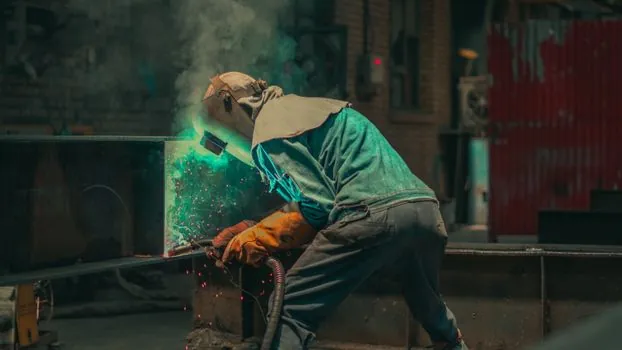
Garment arc rating and arc flash PPE category selection is one of several protective-equipment decisions a process or electrical engineer has to standardise; the same data-first logic applies to selecting arc welder PPE, where the hazard model is continuous thermal radiation rather than a single-event incident-energy pulse, and the arc welder protective gear reference walks through that parallel rating framework. For the broader programme side (gloves, sleeves, balaclavas, suit life-cycle), the protective clothing hub consolidates fabric weight, ATEX considerations, and laundering limits. Where arc-rated garments are part of a wider electrical-safety tool kit, electronic test and measurement procedures define the voltage and current detection step that should happen before the suit goes on. [S1]
Trackable signals for the next quarter: any NFPA 70E revision that revisits the 4/8/25/40 cal/cm² band steps, IEEE 1584 updates that change the model coefficients driving incident-energy calculations, and OSHA enforcement letters citing mis-matched PPE categories on 480 V and medium-voltage work.
Related analysis: Low-flow extension on vortex meters: how far below Re 10,000 can they read?.