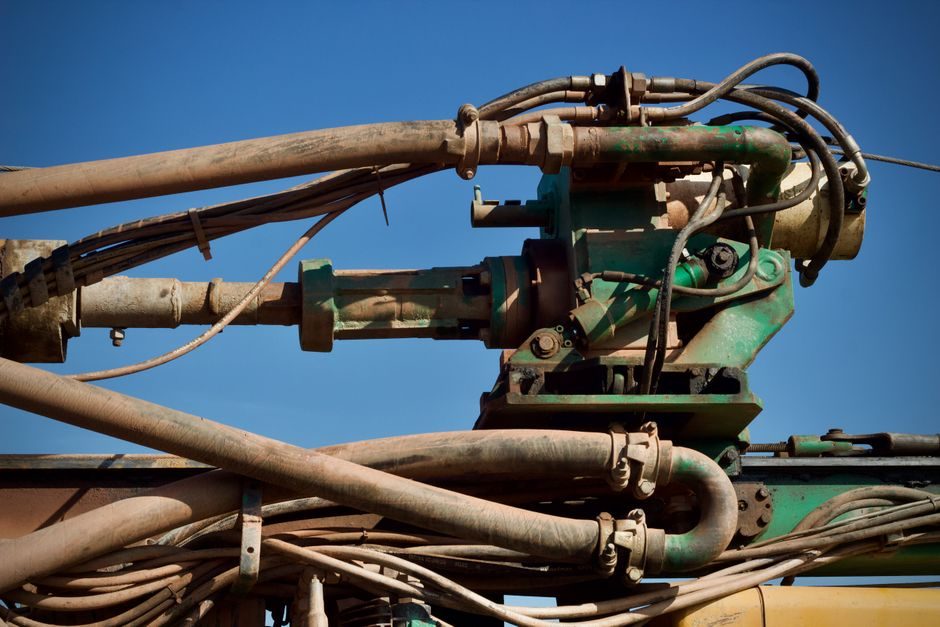
FOB price for a 24V/48V DC linear actuator with hydraulic cylinder sits at US$170 per set for 1-49 sets, dropping to US$150 at 50-99 sets and US$130 at 100+ sets, with a 500 mm standard stroke, IPx6 rating, and CE plus ISO certification [S2]. Volume breaks are steep: 1,000+ sets typically lands another 10-15% below the 100-set tier on Chinese factory-quote sheets, though that figure varies by motor brand and seal origin [S2].
Process-grade electro-hydraulic actuators for valve service are a different cost object. Zhonghuan's ELECTRO-HYDRAULIC ACTUATOR line specifies -40 to 70 °C standard operating temperature (extendable to -55 to 70 °C for low-temp builds), IP65 and optional IP68 ingress, Ex d IIB/IIC T4-T6 explosion-proof rating, and SIL2 (1oo1) or SIL3 (1oo2) safety integrity compliance [S1]. These units integrate a motor, oil-pump unit, integrated block or valve combination, oil tank, and electrical control box into a single skid [S3]. For spec detail on the hydraulic actuator family, the encyclopedia page covers topology and force-stroke math.
Price Bands by Duty Class
Light-duty linear hydraulic actuators with 24V/48V DC motors and 500 mm stroke cluster between US$130 and US$170 FOB China, with the spread driven by order quantity rather than spec differentiation [S2]. Units ship in wooden-box or tray packaging, and limit switches are typically excluded from standard scope [S2].
Mid-duty industrial hydraulic power stations - the motor-pump-tank-control assemblies used for gate and globe valve automation - are quoted per spec rather than per set, with the integrated manifold block, reservoir size, and SIL rating setting the bulk of the cost [S3]. A process-grade unit with Ex d IIC T6 and SIL3 (1oo2) certification typically lists 3-5x above an IP65 non-Ex equivalent, reflecting flameproof enclosure cost and redundant sensor architecture [S1].
Heavy-duty quarter-turn or multi-turn actuators for oil & gas pipeline service exceed US$5,000 per unit at the entry torque tier (roughly 1,000-3,000 Nm output) and scale linearly with torque, with the explosion-proof enclosure, hand-pump override, and SIL3 instrumented position transmitter compounding the premium [S1].
Cost Levers That Move the Quote
Five variables dominate the final invoice. First, certification stack: adding Ex d IIC T6 (hydrogen-acetylene atmosphere rating) on top of IP65 enclosure typically adds 20-30% over a standard IP65 non-flameproof build, and SIL3 (1oo2) redundancy layers another 15-25% over SIL2 (1oo1) [S1]. Second, temperature extension: -55 °C low-temp option (arctic or LNG-terminal service) versus the -40 °C standard adds specialized seal compounds and low-temp hydraulic fluid, roughly 8-12% on the bill [S1].
Third, IP rating: IP68 (submersible) versus IP65 (jet-spray) requires sealed cable entries, breather/drain changes, and pressure-tested enclosures - a meaningful step on welding and NDT cost. Fourth, position feedback and communication: a 4-20 mA position transmitter with HART overlay, or a Foundation Fieldbus/PROFIBUS PA digital interface, is a separate line item on the control-box scope. Fifth, MOQ tier: the US$130-170 linear-actuator range illustrates how a 100-set break reshapes the FOB price by roughly 24% versus the 1-49 set tier [S2].
Selection Criteria: Who Needs What

Specifying engineers on oil & gas block-valve stations, chemical-plant isolation valves, and LNG loading arms should anchor on Ex d IIB or IIC T4-T6 and SIL2/SIL3 compliance, with -40 °C (or -55 °C for arctic service) as the floor temperature [S1]. The hydraulic cylinder bore and stroke must be matched to the valve stem torque and travel, not to the actuator nameplate - oversizing wastes money, undersizing trips the relief valve.
Municipal water and HVAC damper service rarely needs explosion-proof certification; IP65 with standard temperature and a basic limit-switch package is the rational spec, and the US$130-170/set tier is competitive at volume [S2]. Mobile-equipment and solar-tracker applications prioritize 12V or 24V DC operation, quiet-stretch gearing, and CE/ISO certification over SIL or ATEX - the 500 mm stroke and IPx6 rating cover most photovoltaic and agricultural use cases [S2].
For a deeper cut on topology tradeoffs (linear versus quarter-turn versus scotch-yoke) and the hydraulic motor and hydraulic pump sizing behind them, the 2026 buying guide covers force-stroke math and zone classification. The spec-cut comparison between hydraulic and pneumatic valve actuation in 2026 is also useful when the duty cycle and fail-safe requirement point away from hydraulics.
Linear vs Rotary vs Scotch-Yoke: Decision Matrix
Linear hydraulic actuators with hydraulic cylinder - the US$130-170/set class - suit small globe and angle valves, damper drive, and solar-tracker positioning where the stem travel is short and thrust force is the controlling parameter [S2].
Quarter-turn hydraulic actuators (rack-and-pinion or vane type) handle ball and butterfly valves from DN50 to DN600 with output torque from roughly 200 Nm to 10,000 Nm. The integrated hydraulic power station, comprising motor, oil pump, manifold, reservoir, and control box, is the cost driver here, not the actuator housing [S3].
Scotch-yoke hydraulic actuators deliver higher breakaway torque in a smaller envelope, preferred for high-pressure gas block valves where the initial unseating force is the design limit. They typically carry a 15-25% premium over rack-and-pinion equivalents at matched torque. The linear guide and crossed-roller guide choices inside the scotch-yoke slide are invisible to most buyers but set the actuator's cycle life and maintenance interval.
Standards and Sourcing Reality
Explosion-proof hydraulic actuators for process service reference ATEX 2014/34/EU for EU hazardous-area deployment and IECEx for international projects, with Ex d IIB T4 covering most hydrocarbon service and Ex d IIC T6 required for hydrogen or acetylene atmospheres [S1]. Safety integrity level certification under IEC 61508 drives the SIL2 (1oo1) versus SIL3 (1oo2) architecture choice, and the second channel of sensors in a 1oo2 voting configuration is the single largest line-item adder on the SIL3 quote [S1].
Ingress protection to IP65 covers outdoor and washdown service, while IP68 (typically 5 m / 72 hr) is specified for subsea or flooded-manhole installations [S1]. NACE MR0175 compliance becomes a separate material-selection adder for sour-service (H2S-containing) oil & gas applications, distinct from the Ex and SIL stacks.
FOB China pricing on the light-duty linear tier is real and published, with the US$130-170 band tied to 100+ set MOQ and 500 mm standard stroke [S2]. Process-grade quotes require detailed RFQ packages with torque, stroke, IP, Ex, SIL, temperature, and valve-interface specs; vendor pricing in this segment is not list-price and shifts with raw steel, copper-motor, and seal-kit costs. A 2026 RFQ typically returns three quotes with 20-40% spread between the low and high bidder, even on identical written specifications.
Watch for Q4 2026 raw-material surcharges on electrical steel and NBR seals, and confirm with the vendor that the quoted SIL certificate is for the specific assembly serial number, not a family-level certificate covering an unrelated configuration. Verify the explosion-proof marking on the nameplate matches the hazardous-area zone classification at the install site, and require the IP68 test certificate (not just the rating declaration) for any submerged-service spec.
For related coverage, see Engineering Plastic Price & Cost Guide 2026: Resin Bands, Form-Factor Multipliers and.