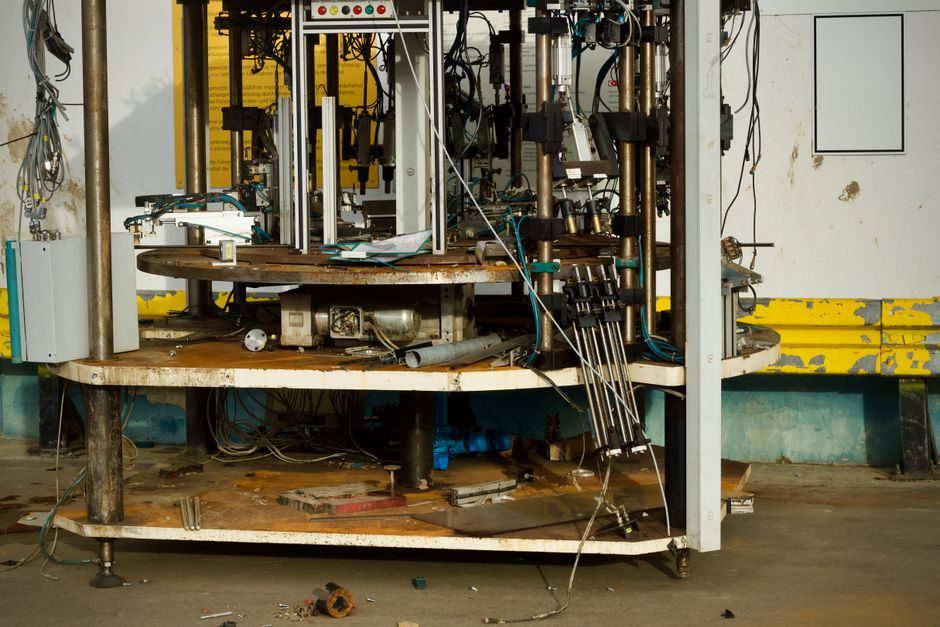
A hydraulic cylinder converts pump flow into linear force; matching bore, rod, pressure class, and mounting to the duty cycle is what separates a ten-year service life from a one-year rebuild.
Most industrial buyers in 2026 source from three pools — Indian custom shops (SN Hydraulics, BEMCO), Chinese OEM/ODM lines (Shenzhen Dallast, EAGLEXT), and Western hydraulic brands (BVA Hydraulics) — with working pressures clustered in the 10-25 MPa range and a few ultra-high-pressure 700 bar specialty lines [S1][S2][S3][S4].
Cylinder Architecture: Single-Acting vs Double-Acting vs Telescopic
Single-acting cylinders pressurise one port and rely on gravity, a spring, or load weight to retract — Shenzhen Dallast lists single-acting telescopic 3-/4-/5-stage dump-truck units at FOB US $30-1,000 per piece, with a 1-piece MOQ and normal-temperature seals [S3]. Double-acting units use both ports for push and pull, and dominate OEM loader work: a 125 mm bore / 70 mm rod EAGLEXT mechanical-loader cylinder rated 15 MPa (2,175 psi), 618 mm max stroke, piston speed below 0.5 m/s, is a representative medium-pressure double-acting build [S4].
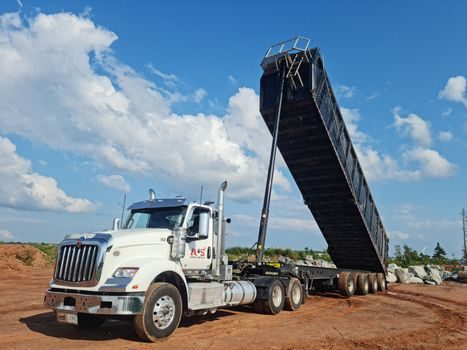
Telescopic multi-stage cylinders collapse into a short envelope and extend to 2-5× the retracted length, making them the default for tipper/dump-trailer tippers where stowed space is the constraint; double-acting hollow-plunger bodies in the 2-inch bore class cover pull-and-push force applications in the same FOB US $130-2,000 band [S3]. For a primer on how force, bore, and pressure interact, see the hydraulic cylinder reference page.
Construction: Welded, Tie-Rod, and Mill-Type Bodies
Tie-rod cylinders clamp the end caps to the barrel with external high-tensile rods, which makes them field-serviceable — caps, seals, and the rod can be swapped without cutting or rewelding. SN Hydraulics in Mumbai publishes a standard tie-rod construction line alongside welded construction, flange-mount, both-end-clevis, trunnion-mount, S.S 304/316, and double-rod-end variants for press and pharmaceutical duty [S2].
Welded (or "seamless") cylinders fuse the end caps to the barrel, compacting the envelope and raising the pressure ceiling at the cost of in-field serviceability; they are the default in mobile equipment and most custom Chinese OEM builds. Mill-type cylinders are the heavy industrial variant — heavy-walled barrel, flanged ports, replaceable gland — built for steel-mill and press lines running continuous duty. The construction choice cascades directly into repair strategy: a plant that needs to swap a seal in 30 minutes should not buy welded.
Pressure Class, Bore, and Rod Diameter
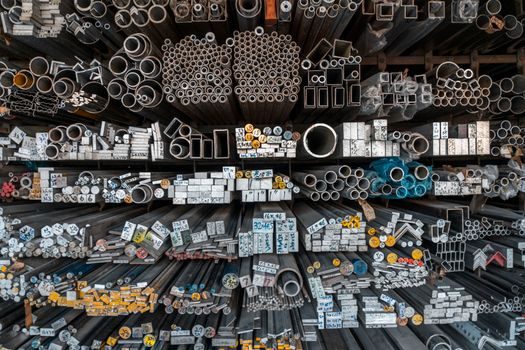
The Business Research Company's 2026-2035 cylinder market report segments the market by bore size into three bands — less than 50 mm, 50-150 mm, and greater than 150 mm — with 50-150 mm holding the volume sweet spot for general industrial presses, machine tools, and material handling [S6]. Pressure rating is the next decision: 16 MPa (≈160 bar, ≈2,320 psi) is the workhorse class for most tie-rod industrial units, 21 MPa (≈3,000 psi) is the next step for heavy presses, and BVA Hydraulics' HC/HDC/HCLN hollow-hole specialty line operates up to 700 bar (10,152 psi) for pulling and pushing tooling [S1].
Force is computed as F = P × A; doubling the bore from 100 mm to 141 mm quadruples push force at the same pressure, so stepping bore up is usually cheaper than stepping pressure class up. Rod buckling — not piston-area stress — sets the practical stroke ceiling for a horizontal cylinder, which is why 618 mm is a typical cap on a 70 mm rod loader unit [S4]. Rods are almost universally chrome-plated hard-chrome over a 4140 or comparable alloy substrate to resist scoring under side-load and rod-pack contamination.
Seals, Temperature, and Fluid Compatibility
Most catalog cylinders published in mid-2026 advertise a working-temperature range of −30 °C to +80 °C, with NBR (nitrile) seals for standard mineral oil, PU (polyurethane) for higher pressure and lower friction, and Viton/FKM for high-temperature or synthetic fluid duties [S3]. Two of Shenzhen Dallast's specialised double-acting units are rated −40 °C to +300 °C, which is the high-temperature envelope, and the listings explicitly cite ISO 9001 plus CE/GS/RoHS certifications on the build [S3].
For the polymer side — geometry, durometer, and gland design — the oil seal buying guide walks through how seal choice compounds with cylinder pressure. Buyers running water-glycol, phosphate ester, or biodegradable hydraulic fluid should confirm seal-material compatibility before locking the order, not at commissioning.
Mounting Styles and Load Geometry
SN Hydraulics publishes seven mounting variants — flange, both-end-clevis, trunnion, double-rod-end, plus S.S 304/316 stainless, all alongside the DNV-certified skid-mounted power pack — a list that mirrors what most custom shops offer [S2]. The mechanical-loader standard cylinder from EAGLEXT is a single-piece catalogue product with working pressure 15 MPa, max stroke 618 mm, bore 125 mm, and piston rod 70 mm, sized for loader arm geometry [S4].
Pivot mounts (clevis, trunnion) let the cylinder swing through an arc and follow the load, which is what you need for loader, dump-body, and excavator arms; fixed mounts (flange, foot) suit linear-push presses where the load is constrained. Side-load is the silent killer of pivot-mounted cylinders — if the application can push the rod sideways, specify a re-lubricatable spherical rod eye or a tie-rod trunnion body. Cylinder mounting and load geometry also drive the rest of the hydraulic circuit; a quick primer on hydraulic actuators lays out the difference between linear and rotary hydraulic muscle.
Vendor Landscape and Sourcing Notes for 2026
Three sourcing lanes dominate 2026 procurement. Indian custom shops (SN Hydraulics, founded 2012, ISO 9001:2015, Mumbai; BEMCO JACKS, India) focus on hydraulic power packs, welded and tie-rod cylinders, flameproof packs, centrifuge bag-lifting devices, and skid-mounted DNV-certified packs for chemical, pharmaceutical, plastic, and metal-foundry clients [S2][S5]. Chinese OEM/ODM lines (Shenzhen Dallast, EAGLEXT) publish 1,310+ cylinder SKUs on Made-in-China.com — single- and double-acting, 2-inch bore hollow, 2-5-stage telescopic, custom-stroke units with FOB US $30 to US $10,000 price points — all backed by ISO 9001, CE, GS, RoHS certification marks [S3][S4]. Western specialty brands (BVA Hydraulics) push into 700-bar ultra-high-pressure hollow-plunger bodies, alloy-steel, lock-nut and threaded-shaft options for lifting, construction, and heavy-handling duty [S1].
For a market-readout view, The Business Research Company's January 2026 hydraulic cylinder market report (150 pages, US $4,490, 2-3 business-day delivery) segments the 2026-2035 outlook by function (single-acting, double-acting), specification (telescopic, tie-rod, mill-type, welded), and bore (less than 50 mm, 50-150 mm, greater than 150 mm) [S6]. Bear in mind that published FOB ranges on aggregator platforms are starting points, not a sealed quote — exact price depends on bore, stroke, rod diameter, mounting, seal material, and whether the order is custom or catalogue.
Selection Logic and Quick Shortlist

Use this shortlist before you request a quote: (1) duty type — push-only, push-pull, or telescopic dump; (2) bore 50-150 mm for general industrial, above 150 mm for press/mill duty, below 50 mm for clamp and tool actuation; (3) pressure class — 16 MPa default, 21 MPa for heavy presses, 700 bar only for specialty tooling [S1][S3][S4][S6]; (4) body style — tie-rod for serviceability, welded for compact mobile, mill-type for steel-mill continuous duty [S2]; (5) seal material — NBR/PU to 80 °C, Viton above 80 °C, confirm fluid compatibility [S3]. Skip the ultra-high-pressure 700-bar line unless pulling and pushing tooling is the actual job — paying for a hollow-hole alloy cylinder to do 16 MPa press work is the most common 2026 over-spec mistake. Verify ISO 9001 and CE/RoHS paperwork before issuing the PO; for high-temperature or marine duty, also confirm DNV certification, as the SN Hydraulics skid line carries it [S2].
For buyers sizing a wider hydraulic package, the next decision is the pump that feeds the cylinder — the hydraulic pump reference covers gear, vane, and piston variants matched to the same 16-21 MPa band. Trackable 2026-2035 signals to watch: bore-class adoption shifts in the next TBRC market-report refresh, more Chinese mills pushing ISO 9001 + CE double-cert builds, and Indian custom shops adding more S.S 316 / flameproof variants for chemical and pharmaceutical duty [S2][S3][S6].