
Hydrogen blending is advancing from isolated demonstrations to structured deployment planning, with Keele University supplying up to 20% hydrogen to more than 100 homes and university buildings through an existing gas network [S3].
The activity spans transmission pipelines, distribution networks, industrial boilers, residential appliances, and supporting regulation, but material compatibility, leak detection, combustion stability, and downstream gas quality remain the gating issues [S1][S4][S5].
What Hydrogen Blending Means in 2026
Hydrogen blending means injecting hydrogen into a natural gas network to deliver an H2-methane mixture through existing or upgraded pipelines. It is intended as a near-term way to use established gas infrastructure while reducing the carbon intensity of gas consumption, although it does not remove all methane emissions associated with the remaining natural gas [S4][S5][S8].
Market segmentation now distinguishes transmission from distribution networks, green, grey, and blue hydrogen sources, and blend bands of up to 2%, 2–5%, 5–10%, 10–20%, and above 20% [S3]. The practical scope is narrower than the headline market: a low blend can reuse more assets, while higher concentrations require increasingly detailed testing of pipeline materials, seals, pressure equipment, burners, and customer equipment [S1][S4][S5].
Evidence From Operating Demonstrations
Keele University's HyDeploy demonstration supplied gas containing up to 20% hydrogen to more than 100 homes and university buildings, and the existing boilers and cookers operated without modification [S3]. That is material operating evidence, but it does not establish that every appliance, network, or operating condition can accept the same concentration.
Romanian-grid research evaluated a 23% hydrogen blend, identified as G222, against existing residential and commercial infrastructure [S4]. The study reported combustion efficiency above 98%, carbon dioxide reductions of 6–7%, improved nitrogen oxide emissions, and a need for closer control of leak detection and safety in hydrogen-enriched networks [S4].
For network operators, these projects establish three practical signals: controlled blending can use installed distribution assets, appliance performance can be retained within tested limits, and each increase in concentration creates a separate materials and safety qualification case [S3][S4].
Selection Criteria by Hydrogen Source and Blend Level
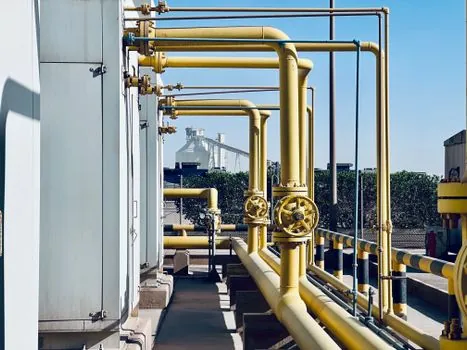
Green, grey, blue, and other hydrogen sources should be compared on delivered energy content, production pathway, contaminant tolerance, supply availability, and compatibility with the receiving network. Source type alone does not establish pipeline suitability; the delivered blend still has to meet applicable gas-quality, pressure, appliance, and safety requirements [S1][S3][S4].
Blends of up to 2% impose the least change on many existing systems, while the 2–5% and 5–10% bands require progressively greater attention to material behavior, burner adaptation, leakage response, and customer guidance. The 10–20% band overlaps with the Keele demonstration, and the above-20% category includes the 23% G222 case studied in Romanian networks [S3][S4].
The decision should not be based on blend percentage alone. A 10% blend from an irregular supply source may present a greater operational problem than a stable 20% blend delivered within a controlled quality envelope, because compressors, regulators, seals, pressure-control equipment, and users all respond to the composition and behavior of the delivered mixture [S1][S5].
Pipeline Materials, Seals, and Pressure Systems
Hydrogen differs materially from methane, and 2026 reviews continue to identify material compatibility, fracture behavior, sealing, permeability, and embrittlement as core technical limitations for hydrogen-enriched networks [S5]. The Romanian review specifically examined polyethylene and steel pipe materials and the potential for embrittlement in high-pressure systems [S4].
Steel transmission pipelines require evaluation of mechanical and fracture behavior under hydrogen exposure, while plastic distribution materials require evaluation of permeability and long-term compatibility [S5]. Seal performance must also be considered because a small molecule such as hydrogen can migrate through joints more readily than methane, making leak detection a separate engineering function rather than a simple continuation of natural gas practice [S4][S5].
Blend concentration cannot be treated as the only design variable. Pressure, pressure cycling, temperature, moisture, residence time, pipe grade, joint design, and equipment condition also affect material performance. Operators therefore need asset-specific qualification before raising the blend above a demonstrated operating envelope [S1][S4][S5].
End-Use Appliances and Combustion Behavior

Customer equipment determines the practical ceiling on network blending. The Keele project operated existing boilers and cookers with gas containing up to 20% hydrogen, while the G222 study reported combustion efficiency above 98% for a 23% blend in the appliances assessed [S3][S4]. These results are test-specific, not a blanket certification for all domestic equipment.
Hydrogen changes combustion characteristics, including flame stability and the behavior of industrial and domestic burners. A 2026 global review identifies flame stability as a central appliance issue and calls for targeted work on technical limitations, operational risks, and knowledge gaps [S5]. Appliance manufacturers, utilities, and regulators consequently need an agreed test envelope covering ignition, out-of-burner stability, carbon monoxide formation, efficiency, and customer safety.
Industrial users may still be the stronger near-term candidates because their systems can be engineered and monitored more closely than a dispersed residential appliance population. That advantage does not remove material risks: boilers, burners, seals, pressure equipment, and safety systems still require direct examination at the selected blend ratio [S5][S7].
Who Benefits and Where the Limits Remain
Hydrogen blending fits utilities, industrial heat users, and gas-system operators that have a controlled hydrogen source, suitable pipeline assets, and customer equipment capable of operating with a defined mixture. It is also a potential bridge for ammonia production and other gas-consuming applications that need additional low-carbon hydrogen supply [S5][S7].
It is not a complete substitute for dedicated hydrogen transport, and it is not the strongest option for applications requiring pure hydrogen. A dedicated line can avoid blending constraints, preserve the required product quality, and provide a clearer separation between hydrogen and natural gas streams, although it requires separate infrastructure and different capital and operating economics [S1][S5].
The practical limitation is system-wide. One high-concentration injection point can expose multiple steel and polyethylene assets, pressure-control stations, seals, meters, burners, and appliances across the downstream network [S4][S5]. This is why a controlled demonstration, asset screening, gas-quality management, and defined operating limit are more credible than a network-wide blend mandate without qualification data.
Regulation, Gas Quality, and Market Direction
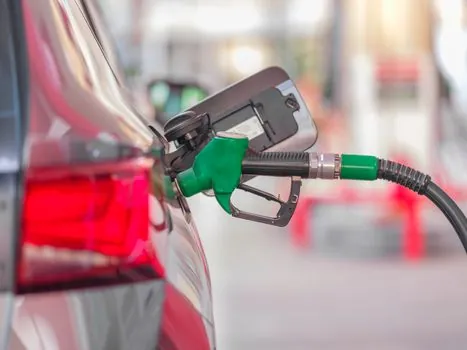
India's Petroleum and Natural Gas Regulatory Board published a hydrogen transportation and blending roadmap in 2026, providing direction for using existing gas networks and developing the infrastructure and regulatory framework needed to expand blending [S3]. In the United States, the Department of Energy's HyBlend initiative focuses on technical barriers to injecting hydrogen into natural gas pipelines [S1].
Market estimates differ because vendors define the boundary differently. One forecast places the global hydrogen blending in natural gas market at USD 14.39 billion in 2026 and USD 45.84 billion by 2034, while another estimates USD 12.21 billion in 2025 and USD 52.2 billion by 2035 at a 15.64% compound annual growth rate [S2][S3]. These figures indicate commercial attention, not a common installed-base measure, so project announcements, qualification rules, and delivered gas volumes are more useful tracking indicators.
Broader hydrogen-pipeline research estimated a 15.6% compound annual growth rate for 2026–2033, with dedicated hydrogen pipelines projected to hold 58.6% of the global hydrogen-pipeline market [S6]. That outlook points toward parallel development rather than wholesale replacement: dedicated pipelines for higher-purity transport and blending for selected uses of existing gas infrastructure [S1][S5][S6].
Decision Matrix for Network Operators
For a network operator, the choice is between low-level blending, higher-ratio blending in qualified zones, dedicated hydrogen pipelines, or direct use of separate hydrogen supply where available. Low-level blending minimizes system changes but delivers only a limited reduction in fossil gas use; higher-ratio blending increases potential benefit while expanding the materials, appliance, and safety qualification burden [S1][S4][S8].
Against four decision criteria, low-level blending ranks best on capital reuse and lowest on product flexibility; qualified-zone blending improves molecular throughput and emissions reduction but requires localized asset testing; dedicated pipelines maximize hydrogen purity and transport flexibility but need new infrastructure; and separate supply avoids network blending constraints but sacrifices the utilization advantage of an existing gas grid [S1][S5][S7].
A defensible operating decision requires a source-quality profile, an asset-by-material compatibility review, downstream appliance testing, leak-detection coverage, and a customer communication plan. Progress should be tracked through certified blend limits, completed qualification tests, network extension, and the volume of hydrogen delivered rather than market forecasts alone [S1][S3][S4].