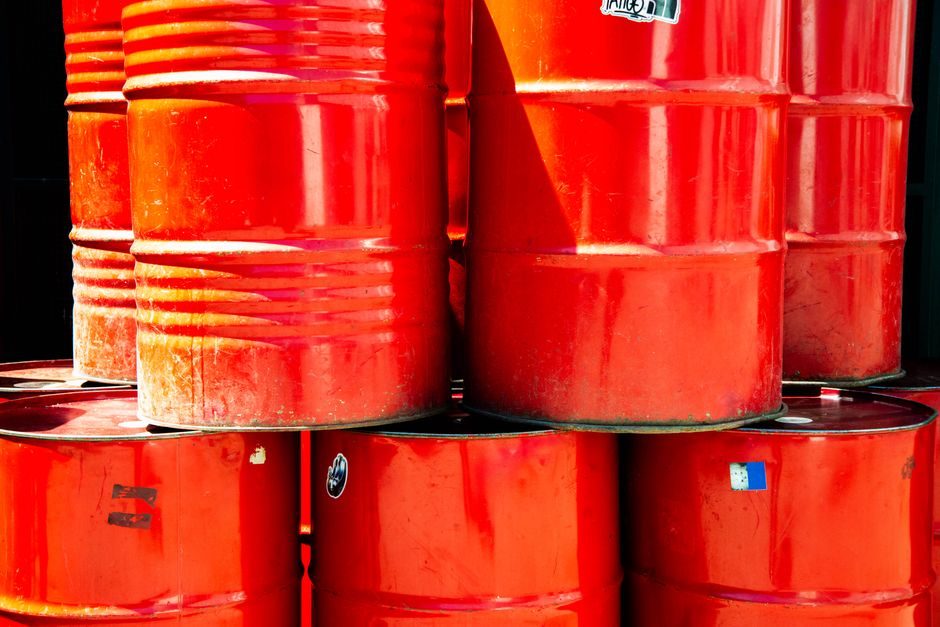
Industrial solvents remain the workhorse of cleaning, extraction, and formulation across chemical processing, pharma, and coatings — and the four headline advantages are high solvency power, low unit cost, tunable boiling point, and straightforward scale-up from bench to reactor [S2].
The headline disadvantages track just as cleanly: flammability, VOC contribution to ground-level ozone, acute and chronic toxicity, and a regulatory overlay that keeps shifting under REACH SVHC listings, OSHA permissible exposure limits, and EPA RCRA waste codes [S2].
Solvent Families and the Polarity / Boiling-Point Decision Grid
Solvent selection starts with a polarity match against the solute and a boiling-point match against the downstream still or dryer, not with a brand catalogue.
Non-polar aliphatic hydrocarbons (hexane, heptane) sit at the low end of polarity and offer narrow boiling ranges that simplify recovery, but their lower flash points and strong VOC profile push them onto substitution watch lists in California and the EU [S2].
Aromatic solvents (toluene, xylene) carry higher solvency for resins and many polymers, yet their NESHAP-listed HAP status in the US and CMR classifications in the EU make them a regulated commodity, not a commodity in the open sense.
Polar protic solvents (methanol, ethanol, IPA, water) give hydrogen-bonding capability for actives, salts, and bio-based feedstocks, with ethanol and IPA already commercial at bio-renewable grades — a substitution path that connects directly to broader bioplastic and green-chemistry process design programs [S1][S2].
Polar aprotic solvents (acetone, MEK, ethyl acetate, DCM) are the daily drivers of paint thinning, adhesive cleaning, and lab extraction; their mid-range boiling points and moderate polarity make them the most specified family in mixed production lines [S2].
Where Industrial Solvents Win: The Four Engineering Advantages
First, dissolution power is unmatched at scale: organic solvents can move from gram-lab to 10,000-litre reactor with no change in mechanism, and supercritical CO2 and subcritical water variants extend that envelope into GRAS-aligned extraction [S2].
Second, unit cost and supply are stable for the top fifteen commodity solvents; bulk hexane, toluene, acetone, MEK, and ethyl acetate trade in liquid, indexed contracts, and a single railcar removes raw-material variability from a plant P&L.
Fourth, the operating envelope is wide — ambient- and elevated-temperature extraction is straightforward, and viscosity, surface tension, and Kauri-butanol values let an engineer pre-pick a candidate for almost any resin, active, or contaminant on a process-spec reference page [S2].
Where Industrial Solvents Lose: Five Hard Constraints
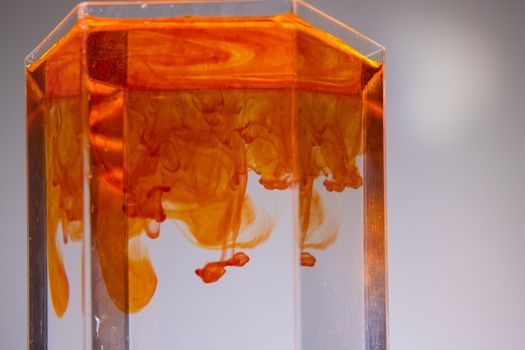
Flammability is the first constraint: most common solvents carry flash points below 40 °C, and NFPA 30 / ATEX 2014/34/EU zoning drives Ex-rated enclosures, grounding, and ventilation into every capital estimate [S2].
Toxicity is the second: OSHA permissible exposure limits for benzene sit at 1 ppm as an 8-h TWA, n-hexane at 500 ppm, and DCM at 25 ppm — values that turn a single open drum into an industrial-hygiene project, and that interact with broader worker-safety engineering across industrial camera and borescope inspection of confined-space reactor cleaning [S2].
Environmental release is the third: VOCs contribute to tropospheric ozone formation, and EPA NESHAP and EU IED set stack and fugitive emission budgets that older plants cannot meet without a solvent-management plan or a switch to aqueous or bio-based substitutes [S2].
Regulatory drift is the fourth: REACH SVHC candidate listing, GHS classification changes, and TSCA risk evaluations have shortened the commercial life of several phthalates, chlorinated solvents, and glycol ethers over the past decade, so a solvent specified today may be restricted within the plant's depreciation horizon.
Residual-solvent burden in the final product is the fifth: pharma ICH Q3C and food-contact frameworks (EU 1935/2004, 21 CFR 174-177) force Class 1, 2, 3 residual limits that drive the move toward lower-toxicity, higher-recovery industrial solvent systems and toward green alternatives such as deep eutectic and supercritical CO2 [S2].
Criteria-Based Comparison: Conventional vs Green Solvent Options
On solvency power, conventional organic solvents still lead for non-polar resins and waxes, while supercritical CO2 and subcritical water cover mid-polarity extracts after pressure and temperature tuning [S2].
On toxicity, water, ethanol, and ethyl acetate sit at the benign end; DCM, n-hexane, and benzene sit at the regulated end with the lowest occupational exposure limits.
On capital cost, conventional tanks and stills are cheaper than the pressure-rated vessels supercritical CO2 demands, but operating cost flips when waste-hauling, emission control, and PPE are priced in for the regulated solvents.
On regulatory risk, bio-ethanol and ethyl acetate carry the lowest SVHC exposure today, while chlorinated and aromatic solvents carry the highest near-term reclassification probability under REACH and EPA TSCA.
Starch- and lignocellulose-derived bioplastic processing adds a parallel set of constraints — high water-vapour permeability, low thermal resistance, and high-water-uptake plasticizer behaviour — that can only be managed when the carrier industrial solvent or plasticizer is matched to the polysaccharide network [S1].
Use Cases That Still Need a Solvent, and the Audit Trail Behind Each Pick
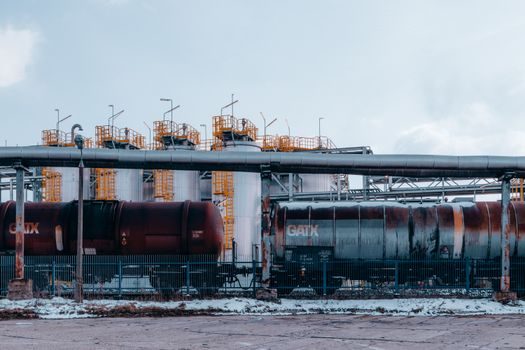
Pharma API synthesis still uses DMF, DMAc, and THF in reaction and crystallization steps; ICH Q3C residual limits and element-impurity rules force a Q3C Class-by-Class audit on every campaign change.
Industrial parts cleaning still runs on petroleum distillates, modified alcohols, and aqueous alkaline cleaners, and the industrial adhesive and sealant producers that supply these lines publish compatibility charts down to specific substrate and cure mode.
Coatings and inks use ketones, esters, and glycol ethers as the carrier; the swap from toluene to ethyl acetate or from NMP to DMSO is a recurring reformulation project tied to VOC and CMR exposure limits.
Extraction of natural actives — flavours, fragrances, nutraceuticals — is the fastest-growing green-solvent segment, with supercritical CO2, subcritical water, and deep eutectic solvents substituting for hexane and DCM in food and cosmetic grades [S2].
Limitations, Failure Modes, and Cross-Reference to Adjacent Spec Work
Solvent failures usually show up as carry-over in the dried product, exceeding ICH Q3C or food-contact limits; as cracked or stained substrate from a polarity mismatch with the industrial adhesive or coating being applied; or as a downstream still that can no longer hit its mass-balance spec because of an azeotrope the original design ignored.
A good audit logs solvent identity, grade, CAS, lot, exposure controls, recovery rate, and residual-test result against the governing standard; the same discipline carries across to synthetic resin and adhesive selection where solvent and resin grade must be matched before pilot scale-up.
For plant-level cost models, the synthetic resin total-cost-of-ownership stack and the arc-welding cleaning trade-offs are the two adjacent references most often opened alongside a solvent spec, because pre-weld and post-weld cleaning chemistry sits on the same solvent family map.
Track these signals over the next two quarters: REACH SVHC candidate-list updates for residual phthalates and glycol ethers; EPA TSCA risk-evaluation outcomes for trichloroethylene and perchloroethylene; and the ICH Q3C revision cycle for residual-solvent Class 1 and Class 2 limits.