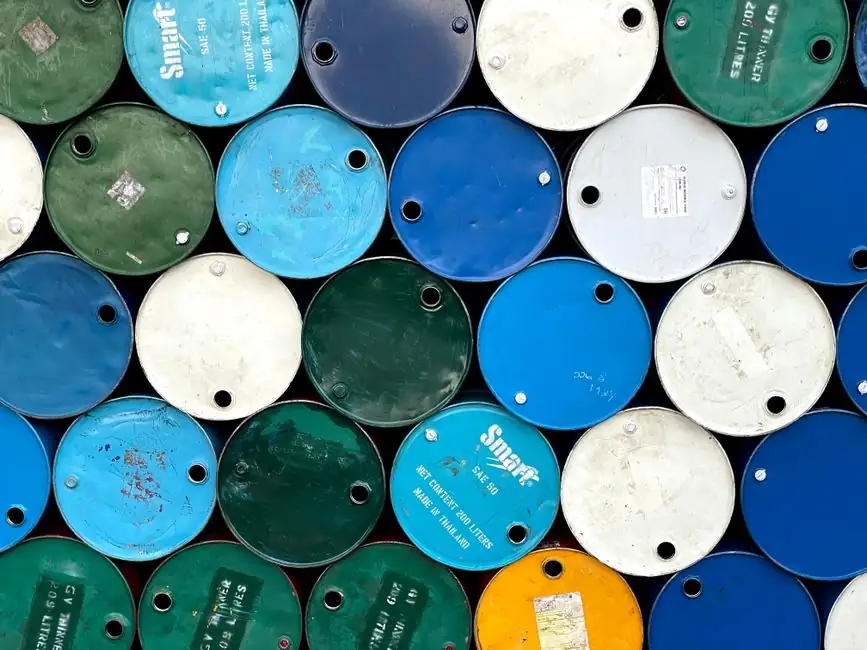
Industrial solvent selection is governed by the "like dissolves like" rule, where polar solvents (water, alcohols, ketones, esters) dissolve ionic compounds and resins while non-polar solvents (hexane, mineral spirits, toluene) break down oils, waxes, and greases [S2][S3]. The decision is rarely chemistry alone: a 2025-08 industry guide ties solvent choice to a four-axis filter of polarity, evaporation rate, regulatory class, and flash point [S2].
Total cost of ownership is driven more by recovery, disposal, and regulatory exposure than by drum price, with solvent recovery systems documented to recapture up to 95% of in-process solvent and cut both replenishment and hazardous-waste spend [S5]. For a process engineer, the first 30 minutes of any solvent review should be spent mapping the duty (cleaning, extraction, reaction medium, coating carrier) to a polarity window, an evaporation-rate band, and a flash-point floor, before any brand or vendor shortlist is opened.
Solvent Families and Their Working Envelopes
Aliphatic hydrocarbons, straight or branched C6 to C15 petroleum cuts, are the default non-polar workhorses for heavy degreasing and oil extraction, with hexane (C6H14) boiling at 69°C and mineral spirits (C9 to C15) carrying a 42°C flash point that makes the latter safer for parts washing and paint thinning [S2]. Aromatic hydrocarbons (toluene at 110°C boiling, xylene at 138°C) are stronger against tough resins, adhesives, and rubber compounds, but carry the HAP and VOC baggage that pushes many plants toward reformulation [S2][S3].
Ketones, anchored by acetone (BP 56°C, molecular weight 58.08) and methyl ethyl ketone (MEK, MW 72.11), are fast-evaporating polar solvents used for fiberglass cleanup, ink, and adhesive wipe-down, with acetone fully miscible in water and MEK valued for resin and surface-coating work [S2][S5]. Alcohols (ethanol, IPA, methanol) bridge the polarity gap; ethanol and IPA dominate precision cleaning because they evaporate with minimal residue, while methanol (toxic if inhaled or ingested) is gated to synthesis, resin production, and fuel blending [S4]. Esters (ethyl acetate) add fast drying with strong solvency, the standard fast carrier in paints, packaging inks, and adhesives [S3][S4].
Evaporation Rate Bands and What They Mean on the Line
Evaporation rate, normalized to n-butyl acetate (nBuAc = 1.0), is the second decision variable and is typically binned into four bands: very fast (>3.0, acetone, MEK) for quick-dry cleaning and spray; fast (1.0 to 3.0, ethyl acetate, IPA) for general coatings and wipe-down; slow (0.1 to 1.0, n-butanol, MIBK) for flow and brush coatings; and very slow (<0.1, mineral spirits, DMSO) for long open time and high-boiling process work [S3]. A solvent that flashes off too fast causes blushing in lacquers or lifts a contaminant before it has time to dissolve; one that lingers extends cycle time and inflates ventilation load [S3].
For cleaning and degreasing, fast to very fast rates are preferred; for coatings and formulation, slow to very slow carriers give the film time to level. Acetone and MEK sit at the very-fast end and are the standard for spray applications and adhesive cleanup, while mineral spirits and propylene glycol USP (BP 188°C, flash 104°C) anchor the slow end as heat-transfer fluids and humectants [S2].
Regulatory and Safety Filters: HAPs, VOC, Flash Point

Toluene, xylene, and MEK are listed Hazardous Air Poll pollutiants under the U.S. Clean Air Act, and facilities using them above threshold volumes face reporting and NESHAP-style control requirements, which is why solvent blending, swapping MEK for a compliant blend, has become a common reformulation lever [S3]. State and district VOC rules further restrict emissions; lower-VOC glycol ethers and bio-based solvents are often the only path to compliance in non-attainment areas [S3].
Flash point sets the storage and handling class: hexane (volatile, low flash) and acetone demand grounded, bonded, explosion-vented storage, while mineral spirits (42°C flash) and propylene glycol (104°C flash) are friendlier to general plant areas [S2]. Halogenated solvents, perchlorethylene, methylene chloride, trichloroethylene, carry higher waste-disposal cost than non-halogenated equivalents, a line item that often outweighs any per-litre purchase saving [S3]. SDS review for PEL/TLV, flash point, and required PPE is non-negotiable before any new SKU enters the plant [S3].
Solvent Selection by Application Duty
Cleaning and degreasing usually map to a non-polar aliphatic (hexane, mineral spirits) for petroleum soils or a fast-evaporating polar solvent (acetone, IPA) for resin and fingerprint soils, with electronics and lab work biased to IPA because of its low-residue profile and rapid dry [S3][S4]. Extraction duties, edible oil, flavors, active pharmaceutical ingredients, lean on hexane or ethanol, both of which dissolve moderately non-polar target compounds and are accepted under food and pharma-grade regulations [S2][S4].
Reaction media prioritize thermal stability and chemical inertness, so high-boiling aprotic or glycol solvents (NMP, DMSO, propylene glycol) are typical, and NMP is documented for polymer dissolution in electronics, pharma, and petrochemical work [S5]. Coating and formulation carriers span the whole polarity map: ethyl acetate and MEK for fast industrial lacquers; toluene and xylene for industrial paints and rubber; ethanol for shellac and certain pharma coatings; and water or glycol ethers for water-borne reformulations chasing lower VOC [S3][S4]. A practical reformulation tip when HAP or VOC is binding: a binary blend, for example ethyl acetate plus a slower high-boiling co-solvent, often matches a single regulated solvent's performance while staying below the reporting threshold [S3].
Comparison Matrix: Common Solvents on Four Criteria

The four most specified solvents in coating and cleaning lines can be lined up against the variables that actually drive a buy decision [S2][S3][S4].
Who Should Not Pick the Mainstream Choice
Toluene, xylene, and MEK are the wrong first pick for any operation sitting in a non-attainment VOC district or under a HAP cap, because the compliance overhead, NESHAP reporting, NESHAP-style controls, lower stack emission limits, will exceed the per-litre saving inside one audit cycle [S3]. Halogenated solvents are the wrong pick for any plant that does not already run a dedicated recovery still, because disposal cost per litre can run several multiples of the drum price and trashes any payback calculation [S3][S5].
Methanol is the wrong pick for any open-vat, low-ventilation cleaning operation; inhalation and skin absorption risk, plus the regulatory enforcement profile, makes it a poor substitute for ethanol or IPA even on a price-per-litre basis [S4]. Hexane, despite its oil-extraction dominance, is the wrong pick for parts washing where the flash-point floor is set above its boiling range, and the 42°C flash mineral spirits or a higher-flash petroleum distillate is the safer, code-compliant substitute [S2].
Shortlist Logic: From Duty to SKU

The shortest working path from a defined duty to a defensible shortlist: lock the polarity window from the solute chemistry; pick the evaporation-rate band from the process time budget; confirm flash point clears the storage and ventilation class; then run the SDS through HAP, VOC, PEL/TLV, and waste-class filters; only then open a vendor list [S3]. For buyers that need a generic reference starting point, the industrial solvent selection primer gives the polarity-by-family map; for plants that also bond substrates, the industrial adhesive selection guide shares the same evaporation-rate logic and is a natural cross-reference.
Buyers sourcing paints, adhesives, or chemical intermediates can also see the broader supply-chain map in this synthetic resin suppliers sourcing cut and the fastener-and-hardware baseline in this industrial fasteners market spec map, both useful anchors when a solvent shortlist has to be aligned with the resin and hardware package it sits in.
For the relevant spec sheets and selection criteria, see industrial borescope.