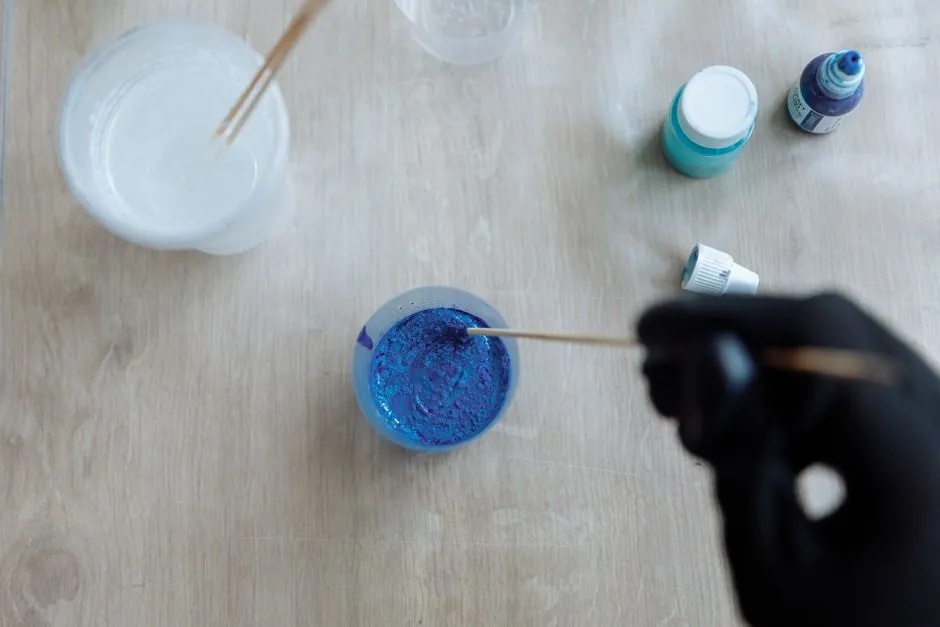
Synthetic resin selection is a chemistry-and-duty decision: the right family of resin is determined first by thermoset versus thermoplastic behaviour, then by viscosity, hardness, and cure profile matched to the end use [S4][S7].
Polyester, epoxy, polyurethane, polycarbonate, and acrylic dominate the industrial menu, with polyester typically the lowest-cost option for large-volume laminates and casting, and epoxy and polyurethane covering higher-strength or higher-flexibility duties [S2]. For buyers weighing adhesive chemistries alongside resins, the decision logic in industrial adhesive selection overlaps with thermoset resin selection on cure, substrate wetting, and service temperature.
Thermoset vs Thermoplastic: the First Branch
Thermoplastic resins such as polyethylene (PE), polyvinyl chloride (PVC), polypropylene (PP), and polymethyl methacrylate (PMMA) soften on heating and re-harden on cooling, a reversible cycle that supports re-processing and gives better mechanical properties but weaker heat resistance and stiffness [S4]. Thermosetting resins such as phenolic (PF), urea formaldehyde (UF), epoxy (EP), unsaturated polyester (UP), polyurethane (PU), and silicone (SI) cross-link into a reticular molecular structure during cure; once set they cannot be remelted, which is why thermosets deliver better heat resistance at the cost of being mouldable only once [S4][S7].
The choice downstream then hinges on the operating envelope: thermoplastics dominate in commodity parts, films, and containers where re-processability matters, while thermosets dominate in coatings, structural composites, electrical insulation, and casting where the cured shape must hold under heat and chemical load [S4][S7].
Reading the Spec Sheet: Hardness, Viscosity, Cure Time
For casting and coating applications, three numbers carry most of the selection weight: Shore hardness, viscosity in CPS, and working/curing time at a defined room temperature. Casting resins typically target a cured hardness around 75 Shore D, with viscosity near 1400 CPS, a 1:1 mix ratio, about 40 minutes of working time, and full cure in 8-24 hours [S3]. Deep-pour resins run at lower viscosity, around 1000 CPS, to support 2-4 inch pours, mix at 2A:1B by volume, give roughly 80 minutes of working time, and need 48-72 hours for full cure while reaching about 83 Shore D [S3].
Coating resins sit on the opposite end: high viscosity near 7500 CPS with minimal flow, 1:1 mix, layers up to roughly 1 inch thick, 24-72 hours to full cure, and a cured hardness around 85 Shore D for scratch and yellowing resistance on bar tops, floors, and countertops [S3]. For softer elastomeric cures, an epoxy system lands in the 75-80 Shore A window as the practical target; values above that band trade flexibility for brittleness, while values below it sacrifice surface toughness [S1].
Mix ratio, exotherm, and pour depth must be checked together: deep-pour systems are formulated for low exotherm at thickness, whereas thin-section casting resins will overheat and crack if poured beyond their rated depth in a single charge [S3].
Matching Resin Family to Duty
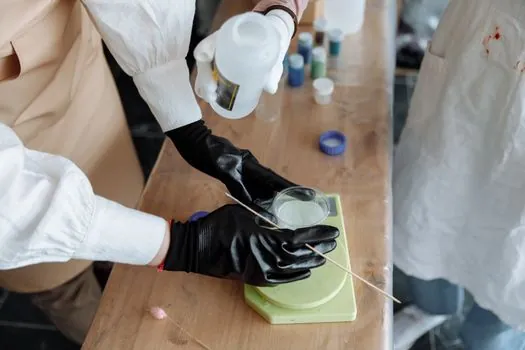
Polyester resin is the cost baseline: it is formed by combining polyhydric alcohols and dibasic organic acids, cures into a hard and durable thermoset, and is specified for construction equipment, marine components, auto body fillers, fishing rods, coatings, skis, bottles, and decorative laminates [S2]. Polycarbonate, polymerised from phosgene and bisphenol A, is the transparent, impact-resistant option for safety helmets, ophthalmic lenses, security windows, automotive headlamps, skylights, and anti-vandal glazing, where its high refractive index and toughness outweigh its higher price [S2].
Polyurethane, made from polyol and isocyanate components, gives a wide Shore A-to-Shore D range by tuning the formulation and can cure into flexible or rigid parts, which is why it is widely used as a modifier or primary binder in foams, elastomers, and tough coatings [S2]. Epoxy is the structural default for wet laminating, vacuum-assisted laminating, and resin infusion of fibreglass, carbon fibre, and aramid fabrics, and it is the resin of choice when the laminate has to carry load, such as yacht hulls, sports equipment, and structural automotive parts [S5].
Vinyl ester occupies the middle ground between polyester and epoxy, offering better chemical resistance than polyester at lower cost than epoxy, and is commonly processed by the same wet-laminate and infusion routes [S5]. For non-structural, weather-exposed duty, silicone-modified or acrylic resins add UV and weathering resistance at the cost of lower mechanical strength [S6][S7].
Process Route: Wet Laminate, Vacuum, or Infusion
The same epoxy or vinyl ester system can perform very differently depending on how it is consolidated. Wet laminating, where resin is brushed or rolled onto fabric, is fast and cheap but traps air, with hundreds of bubbles left in the laminate that must be squeezed out with air rollers, so it is reserved for parts not designed for heavy structural load, such as rowing boats, motorboats, car trim, moulds, baths, and roof racks [S5]. Adding vacuum bagging after wet lay-up reduces the resin content of the laminate and yields a lighter, more durable part suited to yacht hulls, rally car panels, and structural components [S5].
Resin infusion is a closed-mould process carried out under vacuum film; because the dry fabric is wetted only after the vacuum is drawn, the void content drops further and fibre-to-resin ratios are tightly controlled, which is why infusion is preferred for the highest-performance composite parts [S5]. The trade-off is cycle time, tooling cost, and the need for a vacuum pump, bagging film, sealing tack, and either peel-ply or perforated release film, on top of the base fabric and resin [S5].
Limitations and Failure Modes
Each resin family has a defined ceiling: polyesters tolerate moderate heat but lose mechanical properties above their glass transition, while epoxies carry higher loads but can yellow and embrittle under UV unless a UV-resistant topcoat or additive is specified [S1][S6]. Under-cured or un-cured resin, usually from a wrong mix ratio, cold workshop below the 18-20 degrees C window recommended for most deep-pour epoxies, or contaminated substrates, is the single most common field failure and shows up as soft spots, tacky surfaces, or cracking [S1][S3].
Thermoplastics fail by creep and loss of stiffness above their heat-deflection temperature, which is why PVC and PE are not used in load-bearing hot-service parts even though they are easy to process [S4]. Cast epoxy parts crack when poured too thick in a single lift, because the exotherm cannot be shed, while thin-coat epoxies fail by peel when applied to poorly prepared or oily substrates [S3][S5].
Shortlist Logic: From Requirement to Resin
Start by writing down three numbers: maximum service temperature, required Shore hardness band, and chemical or UV exposure, then add the process constraint, whether the part is cast, coated, laminated, or injected [S4][S7]. Match those to the comparison below:
- Polyester: lowest cost, moderate heat and chemical resistance, best for large laminates and casting where budget dominates [S2].
- Epoxy: highest mechanical strength and best fibre wet-out, best for structural laminates, casting, and coatings, at higher cost and tighter mix-ratio discipline [S1][S3][S5].
- Polyurethane: widest Shore A-to-D range, best for flexible or impact-tolerant parts and tough elastomeric coatings [S2].
- Polycarbonate: transparent and impact-resistant, best for safety glazing, lenses, and headlamp optics [S2].
- Vinyl ester: the chemical-resistant middle ground for tanks, pipes, and marine skins where pure epoxy is over-spec and polyester under-specs [S5].
If the duty demands temperatures above the organic ceiling, or wear resistance beyond any resin, the material map shifts to ceramics and metals rather than to a different resin grade. Track the next two signals: (1) any new low-viscosity deep-pour system that extends single-lift thickness beyond 4 inches at room-temperature exotherm, and (2) any bio-based or recycled-content epoxy that closes the cost gap with polyester without sacrificing lap-shear strength.
For the relevant spec sheets and selection criteria, see synthetic resin, peek, and pom.