
When comparing UPS products or vendors, consider broader total cost of ownership factors such as battery replacement and annual energy use [S5].
A TCO analysis can be performed over a specific period, such as 15 years, to compare two or more assets and support evaluation and decision-making [S4].
Industrial UPS TCO Scope and Cost Baseline
Industrial UPS total cost of ownership covers the complete asset life cycle, including the initial purchase, installation, training, electricity, maintenance, component replacement and operating costs [S1][S2].
UPS TCO can be categorized into initial acquisition costs, operational expenses and maintenance costs [S2].
A specific period, such as 15 years, can help identify variable costs over the life of a purchase [S4]. The calculation should be performed at defined load levels, utility tariffs and lifecycle stages rather than across one undifferentiated average.
Purchase Price Drives CAPEX, Not Total Cost
A UPS purchase price typically represents about 25–40% of total ownership cost, while broader lifetime-cost factors include battery replacement and annual energy use [S5][S7].
Three CAPEX variables can move the result substantially: UPS type and rating, redundancy and scalability, and battery type and capacity. Installation complexity adds further cost through switchgear, cabling, engineering, commissioning, floor space and cooling [S2].
Redundancy deserves separate pricing because it changes the equipment quantity, service scope, replacement strategy and allowable loading. A lower-cost unit can therefore carry a higher TCO if added capacity, spare parts, testing or downtime exposure raise lifecycle spending. Comparing quotations at equal usable load, redundancy and autonomy is mandatory before ranking price.
Efficiency, Power Factor and Cooling Shape OPEX

Conversion efficiency directly determines electricity losses and waste heat, so both the UPS input power and downstream cooling load must be included in OPEX. Efficient conversion reduces electricity use and can lower internal temperatures, potentially reducing maintenance frequency and replacement frequency [S2].
Eaton states that even a single percentage improvement in efficiency could save more than the UPS purchase price over its lifetime [S5].
Power factor closer to 1 reduces apparent-power demand, may reduce demand charges and can improve utilization of existing electrical infrastructure, potentially deferring capacity upgrades. Poor power factor increases losses and heat in both the UPS and connected equipment [S2]. Harmonic mitigation also affects TCO because excess heating adds losses, cooling demand and premature component-failure risk [S2].
Architecture Comparison: One Block Versus Parallel Modules
For modular systems, the comparison must also preserve N+1 or another required redundancy level. Removing a module is not a valid cost reduction if it violates availability requirements. The proper comparison is equal service resilience at the specified load, not equal unit count.
Batteries, Maintenance and Scaling Define Lifecycle Risk
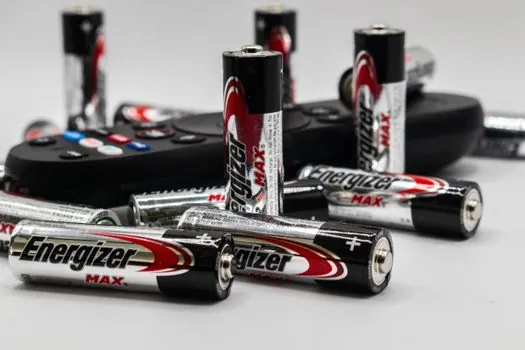
Battery maintenance and replacement are core UPS ownership costs, alongside component reliability, service contracts and technical support [S2]. A TCO model should identify battery replacement events, maintenance frequency, support terms and the effect of load changes instead of treating maintenance as a fixed percentage.
UPS scalability and modularity affect TCO because load growth can alter module quantities, utilization, replacement strategy and cooling demand. A modular approach can permit staged deployment, but it adds communication, configuration and service interfaces that must be priced rather than assumed free [S2].
Who Should Use Industrial UPS TCO Analysis?
Industrial UPS TCO analysis is for engineers, facility managers, procurement teams and owners responsible for critical loads, replacement planning and multi-year operating budgets. It is particularly useful when comparing equipment at equal load and redundancy, evaluating architecture changes or deciding between modular and single-block configurations [S4].
The method is less suitable for a purchase made solely against an emergency replacement deadline, but that constraint should not eliminate lifecycle cost data from the commercial decision. A minimum dataset needs UPS rating in kW or kVA, expected load, redundancy, target term, electricity price, cooling arrangement, battery replacement interval, installation scope and service assumptions [S2][S7].
Industrial UPS selection criteria also need to be checked separately from financial calculations. Technical fit, protection performance, battery behavior, environmental limits and serviceability determine whether a lower-TCO option is viable at all. A supporting review of industrial UPS advantages, disadvantages, and selection can be used to validate those technical gates before comparing lifecycle cost.
Calculation Method and Traceable Cost Assumptions

A defensible model calculates present value by adding initial CAPEX, discounted energy and cooling costs, scheduled maintenance and battery replacements, component renewals, training, service contracts and disposal costs over the selected term. Each assumption should carry a source, unit price and sensitivity range [S1][S2][S7].
For every proposal, record at least 5 baseline inputs: UPS capacity in kVA or kW, design load, redundancy level, evaluation period in years and electricity tariff in currency per kWh. Add the conversion-efficiency curve, cooling coefficient, battery replacement schedule and installation hours so small efficiency gains can be tested against actual operating conditions [S2][S5].
Run at least 3 scenarios rather than a single forecast: base load, higher-load growth and battery replacement timing. This exposes whether the winner changes when utilization, energy prices or replacement dates move. A savings claim should also identify whether it comes from fewer modules, reduced cooling, lower losses, avoided service work or a combination [S4][S5].
Total Cost of Ownership Changes the Purchase Decision
The most useful industrial UPS comparison is not the lowest invoice but the lowest risk-adjusted lifecycle cost at equal load, redundancy and service life. Purchase and installation represent 25–40% of TCO, so efficiency, heat rejection, battery replacement and maintenance can outweigh an initial price advantage [S1][S5].
Track 3 signals when monitoring a UPS business case: measured efficiency at the expected load, the next battery replacement date, and changes in annual service hours or field interventions. Each has a direct line to the operating-cost model and provides a practical check on whether the projected TCO remains credible [S2][S8].