
ISO 50001 and ISO 14001 use the same Plan-Do-Check-Act management logic, but ISO 50001 concentrates on energy performance while ISO 14001 covers the wider environmental footprint.
For a plant, ISO 50001 is the focused route to energy baselines, energy performance indicators, and efficiency improvement; ISO 14001 is the broader route for environmental aspects, legal obligations, pollution, waste, water, and resource management [S1][S4].
Scope Boundary: Energy Performance Versus Environmental Management
ISO 50001 is an Energy Management System, or EnMS. Its purpose is to establish a repeatable system for improving energy performance through monitoring, benchmarking, and process optimisation [S1][S3]. In practical terms, its management boundary can include purchased electricity, fuels, thermal energy, and the energy consumed by equipment and processes.
ISO 14001 is an Environmental Management System, or EMS. It requires organisations to identify environmental aspects, establish improvement objectives, comply with legal requirements, and apply prevention, resource conservation, and lifecycle thinking [S1]. Its scope therefore extends across environmental impacts such as energy use, waste, emissions, pollution, water use, and biodiversity [S4].
The overlap is therefore substantial but not identical. An energy-efficiency project may sit inside both systems, yet an ISO 14001 programme may address environmental issues that have no material energy component, while an ISO 50001 project may focus on consumption and cost without resolving every environmental obligation attached to the affected equipment.
Decision Matrix: Primary Objectives, Evidence and Integration
Against the criterion of primary objective, ISO 50001 targets systematic energy-performance improvement, while ISO 14001 targets management of the organisation’s overall environmental impact [S1][S3]. Against scope breadth, ISO 50001 remains focused on energy use; ISO 14001 extends to waste, pollution, water, biodiversity, and lifecycle impacts [S4].
Against evidence requirements, ISO 50001 is suited to energy baselines and energy performance indicators, supported by monitoring and benchmarking [S1]. ISO 14001 requires environmental aspect identification, objectives, legal compliance, and performance review across the EMS [S1]. Against integration effort, both standards share PDCA, risk-based thinking, leadership commitment, documentation, performance monitoring, and legal or regulatory alignment, which permits partial or full integration rather than duplication [S1][S3].
The standards share ten high-level elements when used alongside ISO 9001 and ISO 45001: scope, normative references, terms and definitions, organisational context, leadership, planning, support, operation, performance evaluation, and improvement [S3]. Their common Annex L structure is the main reason separate certificates can sit inside one coordinated management system [S3].
Who Should Use Which Standard

ISO 50001 is the better primary choice for an organisation whose main compliance, customer, or operational driver is energy consumption, energy cost, equipment efficiency, or quantified decarbonisation through energy management [S1]. It is also appropriate where energy is consumed across multiple production lines and the organisation needs a consistent baseline rather than isolated efficiency projects.
ISO 14001 is the better primary choice for organisations managing a broad environmental footprint, including water, waste, pollution, emissions, biodiversity, and lifecycle considerations, especially across multiple jurisdictions and supply chains [S4]. It is less suitable as a narrow energy-efficiency specification because its environmental scope is substantially wider than the energy question.
Neither standard is a substitute for regulatory obligations or specialist carbon accounting. ISO 14001 addresses environmental management, and ISO 50001 addresses energy management; neither turns a general management-system certificate into evidence that every legal limit or emissions disclosure has been satisfied.
Overlapping Controls and Duplicate Work
The clearest duplicate risk is the repeated creation of policy, objectives, legal review, responsibilities, training, monitoring, internal audit, management review, and corrective action. ISO 14001 and ISO 50001 both rely on the PDCA cycle, with ISO 50001 explicitly framed around energy performance and ISO 14001 around environmental management [S1][S4].
Integration options include maintaining separate systems, using a partially integrated system, or operating a fully integrated management system [S3]. Organizations can maintain separate management systems, integrate them partially, or integrate them fully into an integrated management system.
A practical example is a compressed-air system. One procedure can cover equipment ownership, maintenance escalation, procurement review, and corrective action under both frameworks, while the measurement set keeps distinct definitions: energy consumption and efficiency belong primarily to ISO 50001, whereas waste-oil and disposal controls remain under ISO 14001 [S1][S4].
Energy, Emissions and Climate Boundaries
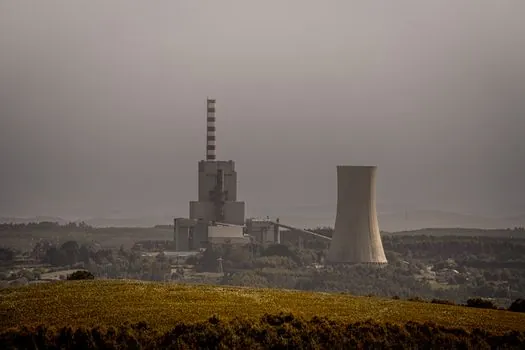
Energy use is one part of the environmental footprint, so an ISO 50001 result can support ISO 14001 evidence. The reverse is not automatic: a broad environmental policy does not by itself demonstrate that the organisation has established the energy baseline, quantified performance, or selected energy-performance indicators required for a rigorous energy-management system [S1].
Both standards can support greenhouse-gas reduction, and their shared management methods can help fulfil sustainability-policy and GHG-reduction requirements addressed by the European Sustainability Reporting Directive framework [S1]. That overlap does not make the standards interchangeable. ISO 14001 addresses environmental impacts such as emissions, waste, pollution, and water; ISO 50001 addresses energy efficiency and reduction of greenhouse-gas emissions through systematic energy management [S1].
Where energy procurement, renewable electricity, process changes, and emissions reduction form one decarbonisation programme, an integrated structure can avoid competing baselines. The organisation should still define which system owns each metric, calculation boundary, target, and review record, because a shared file does not establish a shared metric definition.
Implementation Sequence and Failure Modes
Start with the organisational boundary, legal and other requirements, energy-consuming activities, environmental aspects, and the responsible management structures. ISO 14001 calls for environmental aspects, objectives, legal compliance, resource conservation, pollution prevention, and lifecycle thinking; ISO 50001 calls for energy monitoring, benchmarking, and process optimisation [S1].
Common failure modes include certifying ISO 14001 without controlling the energy baseline, implementing ISO 50001 without linking energy actions to environmental aspects, maintaining duplicate procedures with inconsistent indicators, and expanding a plant-level programme without defining boundary ownership for outsourced or supply-chain activities [S1][S4].
For deeper metric design, Set ISO 50001 Energy Baselines and EnPIs That Hold Up provides a focused treatment of energy baselines and EnPIs. Cevher’s disclosed ISO 50001 scope, covering light alloy wheel design and production and clutch housing production, also shows why the organisational and operational boundary must be stated rather than left implicit [S2].
Certification and Sourcing Record

The relevant editions in the cited comparison are ISO 14001:2015 and ISO 50001:2018, both using the high-level structure associated with Annex L [S3]. The same comparison identifies three implementation choices: separate systems, partial integration, and full integration. It also identifies 10 common elements across ISO 9001, ISO 14001, ISO 45001, and ISO 50001 [S3].
For the selected management-system references, use ISO 14001:2015 for the environmental management framework and ISO 50001:2018 for the energy management framework. For sustainability-reporting alignment, the source material connects both standards with DR E1-4 concerning GHG-emissions reduction targets and sustainability policies [S1]. Scope descriptions, objectives, baselines, indicators, legal requirements, and evidence should be checked against the controlled copies used by the organisation’s chosen certification body.
Decision records should state which standard governs each deliverable, who approves it, which calculation boundary applies, and how often performance is reviewed. That makes the overlap auditable instead of leaving two certificates with duplicated procedures and incompatible results.