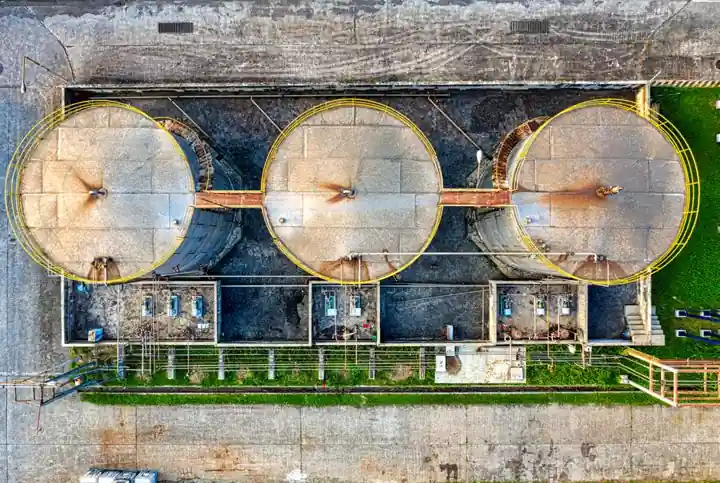
ISO 55001:2014 specifies the criteria necessary for establishing, implementing, maintaining, and improving an asset management system [S1].
The ISO 55000 standards describe governance for physical assets in power plants, including turbines, boilers, transformers, and auxiliary systems [S4].
What ISO 55001 governs in a plant
ISO 55001 is a management-system requirement rather than a maintenance technique. It specifies what an organization's asset management system must contain, while ISO 55000 defines the vocabulary, principles and concept of value from assets and ISO 55002 supplies practical implementation guidance [S4][S5].
ISO 55001 is suitable for capital-intensive plants that need consistent governance across turbines, boilers, transformers and support equipment. It is not a standalone equipment condition-monitoring standard, a maintenance work procedure or a substitute for statutory inspection and safety controls [S1][S4].
The 7 clauses and required evidence
The required structure is concrete: clause 4 covers organizational context, clause 5 leadership, clause 6 planning, clause 7 support, clause 8 operation, clause 9 performance evaluation and clause 10 improvement [S5]. Together, these clauses test whether asset decisions are intentional, risk-based and linked to business objectives [S3].
Clause 4 requires the organization and stakeholder context, the asset management system scope and the system itself. Clause 5 requires leadership commitment, a policy, and defined roles, responsibilities and authorities. Clause 6 addresses risks and opportunities, asset objectives and the plans for achieving them [S5].
Clause 7 covers resources, competence, documented information and communication. Clause 8 controls operation and lifecycle processes, clause 9 requires measurement, analysis and evaluation, and clause 10 requires corrective action and continual improvement of the asset management system [S5].
Evidence of an asset management system can include a documented strategic asset management plan linking asset objectives to organizational goals with resourced budgets [S3].
Building a defensible lifecycle information model
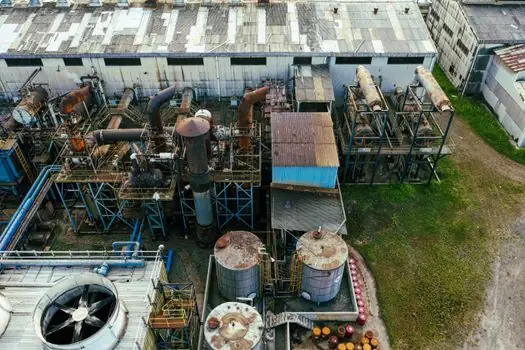
ISO 55001 compliance requires more than recording completed work. A modern CMMS can turn maintenance data into board-level decisions [S4].
A practical foundation is covered in asset hierarchy in a CMMS, including level design, ISA-95 mapping and failure modes.
Documented decisions should preserve the reasoning used to prioritize the selected work [S3]. The applicable risk assessment should determine work priority, and major decisions should connect to asset objectives rather than remain in the knowledge of individual technicians [S3].
Data governance is equally practical: define required attributes, source systems, responsible owners, quality rules and retention arrangements. Otherwise a CMMS can contain decades of work orders without providing reliable evidence for audit or management review [S3][S4].
Risk-based maintenance versus compliance-only records
Risk-based maintenance and ISO 55001 documentation are not competing systems. Risk assessment determines the priority of work, while documented lifecycle information shows how that decision was made, who approved it and which objective it supports [S3].
A weak implementation records work orders after execution and leaves the rationale in verbal knowledge. Asset decisions should be intentional, risk-based, and connected to business objectives [S3].
The comparison is straightforward: reactive maintenance responds to failure; preventive maintenance follows time or usage intervals; risk-based maintenance combines condition or risk evidence with consequence; and ISO 55001 governs the management system that plans, authorizes, executes and reviews those choices [S3][S4].
High availability alone does not demonstrate compliance with ISO 55001 because the standard requires proof that asset decisions are intentional, risk-based, and connected to business objectives [S3]. High availability does not prove that strategic objectives, risk rationale, decision records and corrective actions are documented [S3].
Objectives and indicators that can be audited

A documented strategic asset management plan links asset objectives to organizational goals with resourced budgets [S3].
Useful evidence includes availability targets, forced-outage exposure, maintenance deferrals, overdue preventive work, backlog age, critical-spares coverage, cost variance, asset-life extension and environmental or energy performance. ISO 55001 requires performance measurement and evaluation, but it does not prescribe one universal KPI set for every plant [S1][S4].
Review records must show what happened when a result missed its target. A dashboard without management review is not an asset management control; a defensible control identifies the deviation, assigns corrective action and links the result back to the objective [S3].
Energy-related measures can complement this framework. ISO 50006 Energy Performance Indicators Explained addresses the indicator layer, while ISO 55001 determines whether energy assets are governed through lifecycle objectives, risk decisions and accountable improvement.
Certification scope and common failure modes
Common first-audit failures are evidentiary rather than mechanical: maintenance plans are disconnected from plant KPIs, safety risk matrices are not used for maintenance scheduling, the reason behind repair-versus-replacement decisions is missing, and collected KPI data is not systematically reviewed or converted into corrective action [S3].
Certification should cover a defined scope rather than imply plant-wide assurance by default. The scope statement, asset register, objectives, risk framework, work history, decision records and review evidence must all align. A certificate cannot substitute for engineering judgment, legal compliance or competent inspection of pressure equipment, electrical systems or other regulated plant assets [S2][S6].
ISO 55001:2014 remains the identified ISO publication for the management-system requirements [S1][S2]. Some secondary material refers to an “ISO 55001:2024” revision and describes changed requirements, but the supplied research does not establish the revision status, publication text or effective date; that claim should not be used for procurement or certification planning without a primary-source check [S1][S3].
Implementation sequence for industrial plants
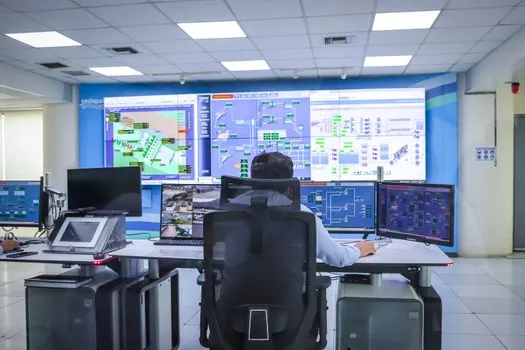
A workable implementation starts with a 7-clause gap review, a bounded asset scope and documented stakeholder needs. It then produces the policy, objectives, risk criteria, asset register, lifecycle procedures, competency controls and measurement process before certification readiness is assessed [S1][S5][S7].
Implementation guidance emphasizes that organizations must establish the processes and systems needed to demonstrate competent asset management, while the asset management system should fit the organization's operating model rather than operate as an isolated compliance program [S7].
For a plant operator, the first audit package should contain: 1 approved scope, 1 signed policy, 1 strategic plan, asset-class objectives, risk criteria, decision records, work history, KPI reviews and corrective actions. Each item should identify an owner, date and supporting record so the audit trail can be traced without reconstructing decisions from interviews [S3][S4].
The next verifiable checkpoint is an internal audit against all 7 clauses using a sample of critical assets, not only common work orders. Trace each sample from objective and risk assessment through work authorization, execution, performance result and improvement action; unresolved gaps define the remediation register before external certification review [S1][S6][S9].