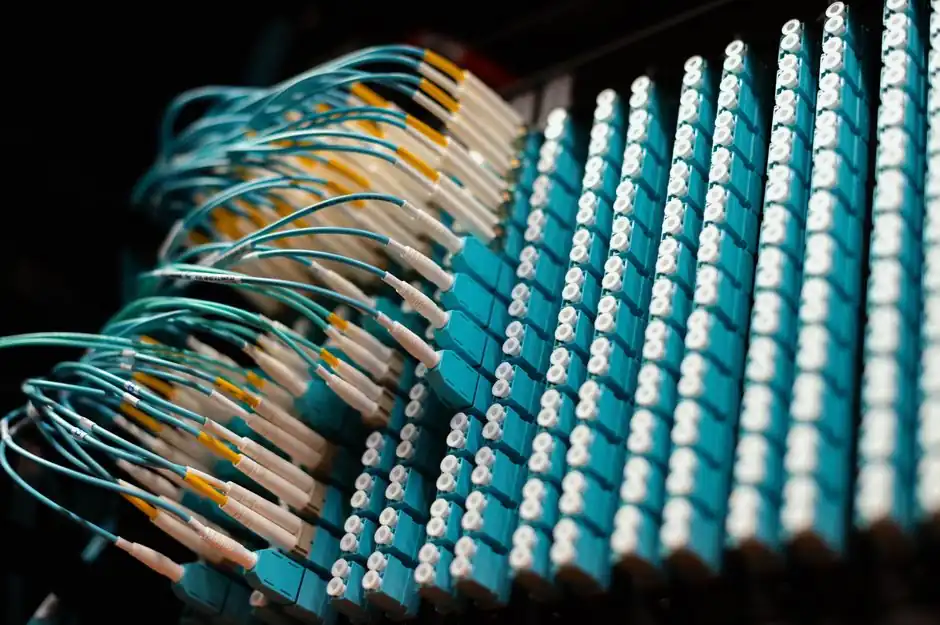
L11 adds rack-level assembly and validation to L10 server manufacturing, combining servers, switches, optics, cabling, power, cooling, and system-level testing before shipment [S1][S2].
For AI clusters, the decision is based on integration scope, fault isolation, schedule certainty, and whether the site already has mature rack, power, cooling, and network operations.
L10 and L11 integration scope
L10 is a complete server-level delivery: CPUs, memory, GPUs, storage, network adapters, firmware, and an operating system or software image are configured and tested on each server [S2]. In the L1–L12 manufacturing hierarchy, L10 therefore represents “full server assembly and testing,” while L11 represents “rack integration” with tested servers installed and connected to switches and PDUs [S2].
L11 expands the tested boundary from one server to the populated rack. Its scope can include switches, optical connections, cabling, PDUs, and cooling distribution, followed by rack power, fabric, collective, and thermal tests [S2]. Definitions vary by supplier: one description treats L10 as a mechanical rack shell, while another uses L10 for a finished compute tray, so an itemized scope is more reliable than the label alone [S2][S3].
Capacity comparison across deployment criteria
L10 provides greater scheduling flexibility because each server is handed over separately, but the customer retains responsibility for racking, cabling, configuration, and validation [S2]. It is the stronger option when racks, power, cooling, and the network fabric already exist, an in-house integration team can perform the work, or servers are being added to an established cluster [S2].
L11 provides greater deployment capacity per site event because the integrator assumes the rack-level work through handover. The customer still has to position the rack, connect facility power, cooling and uplinks, and complete acceptance testing, but the handover includes a rack inventory, a cabling map with MAC addresses, a firmware baseline, and rack test reports [S2].
On integration risk, L10 leaves rack-level failures with the customer, while L11 transfers that risk to the integrator up to the defined handover point [S2]. L10 validates each server independently, whereas L11 adds rack power, cabling, fabric, collective and thermal tests [S2].
On cost and lead time, the research supports L11 as more cost-effective for deployments requiring reduced site work, but it provides no universal price or schedule percentage. L10 can avoid integrator mobilization for small or incremental additions, while L11 is better suited to new racks, liquid-cooling systems, fixed go-live dates, and large AI deployments [S2][S3].
Fault classes that rack testing exposes
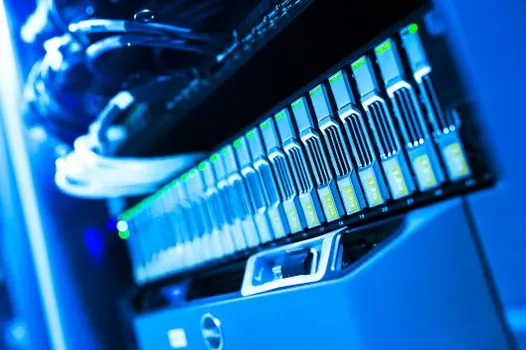
A server can pass component, system, and burn-in tests at L10 and still fail when connected inside a rack. Wrong-port or wrong-cable connections, marginal optical links, and switch configuration errors generally appear only after the nodes are connected [S2].
The coverage benefit extends to network serviceability. Factory testing occurs before freight and installation, while positioning, connection of power, cooling and uplinks, and acceptance testing remain on-site work [S2].
AI cluster use cases and exclusions
L11 fits new AI racks where dense optical and copper cabling, liquid-cooling distribution, fixed commissioning dates, and rack-level performance testing justify early integration. It also fits deployments where hundreds of racks need repeatable cabling, labeling, and factory validation, provided the operator has established an acceptance procedure for delivered systems [S3].
L10 fits expansions into existing infrastructure, small server additions, and operators with experienced rack-and-cabling teams. It provides more flexibility when compute topology, switch allocation, or firmware baselines may change before installation, because the server remains the final tested delivery unit [S2].
L10 is not the right scope when the schedule depends on validated rack-level power, fabric, cooling, or collective performance and no competent internal integration team is available. L11 covers integration of an assembled rack, including its servers, switches, optics, cabling, PDUs and cooling distribution [S3]. For rack-layout and material-handling decisions, compare the integration requirement with pallet rack constraints and the receiving path.
Specification and acceptance requirements
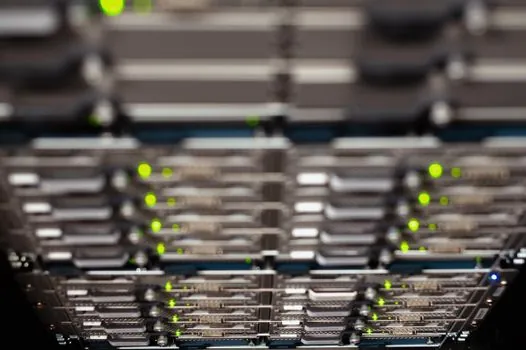
The purchase specification should define the exact L10 and L11 boundary rather than relying on the level name. Request an itemized bill of materials identifying server count, compute configuration, switch models, optics, cable types, PDUs, cooling components, mounting hardware, labeling, firmware baseline, and the extent of customer connections [S2][S3].
For L11 acceptance, require evidence for rack power under peak draw, cabling and switch connectivity, collective workload behavior, thermal distribution with every node loaded, and configuration consistency across nodes [S2]. The handover package should contain rack inventory, the cabling map with MAC addresses, the firmware baseline, and rack test reports [S2].
Test boundaries must be explicit because site acceptance remains necessary after delivery: the customer connects facility power, cooling and uplinks, then performs acceptance testing [S2]. Environmental and seismic conditions for the final installed location should therefore be handled outside the integrator’s factory scope unless expressly contracted.
Decision rule for AI deployments
Choose L10 when the infrastructure is mature, the quantity is limited or incremental, the internal team controls rack integration, and the server remains the stable delivery boundary [S2]. Choose L11 when the rack contains a dense network fabric and liquid cooling, commissioning has a fixed date, rack-level performance matters, or avoiding site rework has greater value than accepting a tightly defined integrator scope [S2][S3].
The decisive question is not whether L11 is technically larger than L10, but whether failure isolation must extend to the populated rack. If acceptance requires rack power, cabling, fabric, collective and thermal validation, L11 moves that risk and workload before shipment; if per-server delivery is sufficient, L10 preserves operational flexibility [S2].
A trackable purchasing signal is the completeness of the handover package: 1 rack inventory, 1 cabling map with MAC addresses, 1 firmware baseline, and rack test reports for power, cabling, fabric, collective behavior, and thermal load [S2].