
Legacy MES migration has no universal method: the selected approach must balance risk, elapsed time, and total cost against automation, interoperability, and production-downtime exposure [S1].
Manufacturers should map the installed environment, preserve traceability, and qualify the target platform before migrating applications, interfaces, and plant-floor data under a tested cutover plan [S1][S2][S5].
Three Variables Define the Migration Path
Manufacturers must choose whether to continue investing in their current MES or migrate to a modern MES that can provide flexibility for changing demands and requirements [S1]. The source states that legacy MES systems heavily customized over time make upgrades, integration, backwards compatibility, and future-proofing more difficult [S1].
These are decision boundaries, not a universal product ranking. A plant with regulated electronic records, uninterrupted production, or complex machine integrations has less tolerance for a high-risk route than one that can tolerate controlled production interruptions [S1][S4].
Map the Legacy Estate Before Selecting an Architecture
A migration starts with a documented inventory of applications, databases, interfaces, infrastructure, and operational dependencies [S5]. The readiness assessment should compare the current state with the target state, identify bottlenecks and vulnerabilities, estimate costs, and expose the technical and operational consequences of moving to cloud services [S5].
A modern MES can extend beyond individual manufacturing areas, integrate business processes such as maintenance, quality, and engineering, and support expansion across the supply chain [S1]. Legacy customization is a material risk because extensive customization makes upgrades, integration, backward compatibility, and future expansion harder [S1].
Data handling requires more than copying database tables. Cloud migration includes moving data and applications from legacy systems or on-premises data centers into the cloud, so record structure, identifiers, timestamps, audit trails, and interface semantics all need validation [S2]. Detailed treatment of production history is covered in MES data migration for traceability.
Choose by Dependency, Automation, and Cutover Tolerance
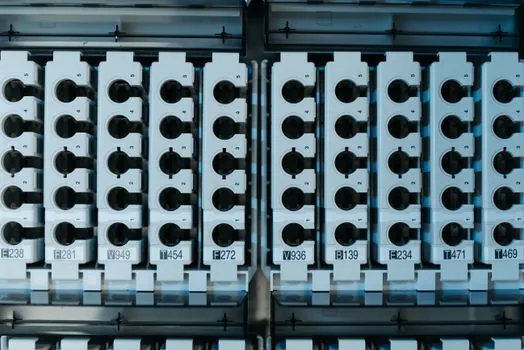
The source identifies supporting digital transformation, meeting customer needs, and accommodating changing requirements among the reasons for switching to a modern MES [S1]. A standalone application and manual records may fit a low-interdependence, low-automation operation with controlled cutover risk, while a highly automated plant needs an integrated target that can absorb interfaces and reduce production disruption [S1].
The source presents investing in the current MES or migrating to a modern MES as the basic choice for manufacturers [S1].
Use a Four-Stage Control Plan
The pre-migration, migration, and post-migration phases must all be included in schedule and cost estimates [S1].
Parallel operation is one risk-control mechanism where the plant can support it. A defined interval in which legacy and target systems exchange or compare critical transactions provides evidence before the old system is retired. The interval must have a fixed exit criterion, such as matched order status, production counts, genealogy, quality events, and interface acknowledgements, rather than an indefinite parallel run.
Protect Traceability and Operational Continuity
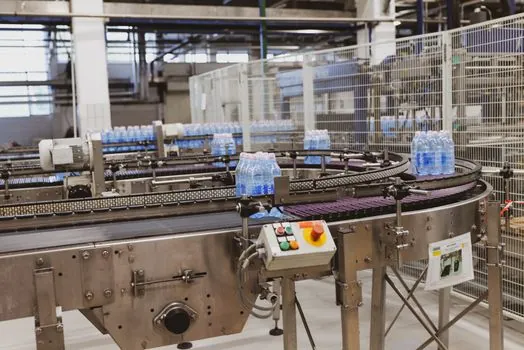
Cloud migration entails moving data and applications from legacy systems or on-premises data centers to the cloud [S2].
Legacy infrastructure is more exposed to hardware failures, software malfunctions, downtime, and security vulnerabilities during extended modernization [S4]. Those risks justify infrastructure and support work before business-function migration, particularly where the legacy MES is tightly coupled to plant equipment or records that cannot be reconstructed after loss.
Do not treat the cloud target as proof of production readiness by itself. Cloud services can supply scalable infrastructure and faster deployment, but application configuration, interface behavior, identity controls, data quality, and plant-floor procedures still determine whether the migrated MES works [S5]. A modernization project must test the complete production information chain, not only server availability.
Budget for More Than Software Licences
The cost model must cover planning, implementation, data preparation, interfaces, security, testing, training, downtime, and post-migration support [S1]. In the broader cloud-migration benchmark, 29% of IT budget was allocated to cloud initiatives and 63% of organisations reported increasing cloud migration efforts over a 12-month period [S5]. These figures describe general cloud programs rather than an MES-specific budget and should not be transferred directly into a plant estimate.
The same benchmark reported that 90% of organisations encountered obstacles and risks during cloud adoption, with heavy costs, limited specialist expertise, and an immature IT ecosystem identified as barriers [S5]. MES projects add plant-specific constraints, including machine connectivity, production continuity, genealogy, validation, and operator acceptance [S1]. A total-cost model should therefore report licence or subscription cost separately from conversion effort, infrastructure, integration, outage exposure, and internal labour.
Know When Migration Is the Wrong First Move

Legacy MES migration is not the right first move for every installation. A short stabilization project may be preferable where the legacy application is stable, no replacement capability has been defined, or production cannot absorb a cutover [S1]. The same principle applies to edge cases where undocumented customization cannot be reconstructed, required interfaces cannot be tested, or no owner can approve migrated production records [S5].
Conversely, continuing a highly customized platform without a funded path for upgrades and integration compounds future transition risk [S1]. The decision should not be framed as cloud versus no cloud. It should compare the operational cost and technical constraint of retaining the current MES with the risk, duration, and cost of each credible transition route [S1][S5].
The next trackable signals are the completed legacy dependency inventory, signed risk-weighted roadmap, test results for production traceability, and a dated cutover decision showing which records and interfaces are accepted for transition. Those four controls provide the evidence needed to move from migration planning to controlled execution.