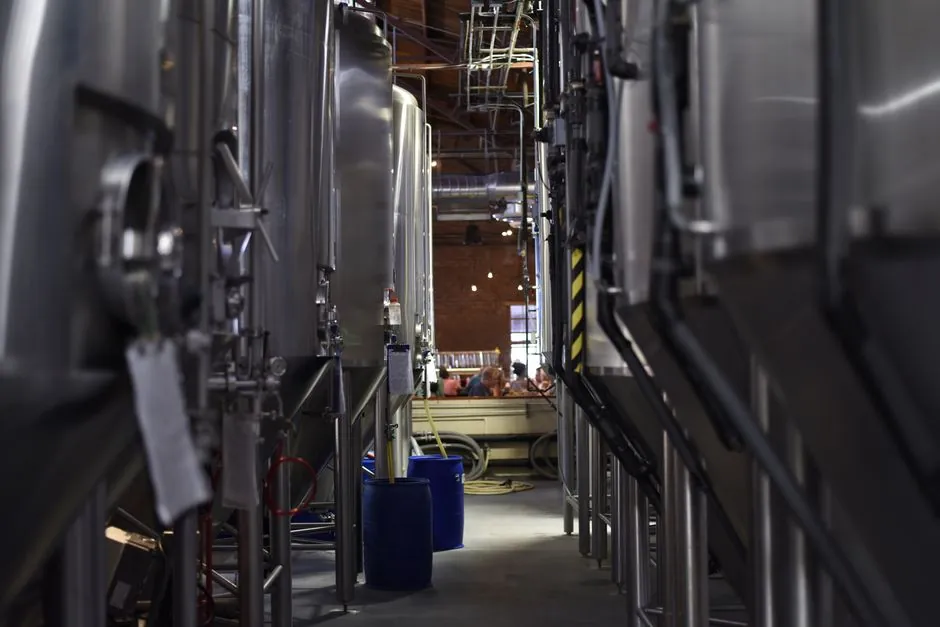
A working engineer shopping for a level transmitter in 2026 is choosing among at least nine sensing technologies, four output protocols, and IP65 to IP68 housings, with accuracy bands from ±0.1% FS to ±0.5% FS and operating temperatures stretching from -40°C to +150°C depending on the family [S4][S5].
The 2026 supplier field is sharply split: Chinese OEM builders (Sinepower L100, Qintai QS-P400, Micro Sensor) push IP68 stainless input-type submersibles at sub-RMB pricing, Indian mid-range integrators (YPL Instruments Faridabad, Trumen Indore) ship rigid-rod capacitance level transmitters starting around INR 7,900 per piece, while western engineered units from FlowLine, ABB, Emteq, and Simex carry IECEx or CE/RoHS marks for hazardous-area and corrosive-service duty [S2][S3][S4][S5][S6].
Submersible and Hydrostatic Transmitters Dominate the IP68 Class
Submersible hydrostatic units are the workhorse, with the Sinepower L100 series rated to 0-1000 m H2O measuring range, ±0.1% to ±1% FS comprehensive accuracy, ±0.03%/°C temperature drift, and -40 to +85°C operating envelope, all sealed in IP68 stainless with a Nitrile rubber sealing interface and IEC 61326-1 EMC compliance [S3].
The Emteq SPT21 series breaks the corrosive-service barrier with a PTFE housing, ceramic diaphragm, FKM seal, and Teflon-shielded cable on the SPT21WS1 (0-1 to 0-5 m H2O, ±0.5% FS, -10 to +80°C, 4-20 mA / 0-5 V / 0-10 V / RS485), and the SPT21WF add-on for a double-flange anti-clog diaphragm that eliminates pressure port blockage from 0-1 to 0-200 mH2O at ±0.5% FS standard, with CE, RoHS, CCS, and DNV approvals [S4][S5]. For tank-side work, the YPL HLT22 hydrostatic model from India ships at INR 10,000 per piece with a 0 to 5 m range, 4-20 mA output, SS304 wetted parts, IP65 enclosure, and -20 to +80°C span on a 5 m submersible cable [S2].
Radar, Guided-Wave Radar, and Ultrasonic Cover Open-Vessel and High-Temperature Duty
Non-contact radar is now the default for solids and turbulent liquids, with the FlowLine EchoPulse LR30 covering 30 cm to 30 m in a nylon IP68 housing at -40 to +80°C, the LR20 extending 30 cm to 20 m with an AISI316L antenna and PTFE shield up to -40 to +150°C at -1 to +5 bar, and the EchoBeam LR80 reading 10 m liquids / 5 m solids with Bluetooth LevelTap commissioning and 4-20 mA 2-wire output [S4][S5].
Guided-wave radar handles narrow or heated vessels: the FlowLine EchoWave LG10/LG11 reads up to 5.5 m liquids through rod, coaxial, or cable probes in AISI316L at -40 to +150°C and -1 to +17 bar with 4-20 mA 2-wire fail-safe output [S4]. ABB's LWT Series fills the same niche as a guided-wave probe intended for high-accuracy measurements in harsh conditions [S10]. Ultrasonic remains the low-cost chemical-resistant pick, with EchoPod DL24 covering 10 cm to 3 m on a PVDF sensor in a PP enclosure with 4-20 mA fail-safe plus four SPST relay outputs, and the UG06/UG12 variants reading 6 m and 12 m respectively on a condensation-resistant reflective transducer [S4][S5].
Capacitance, Magnetostrictive, and Displacer Units Hold the Interface and Interface-Proofing Slots

Capacitance level transmitters and rigid-rod RF probes are the right call for foam, slurry, and interface detection: the YPL-CLT24 ships with a 1000 mm SS304 rod on a 1/2 inch thread with 4-20 mA output, while the Trumen TLC-ICT extends rigid-rod range from 50 mm to 3,000 mm with a flexible probe option, priced around INR 39,500 per piece [S2][S6].
Magnetostrictive level transmitters are the precision interface-and-level choice for bulk storage, and displacer-style smart units handle density-compensated chamber work [S4]. The Kusam TWP/TWP2 is a hybrid position-and-level transmitter built around a potentiometric input/output scheme, accepting AC 85-265 V or DC 85-300 V aux power with 0.1% RO accuracy at 23 ±5°C in a DIN-rail or wall-mount PC plastic case, AC 1.5 kV dielectric strength (2025-08) [S7]. These technologies pair with submersibles and radar to cover most bulk-liquid, interface, and chambered-vessel use cases without a need for a separate vendor stack [S4].
Output Protocols, Hazardous-Area Marks, and EMC Compliance in 2026
Output protocol selection is still a binary decision driven by the host control system: 4-20 mA 2-wire with HART 7 is the default for engineered western units, while 0-10 V, 0-5 V, RS485 (Modbus RTU), and I2C cover OEM and panel-builder integration [S3][S4][S5]. Hazardous-area certification shows up as IECEx intrinsically safe on PCSPL's engineered lines and ATEX-class equivalents on European-origin ABB LWT units, while Chinese OEM input-type submersibles target IEC 61326-1 EMC, IEC 61000-4-2/-3/-4/-5 immunity, and -40 to +85°C storage [S3][S4].
For non-corrosive fluid duty, a Sinepower L100 with 4-20 mA or RS485 output at 10-36 V DC supply, IP68 sealing, and 200% FS overload rating is the typical COTS pick; for corrosive or hygienic duty, an Emteq SPT21WS1 with PTFE wetted side or a FlowLine LR20 with PTFE-shielded AISI316L antenna is the engineered pick; for hazardous-area chemical plants, ABB LWT guided-wave or PCSPL's IECEx-marked EchoWave LG11 is the right floor [S3][S4][S10]. Sizing and selection specifics for these choices are mapped in this 2026 selection guide at Level Transmitter Sizing and Selection: 2026 Spec Map and the related open-channel instrumentation vendor field at Open Channel Flowmeter Suppliers: 2026 Spec Map and Vendor Field [S3][S4].
Supplier Map: Chinese OEM, Indian Integrator, and Western Engineered Tiers
The 2026 supplier map splits cleanly into three tiers: Chinese OEM value builders (Sinepower, Qintai, Micro Sensor) ship input-type submersibles with stainless isolated structures, multiple output options, and IP68 ratings at aggressive lead times, typically with -10 to +70°C temperature compensation and ±0.1% to ±0.5% FS accuracy bands [S3][S8][S9]. Indian integrators (YPL Instruments, Trumen Technologies) deliver rigid-rod capacitance, hydrostatic, ultrasonic, and magnetic units with MOQs as low as 1-5 pieces and prices starting at INR 7,900 for entry-level capacitance probes [S2][S6].
Western engineered suppliers (FlowLine, ABB, Emteq, Simex, MicroSensor, Kusam) carry third-party approvals (CE, RoHS, CCS, DNV, IECEx), explicit material traceability (AISI316L, PTFE, PVDF, ceramic, FKM), and a wider temperature and pressure envelope on radar and guided-wave products, with datasheets and per-model spec sheets published [S4][S5][S7][S8][S10]. For an engineered unit with explicit IEC 60079 hazardous-area certification and an AISI316L wetted side, the western tier is the only choice; for non-hazardous water and process utility, Chinese OEM and Indian integrator units dominate the cost-vs-specification curve [S3][S4][S6].
Trackable signals for the next planning window: the September 2026 release of updated FlowLine radar and Emteq SPT21 datasheets on PCSPL, the cadence of new IECEx-certified guided-wave units from ABB, and the Qintai QS-P400 family expanding its LoRa and 4G wireless output options for remote tank telemetry [S4][S5][S9].