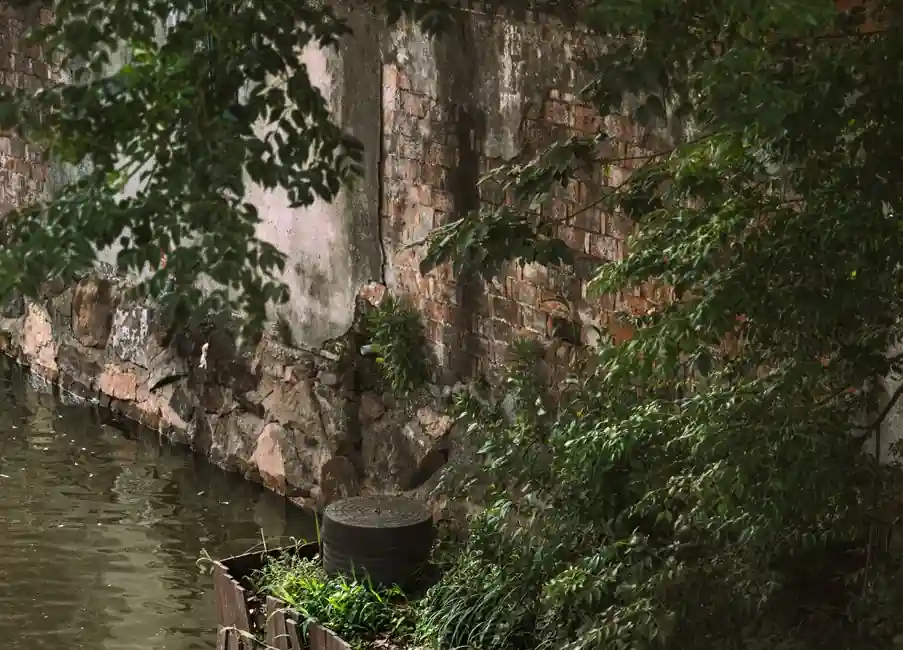
Open channel flow measurement in 2026 is dominated by ultrasonic level sensors paired with Parshall flumes or triangular weirs, with electromagnetic open-channel variants and Doppler area-velocity meters filling the sediment-heavy and partially filled pipe niches [S1][S2].
Supplier offerings cluster into four engineering buckets: Chinese OEM Doppler and ultrasonic specialists (Lanry, Dongyi), Indian panel-mount integrators (Flowtech, Ztek), Western application-engineered vendors (GlobalSpec-listed Micronics UF AV5000, AFT Instruments), and US/European measurement houses (SmartMeasurement with Alsonic RAVM transit-time and Doppler variants) [S1][S3][S4][S7][S8][S9][S10].
Primary device families set the hydraulic floor
Parshall flumes, V-notch (30°, 45°, 60°, 90°) weirs, ISO rectangular weirs, and custom weirs are the four primary-device geometries quoted by ultrasonic open channel flow meter manufacturers [S2]. These structures create critical flow and tie a single upstream head to discharge, with the head-discharge relationship evaluated against ISO 1438, ISO 4359, ISO 4360, and ASTM D1941 [S5].
Submergence, the ratio of tailwater depth to upstream head, governs when the simple equation holds. Below a device-specific threshold, the upstream head alone defines discharge; above it, a second downstream head plus a correction factor is required, otherwise flow is over-reported [S5]. Construction costs for new concrete Parshall flumes run $5,000-50,000 versus much lower cost for a simple weir plate retrofit, so hydraulic fit often bows to civil budget [S6].
Secondary sensing technology splits the supplier base
Ultrasonic non-contact level sensing is the most widely quoted principle: weatherproof sensors with 100 m cable reach to the main unit, 6 relay outputs, pulse output for totalized flow, and Modbus-RTU digital communication are standard catalog features [S2]. Operating temperature bands commonly span -20 to 70 °C with 4-20 mA analog output, and supply voltage sits at 220 VAC with 12 V DC sensor excitation on panel-mount designs rated IP54 [S9][S10].
Area-velocity meters substitute for the primary device by combining level with acoustic Doppler mean velocity. The Micronics UF AV5000 uses inert wetted materials (904L stainless steel, PEEK, PTFE) at 174 psi operating pressure, while SmartMeasurement's Alsonic RAVM is a non-intrusive transit-time area-velocity variant with the Alsonic-DAVM Doppler version for sediment-laden flows and the Alsonic-SAVM for partially filled cylindrical sewer pipes [S1][S7]. Electromagnetic open-channel flowmeters enter where conductive wastewater flows irregularly at low depth or with heavy sediment, conditions where ultrasonic echo can become unstable [S4].
Decision criteria for selecting a supplier
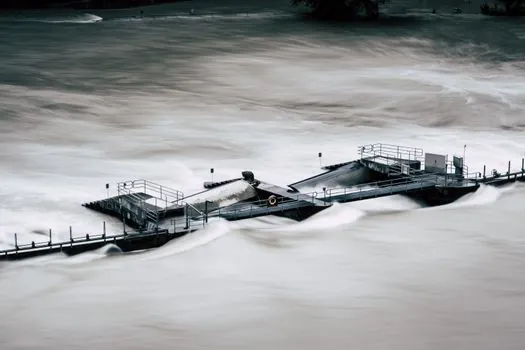
Four selection gates line up the main options. First, hydraulic geometry: free-flow vs submerged operation dictates whether a Parshall flume with single-head reading is sufficient or a dual-head bubbler stage is required [S5][S6]. Second, fluid character: clean irrigation water favors ultrasonic + weir, raw municipal sewage with high suspended solids favors Doppler area-velocity or electromagnetic open-channel designs [S2][S3][S4]. Third, site constraints: outdoor canal sites needing non-contact sensing favor ultrasonic or radar with IP67 housings, while retrofitting into existing partially filled pipes favors insertion Doppler or transit-time area-velocity [S3][S7]. Fourth, data path: local LCD readout is enough for manual reading rounds, SCADA or cellular telemetry ($50/month typical) is needed for remote lift stations and irrigation pilots [S2][S6].
Certification and warranty terms also separate vendors. ATEX, CE, and SIL-3 ratings with 36-month factory warranty appear on application-engineered Western lines, while Chinese OEMs typically publish Modbus-RTU and 4-20 mA conformance without ATEX highlights [S3][S4]. For regulatory-reporting outfalls, ISO 1438 / 4359 / 4360 conformance on the primary device remains non-negotiable, even when the secondary sensor is brand-agnostic [S5].
Cost, installation, and lifetime tradeoffs
Capital cost breaks into two layers. The primary device (Parshall flume construction $5,000-50,000, weir plate a fraction of that) plus secondary sensor plus transmitter, with cellular telemetry adding $50/month for remote outfalls [S6]. Plan for 174 psi operating pressure compatibility on inline designs and 95% RH non-condensing humidity tolerance on panel-mount canal units [S1][S9].
Maintenance cadence differs sharply. Non-contact ultrasonic and radar sensors on weirs/flumes run long maintenance intervals (limited to window cleaning), Doppler area-velocity sensors in sewage have a medium interval (fouling and sediment), and EM open-channel units with non-contact velocity coils sit in the long-interval band but need geometry-specific calibration to remain ISO-defensible [S4][S5].
Supplier landscape by region and product
Chinese manufacturers Lanry Instruments (Shanghai) and Dongyi Technology anchor the OEM Doppler and ultrasonic category, offering RS485 Modbus open channel flow meters for sewage treatment, wall-mounted IP67 4-20 mA units over -20 to 70 °C, and ground-water portable Doppler units for field surveys [S3][S8][S10]. Indian integrators Flowtech Measuring Instruments and Ztek Control Systems focus on panel-mount canal meters at the 96 × 96 mm DIN form factor with 220 VAC input and ABS-polycarbonate fronts [S2][S9]. Western suppliers Micronics (UF AV5000) and AFT Instruments (electromagnetic and ultrasonic open channel lines) sell into municipal wastewater and irrigation with explicit ATEX, CE, SIL-3, and 36-month warranty positioning [S1][S4]. SmartMeasurement (US) bridges both worlds with the Alsonic family: non-intrusive RAVM, wetted transit-time AVM, Doppler DAVM, and the sewer-pipe-specific SAVM [S7].
Selection sequence: (1) classify the channel as clean water, raw wastewater, or partially filled pipe, (2) decide free-flow vs submerged hydraulics, (3) pick primary device (Parshall flume, V-notch, rectangular, or custom), (4) pick secondary sensor (ultrasonic, radar, bubbler, Doppler, or EM open-channel), (5) verify ISO 1438 / 4359 / 4360 / ASTM D1941 conformance and ATEX / IP rating, (6) confirm SCADA / cellular telemetry interface matches plant standard [S5][S6].
Limitations and failure modes to spec against
Ultrasonic sensors fail on foam, steam, and heavy surface turbulence; radar non-contact units handle those better but cost more. Doppler area-velocity meters need a minimum sediment or bubble concentration to backscatter, and over-read in clean irrigation laterals. Parshall flumes lose accuracy when submergence exceeds the device-specific limit (around 60-70% for standard sizes), and the simple single-head equation is no longer valid [S5]. Panel-mount canal meters at IP54 are not weatherproof for direct outdoor mounting; outdoor installations need IP67 wall-mounted enclosures [S4][S9][S10].
For a deeper cross-technology comparison that lines ultrasonic, velocity, and radar head-to-head, the open channel flowmeter selection guide walks the same gate sequence with vendor-neutral decision points. For the full hydraulic and standards background that defines what an open channel flowmeter actually is, the encyclopedia chapter covers flume/weir families, head-discharge math, and USBR Water Measurement Manual references.
For component-level specifications, see construction machinery and equipment, and lamps and light fittings.