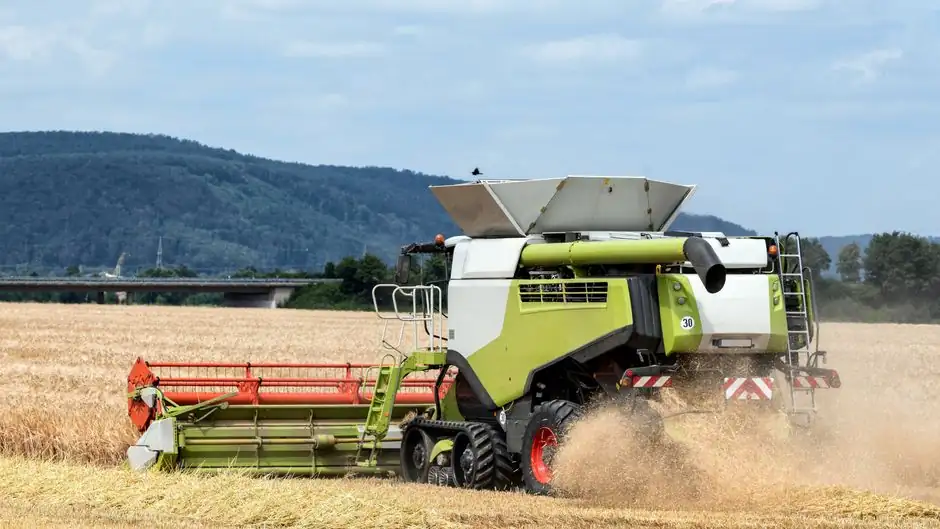
In agricultural equipment design, seven sizing factors drive linear module selection: load, orientation, speed, travel, precision, environment, and duty cycle, and missing any one of them typically returns a module that fails in the field within a single season [S2]. The decision matters because machinery and building ownership costs have been reported at roughly 25% of total farm costs in wheat systems, with broader crop-production estimates reaching 40% of total cost, so a wrongly sized linear stage is a recurring replacement line item, not a one-off [S3].
Modern tractors, combine harvesters, sprayers, seeders, and balers now carry electric linear actuators on header-height control, reel positioning, seed-meter door actuation, fertiliser-spout trim, and tillage-depth cylinders, shifting the design problem from pure hydraulic mechanics into mixed electromechanical sizing [S4][S6]. Selecting the wrong linear module in this space costs more than a warranty event: it triggers cascading downtime during planting or harvest windows where a 24-hour delay can cost measurable yield.
Application Sizing Inputs That Drive the Module Choice
Effective sizing starts by quantifying the worst-case dynamic load, not the static mass, and the agricultural benchmark is that one undersized module can stall a planter line and delay every downstream operation [S3]. Bosch Rexroth's published sizing methodology for multi-axis systems, linear axes, and actuators uses the same seven-factor envelope (load, orientation, speed, travel, precision, environment, duty cycle) and feeds them into a LinSelect calculation that returns a recommended screw-drive class and guide-rail family [S2].
Three numeric anchors matter here: combine header-height actuators typically see 200-400 mm of travel at 5-25 mm/s with peak dynamic loads in the 1.5-3.0 kN range; seed-meter and fertiliser-shutter actuators work in shorter 50-150 mm strokes with cycle counts that can exceed 50,000 per season on high-acreage planters; and tillage-depth cylinders on mounted ploughs or subsoilers routinely absorb 5-15 kN shock loads over 300-500 mm strokes at low speed [S4]. Travel-length and precision requirements scale with the application: harvesting reel positioning needs ±1-2 mm repeatability, while fertiliser-spool metering only needs ±3-5 mm, so the same machine often demands two different linear-module classes.
Linear Guide, Screw Drive, and Actuator Topology Compared
Within an agricultural linear module, three sub-assemblies are independently selectable: the linear guide rolling-element type, the screw or belt drive, and the actuator housing. Ball-rail guides carry loads up to roughly 50 kN per block at moderate contamination, cost less, and are the default for general-purpose tractor and implement adjustments, while roller-rail guides roughly double the load capacity and stiffness at higher unit cost, which is why they show up on large combine header lift systems and high-cycle baler applications [S2].
Comparing the three dominant drive types on criteria a buyer actually feels: ball-screw drives deliver 80-95% mechanical efficiency, ±0.01-0.05 mm repeatability, and 10,000-50,000 km service life, but require sealed bellows or stainless covers in abrasive soil; trapezoidal (lead) screws cost less, accept more contamination, and tolerate higher shock, yet cap efficiency at 30-50% with ±0.1-0.2 mm repeatability, suiting tillage-depth and spreader-trim duties; and belt-driven linear modules, including toothed-belt actuators, deliver the highest speed (1-5 m/s) and longest travel (up to 6 m) at the lowest cost per metre, used on long-throw seeders and spray booms where precision is secondary to reach [S2][S4].
Environment, Ingress, and Corrosion: The Field-Service Reality
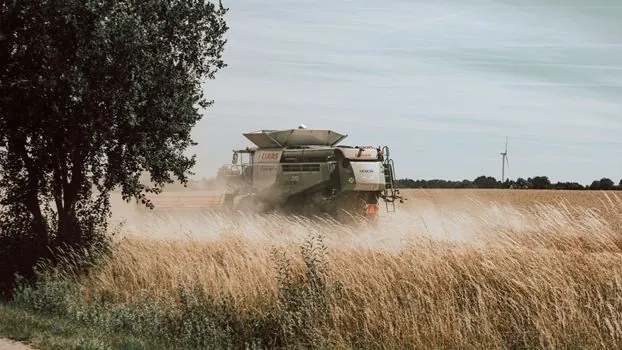
Agricultural environments are wet, dusty, and chemically aggressive, so a linear module's IP rating and surface treatment are first-class selection criteria, not finishing touches. A commonly cited field threshold is IP65K for washdown-exposed areas and IP66K or IP67 for direct-spray zones on sprayers and manure spreaders, paired with stainless hardware (A2/A4-70 or 316 grade) on critical fasteners and either zinc-nickel or hard-anodised aluminium on exposed housings [S4].
Progressive Automations and Venture Manufacturing both market actuator lines built around sealed housings, stainless or zinc-plated extension rods, and grease-lubricated bronze or polymer bearings specifically for combine harvesters, corn detasslers, seeders, spreaders, sprayers, choppers, and weed removers, where the failure mode is seal degradation from fertiliser mist and dust ingestion, not motor burnout [S4][S6]. Dust ingress is the dominant field failure: a ball-screw module in a dusty environment without a steel-belt bellows cover typically loses 30-50% of its rated service life, which is the case for specifying bellows covers or stainless telescopic shields on any module mounted within 0.5 m of the soil line.
Duty Cycle, Lubrication, and Service-Life Budget
Duty cycle separates the modules that survive a 10-year tractor life from those replaced mid-season, and the published sizing inputs treat it as a number, not a feeling [S2]. A combine harvester in wheat typically runs 80-200 hours per season, while a row-crop planter runs 40-80 hours, and an autonomous or high-acreage machine can exceed 1,000 hours per year, which moves the same nominal module from "light duty" into "heavy duty" and forces a re-derated L10 life calculation.
Standard ASAE/ASABE-published maintenance intervals for agricultural linear components (covered indirectly in farm-machinery selection literature) suggest regreasing every 200-400 operating hours for ball-rail guides and screw-drive lubrication, with full seal inspection at 1,000 hours, and Bosch Rexroth's selection framework specifically calls out duty cycle so the calculated L10 bearing life exceeds the planned machine service life with a 1.5-2x safety factor [S2][S3]. Mixed integer linear programming work on multifarm machinery selection has further shown that a "lowest first-year cost" machinery set is rarely the lowest 12-year cost set, and the same logic applies to the linear modules inside the machinery: the cheapest module in year 1 is often the most expensive in year 5-12 once replacement labour is included [S1].
Selection Workflow and Sourcing Signals
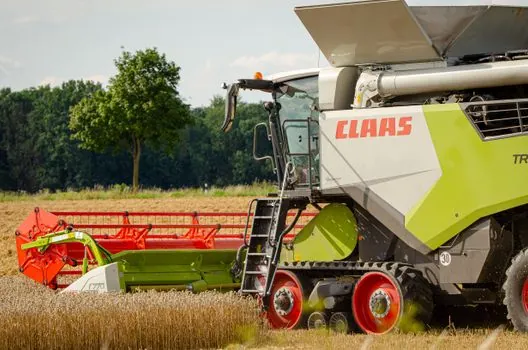
A practical selection workflow for a procurement engineer follows four steps, and each step is checkable against published vendor tooling or research. First, capture the seven sizing inputs (load, orientation, speed, travel, precision, environment, duty cycle) into a sizing sheet, ideally using the Bosch Rexroth LinSelect tool or an equivalent OEM calculator, which returns a candidate module class within minutes [S2]. Second, apply the environment filter: confirm IP65K minimum, agree on housing material (zinc-nickel-coated steel, hard-anodised aluminium, or 304/316 stainless), and decide whether bellows covers or telescopic shields are needed based on the dust zone.
Third, run a multi-criteria comparison using an improved CRITIC-entropy weight and GRA-TOPSIS method, as published in the agricultural-machinery selection literature, weighting cost, L10 life, IP rating, service interval, and local distributor lead time, which is the same multi-criteria approach used for whole-machine fleet selection but applied at the component level [S5]. Fourth, lock the duty-cycle life calculation and require the vendor to publish L10 life at the actual application load, not the catalogue maximum; a module specified at 30% of its catalogue dynamic load will typically last 8-10x the catalogue-rated L10 hours, while a module at 80% of catalogue load sees that number collapse to roughly 1.2-1.5x, which is the operating margin that determines whether the module survives the machine's first ownership cycle. For a parallel spec map on corrosive marine service, see the marine linear module selection breakdown, since marine and agriculture share the IP-plus-coating logic even though salt spray is a different corrosion driver than fertiliser mist.
Trackable signals over the next two quarters: vendor disclosures of ASABE-compatible dust-ingress test results for sealed ball-screw modules, and the first published cross-vendor L10 life curves stated at agricultural duty cycles rather than industrial reference cycles. Both would let buyers move from catalogue-scaled estimates to application-rated numbers, and that is the single biggest gap in current agricultural linear-module specification.