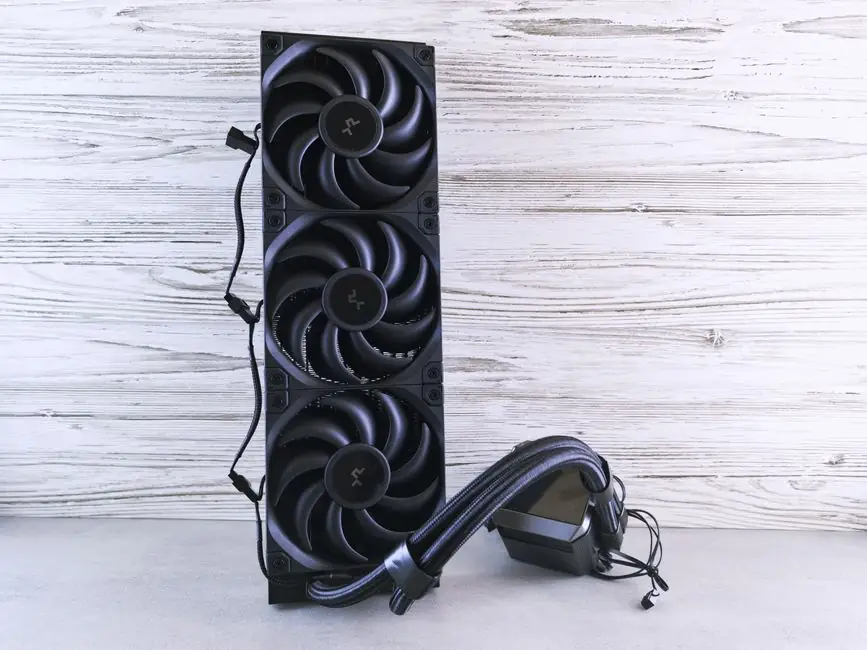
Liquid cooling quick disconnect couplings must balance flow capacity, allowable pressure drop, operating pressure, temperature range, and shutoff performance rather than rely on connection size alone [S7].
The available product families cover server-to-CDU flow from compact LQ2 and LQ8 connectors to UQD02, UQD04, UQD06, and UQD08 configurations for data centers, cold plates, semiconductor testing, and EV charging [S3].
Core Specification Envelope
A quick disconnect specification should define at least flow rate, pressure rating, temperature limits, connection type, body size, valve arrangement, seal material, and coolant compatibility before a model is approved [S7]. Parker NSG Series couplings use a flat-face valve, permit BSPP or hose connections, and specify a minimum operating temperature of -40 °F, while individual body and flow ratings depend on the selected configuration [S1].
Parker's NSG Series has a 3 mm body size, a 1.1 gal/min flow rate, a flat-face valve, a minimum operating temperature of -40 °F, and BSPP or hose connection types [S1].
Flow, Pressure Drop, and Thermal Capacity
Flow capacity and pressure drop are separate acceptance criteria: a coupling can pass a nominal flow figure and still impose an unacceptable pressure loss at the target flow rate [S7]. Selection requires the system designer to compare the rated flow of the coupling with the coolant demand of the equipment and the allowable pressure loss across the connected hose or tubing circuit [S7].
CPC lists Everis LQ2 and LQ8 product lines for liquid-cooling applications that include server racks and coolant distribution units [S3]. Its range includes blind-mate, latched, metal, high-performance polymer, and universal quick-disconnect categories, with UQD product lines designated 02, 04, 06, and 08 [S3].
Eaton Aeroquip blind-mate couplings extend across -65 °F to 160 °F, equivalent to -54 °C to 71 °C [S8]. Published temperature ranges should therefore be checked against both coolant temperature and ambient exposure during shutdown, storage, and maintenance [S8].
Dripless and Non-Spill Valve Behavior
Liquid cooling couplings should use non-drip, non-spill, dry-break, or clean-break arrangements where coolant loss would damage adjacent equipment or interrupt service [S2]. This requirement is more demanding than merely providing a closed valve: disconnect sequencing, residual pressure, seal contact, and mating behavior determine how much fluid can escape [S2].
Internal valves can remain closed during coupling and open only after the mating halves are fully engaged, which supports full-flow operation while limiting leakage during connection [S6]. Danfoss Hansen FD83 couplings apply the same product logic to fluid-transfer and electronics-cooling applications, where full flow, fluid compatibility, and operational safety govern coupling selection [S5].
Flat-face valves appear in both the Parker NSG Series and Nott NSP1-252-4MP, but the presence of a flat face alone does not establish dripless performance [S1][S4]. Datasheet terms such as dry-break, non-spill, or clean-break should be verified separately, and the published flow rating should be tested with the intended coolant and operating condition [S2][S7].
Blind-Mate, Latched, and UQD Comparison
Blind-mate couplings support connection when alignment is limited, latched couplings use a retained mechanical connection, and universal quick disconnects are offered across multiple sizes; these are materially different ways of addressing installation and service conditions [S3]. CPC's supplied product listing names the Everis UQD02 and UQD04 & UQDB0 product lines and the LQ2, LQ4, LQ4S, LQ6, and LQ8 product lines [S3].
For a structured comparison, blind-mate designs score well on misaligned or restricted-access engagement, latched designs score well on retention after connection, and UQD families offer a broad size range for standardized liquid-cooling interfaces [S3]. Cost, allowable pressure drop, and pressure rating cannot be ranked from the available product listings alone, so they require model-specific manufacturer data [S1][S7].
This comparison does not make the three styles interchangeable. Blind-mate tolerance, latch force, flow path, residual leakage, coolant chemistry compatibility, and allowable pressure differ by product and must be checked against the installed loop [S5][S8].
Thread, Hose, and Installation Interface
The connection interface must match the equipment port rather than only the coupling diameter. The Nott coupling uses a 1/4-18 NPT male thread and a 0.88-inch hex for installation, while the Parker NSG Series is offered with BSPP or hose connections [S1][S4].
Thread size, thread form, sealing method, hose inside diameter, and coupling body size should be recorded as separate fields.
Installation geometry also affects serviceability. Compact dimensions are a stated liquid-cooling requirement because rack space limits hose routing and tool access [S2]. For cold plate and heat exchanger assemblies, the port orientation must preserve bend radius, hose movement clearance, and access for disconnection without loading the fitting.
Materials, Coolants, and Environmental Limits
Body material, seal material, and coolant compatibility must be treated as a matched system. The NSP1-252-4MP combines a stainless-steel body with an EPDM seal, but that configuration does not establish suitability for every glycol, dielectric fluid, inhibitor package, or contaminated coolant [S4].
Fluid compatibility affects seals, wetted surfaces, and thermal-management reliability, while operating-pressure and temperature limits define the mechanical operating envelope [S5][S7]. The published -40 °F to 158 °F range for the Nott model and -65 °F to 160 °F range for Eaton Aeroquip blind-mate couplings are model-level limits, not universal limits for liquid cooling [S4][S8].
Qualification should therefore record the coolant name and concentration, intended temperature and pressure, wetted body material, seal material, service-cycle count, and the acceptable leakage criterion [S2][S5]. For installations linked to air-cooled condenser loops, those checks matter because coolant chemistry and temperature remain part of the coupling duty even when heat rejection occurs elsewhere.
Procurement and Acceptance Tests

A purchase specification should freeze the selected model code, port form, flow rating, pressure rating, temperature range, valve type, body and seal materials, dimensional envelope, and required approval documentation [S1][S4][S7]. A statement that a part is “for liquid cooling” is not an adequate technical specification because the same phrase covers couplings with materially different flow and pressure limits [S5].
Acceptance testing should include rated-flow operation, pressure-drop measurement, leak inspection at the design operating condition, and repeated mating under the intended service cycle [S2][S7]. Published examples provide measurable comparison points: 1.1 gal/min for one Parker NSG configuration, 2.3 gal/min for the Nott NSP1-252-4MP, and a 150 psi maximum operating pressure for the latter [S1][S4].
Track two signals before final release: confirmation that the selected model’s published flow and pressure limits cover the calculated coolant duty, and confirmation that coolant, seal, and body materials are approved for the exact fluid and temperature range. Both checks close the gap between a catalog coupling and an engineered liquid-cooling connection.