
Individual load cells can cost from $1 to $2,000 or more, with prices varying by design, materials, precision, and application.
A complete module analysis covers load cells, summing or junction boxes, indicators or transmitters, wiring, surge protection, mounting hardware, software, commissioning, and the operating consequences of failure [S3][S4].
Load Cell Module TCO Scope and Cost Structure
Total cost of ownership for a load cell module should include purchase, installation, commissioning, operation, maintenance, repair, replacement, calibration, downtime, disposal, and production impact. Truck-scale guidance identifies the load-cell system as the component with the greatest impact on ongoing expenditure, which makes cell selection and installation quality more important than the initial quote alone [S3].
For a load-cell module, acquisition covers the cell, module hardware, indicator or transmitter, enclosure, cabling, and engineering; ownership also includes depreciation, financing, disposal, and replacement reserves. Operating costs include labor for inspection and calibration, consumables, electricity, software, communications, repair parts, and the value of lost production or delayed material movement.
The application boundary also matters. A low-capacity laboratory module, a hopper inventory module, and a truck-scale load-cell assembly can use the same word, “module,” while carrying very different exposure to impact, weather, washdown, side loading, and cleaning chemicals. Inventory systems must continuously measure vessel and material mass, subtract tare, and convert the reading into inventory information [S4].
Purchase Price Is Only One Cost Driver
Published load-cell price bands illustrate why a single budget figure is misleading: $1–$20 covers entry-level cells, $20–$150 covers mid-range industrial devices, $150–$600+ covers premium protected or certified devices, and $600–$2,500+ covers specialty products such as explosion-proof, high-temperature, hydraulic, pneumatic, or custom-engineered designs [S5].
Load-cell prices vary with design, materials, precision, and application. Capacity determines the mechanical design and material quantity. Accuracy class affects strain-gauge and construction quality, with published examples including C3 at ±0.02% and C4 or C5 premium devices [S5]. Environmental sealing adds cost when the application requires IP66/IP67 protection, hermetic IP68/IP69K sealing, or specialist corrosion resistance [S5].
Lead time and certification also affect cost. Published examples include OIML or NTEP-certified cells for regulated weighing and ATEX-rated specialty designs for explosive atmospheres [S5].
These are list-price bands, not a quotation for a configured module, so capacity, quantity, mounting geometry, output protocol, enclosure rating, accuracy class, calibration, and delivery conditions must be confirmed before comparing suppliers.
Material and Mechanical Design Set the Maintenance Exposure

Alloy steel is one of the construction materials listed for entry-level load cells.
Stainless steel is one of the load-cell material options. Basic aluminum construction is listed as a characteristic of entry-level load cells.
Mounting design affects both purchase cost and lifecycle risk. A typical inventory system uses cells under or attached to silo or bin legs, with brackets or assemblies adapting the sensor to the vessel geometry and isolating it from side loads [S4].
For harsh installations, material selection and sealing should be treated as risk-reduction decisions rather than cosmetic specifications.
Accuracy, Protection, and Certification Decide the Use Case
C3 accuracy is associated with mid-range industrial load cells at approximately ±0.02%, while premium C4/C5 products are used where higher precision, traceability, or certified performance is required [S5]. Entry-level devices may provide ±0.1% or lower accuracy and are intended for non-critical applications [S5].
Ingress protection must follow the physical exposure. IP66 or IP67 is presented for industrial environments, while hermetically sealed IP68 or IP69K devices serve more severe washdown and exposure requirements [S5]. Hazardous-area, high-temperature, hydraulic, and pneumatic constructions occupy the $600–$2,500+ specialty band because their sealing, materials, geometry, and certification add engineering cost [S5].
Accuracy claims are only comparable when test and calibration conditions match. OIML, NTEP, and ISO are listed as certifications and compliance considerations for load cells. For legal-for-trade, pharmaceutical, food-processing, and hazardous environments, the required approval should therefore be specified at module level rather than inferred from a general “industrial” description.
Certification is not a substitute for suitable capacity, mounting, and environment. A certified cell still depends on proper installation, intact cabling, stable excitation, correct summation, and a suitable indicator or transmitter [S4].
Module Options Compared by Four Decision Criteria
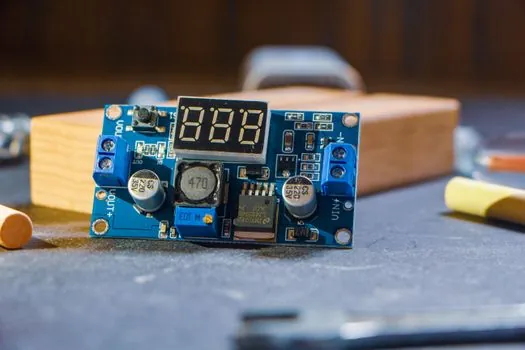
A basic standalone cell offers the lowest hardware cost and can suit low-capacity, non-critical weighing, but it transfers more integration and risk-management work to the user. A multichannel module combines load cells through a summing or junction box and typically adds balancing, signal conversion, filtering, temperature compensation, and a single weight output [S4].
This comparison applies the published price bands directly: the relevant decision is not simply the lowest purchase price, but the balance between acquisition cost, failure exposure, accuracy, and application fit [S5].
Installation and Commissioning Can Erase Purchase Savings
Installation cost includes foundation or vessel modifications, brackets, alignment tools, cabling, grounding, enclosure, network integration, and commissioning labor. Outdoor silo systems need robust surge protection and power management because the electronics can be exposed to lightning and electrical transients [S4].
The electrical scope also expands with the measurement architecture. A junction box combines and balances multiple cell signals, and some designs perform analog-to-digital conversion [S4]. An indicator or transmitter can amplify the cell output, convert it digitally, filter it, apply temperature compensation, and transmit it through Modbus, 4–20 mA, TCP/IP, or cellular links [S4].
Calibration is a lifecycle control, not a one-time checkbox. Commissioning must establish zero, span, signal balance, weight readings, vessel tare, and any required density or volume conversion. Software in an inventory application can then calculate usable inventory from gross vessel weight after subtracting tare [S4].
Poorly executed installation can therefore create recurring expense even with quality cells. Side-load exposure, thermal movement, unbalanced channels, cable damage, and unprotected power inputs increase troubleshooting, recalibration, and downtime. Budgeting only the cell price hides these costs.
Maintenance, Energy, and Downtime Define Operating Cost
Ongoing cost for a truck scale is dominated by the load-cell system, so inspection, replacement, and loss of weighing availability deserve separate line items in the TCO model [S3]. Preventive inspection should cover zero drift, span performance, channel balance, cabling, moisture ingress, mounting alignment, and the condition of surge-protection devices.
Maintenance labor depends on access. A vessel module mounted under a silo may require elevated work, confined-space procedures, or temporary process interruption, while a platform-scale load cell may be easier to inspect or replace. Field-replaceable cells reduce repair time, but only if the complete assembly has been designed around controlled replacement and recalibration.
Energy is usually modest for passive strain-gauge cells, but it is not zero once the indicator, transmitter, network interface, cellular link, surge protection, and monitoring service are included [S4]. Standby power, signal-conditioning electronics, communications, and cloud monitoring should be included where applicable.
Downtime can exceed all hardware costs for a continuously operating inventory, hopper, or truck scale. If loss of measurement delays replenishment, causes an overfill, or interrupts dispatch, the business impact must be modeled as an annual expected cost. A useful expression is annual downtime cost equal to affected production or logistics value per hour multiplied by annual outage hours, with each outage probability based on the actual maintenance history.
Failure Modes and Sourcing Controls
The principal failure modes are mechanical overload or impact, creep and zero drift, moisture or corrosion, cable and connector damage, power surges, channel imbalance, and loss of communications. A junction box reduces the consequences of single-channel error by combining signals, but the electronics and cables connecting the cells remain part of the failure domain [S4].
Inventory applications add a material-handling risk: grain, feed, powders, pellets, raw ingredients, additives, and chemicals create vibration, environmental exposure, shifting loads, compaction, and changing bulk density [S4]. Load cells measure mass directly, which avoids unreliable level-to-volume conversion when density changes, but this benefit depends on stable mounting and valid vessel tare.
Sourcing should require the cell model, rated capacity, accuracy class, material, sealing rating, excitation, output, cable length, temperature range, approval, calibration data, mounting drawings, lead time, warranty, and replacement-part continuity. The published entry-level tier is associated with limited documentation, while mid-range and premium tiers provide documented test reports and more consistent batch quality [S5].
For fleet or multi-site ownership, standardize the module and keep spare cells, cables, junction-box components, and configuration records. That can reduce emergency procurement and the time between failure and restoration.
Build a TCO Model With Trackable Cost Inputs
The strongest business case separates three totals: acquisition cost, annual operating cost, and expected annual risk cost. Acquisition includes engineering, hardware, installation, commissioning, software, communications, and training. Operating cost includes inspection, calibration, spare parts, energy, communications, software, and planned replacement. [S3]
Risk cost covers failures, downtime, safety consequences, out-of-spec production, product loss, and regulatory or contractual exposure. Do not assign a generic downtime rate. Use the site's actual throughput, material value, labor burden, response time, and historical failure intervals, then run sensitivity cases for repair duration, callout rates, and spare-part lead time.
The load cell module should be evaluated as a complete signal chain from mechanical mounting through junction box, transmitter, communications, and software. For every candidate, calculate present value over the agreed ownership period using the organization’s actual discount rate, replacement profile, and labor rates. A mid-range cell can deliver the lowest TCO in a protected, moderate-duty application; a premium or specialty cell can justify its higher price where corrosion, washdown, certified accuracy, or hazardous-area requirements dominate the risk.
Track three procurement signals before approval: the quoted price for the specified accuracy, sealing, and approval class; the documented lead time for complete modules and replacement parts; and the estimated annual cost of calibration, repair, and downtime. If any one changes materially, rerun the TCO model rather than treating the original purchase-price comparison as valid.