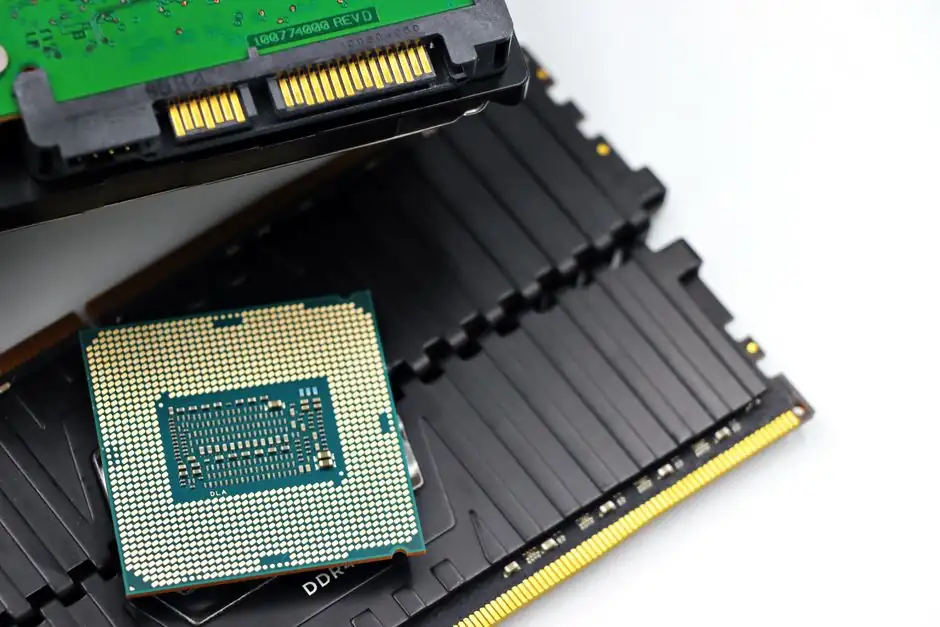
Conventional DRAM contract prices surged 90 to 95 percent in the first quarter of 2026 and are climbing a further 58 to 63 percent in the second, while NAND contract prices are rising 70 to 75 percent quarter over quarter [S1].
Inventory weeks expose the procurement gap
A separate component-market snapshot dated 2026-07-28 recorded memory inventory at 25.2 weeks, compared with 26.8 weeks for semiconductors, 22.4 weeks for power and discrete components, 21.1 weeks for analog and RF devices, and 20.7 weeks for sensors [S2]. The two observations measure different parts of the supply chain, but together they show why quoted availability cannot be treated as equivalent to protected production material.
The practical inventory target is no longer a universal round number. For a module used in an industrial controller, required coverage should reflect the module's qualified supplier lead time, forecast accuracy, acceptable production disruption, and the consequence of a missing shipment. A program with no alternate memory source should not be planned around a buffer that the broader market no longer provides [S1].
DRAM and NAND allocation changed the purchasing model
DRAM and NAND moved into allocation during 2026, with major suppliers imposing allocation terms rather than accepting unrestricted purchasing commitments [S1]. Conventional DRAM contract prices surged 90 to 95 percent in the first quarter of 2026 and are climbing a further 58 to 63 percent in the second, while NAND contract prices are rising 70 to 75 percent quarter over quarter [S1].
The memory chip shortage is characterized as a structural reallocation of capacity rather than a temporary imbalance [S1].
The pricing comparison matters because DRAM and NAND are not interchangeable components. DRAM supplies working memory, while NAND provides non-volatile storage. A module maker cannot replace a constrained DDR5 component with NAND, and a controller designed around one memory architecture may require board, firmware, qualification, and validation work before it can accept another configuration.
Module makers need documented supply, not optimistic quotes

Written allocation commitments are more useful than verbal assurances or published web prices because they establish quantities and delivery windows for production planning [S1]. For module makers, each agreement should identify the exact DRAM or NAND part number, module configuration, package or interface, annual and quarterly volumes, delivery cadence, price-adjustment mechanism, and allocation priority.
Long-term agreements are most valuable for memory-intensive designs because they secure supply before spot-market availability deteriorates. Procurement teams should also separate the module-level lead time from the component-level lead time. A supplier that quotes a module delivery date still depends on DRAM or NAND allocation, and the module assembler cannot compress the upstream constraint by scheduling alone.
Price escalation clauses should be modeled as an operating assumption rather than treated as exceptional. Supply allocated across several quarters can still create a cash requirement that a single invoice at the beginning of production does not capture. This purchasing structure also explains why take-or-pay clauses can gain importance when suppliers must reserve constrained wafers or assembly capacity.
Qualification choices determine substitution speed
A qualified alternate may reduce exposure, but changing DRAM capacity, speed grade, organization, package, or NAND interface can require supplier requalification and end-product validation.
A decision table should compare each approved option by at least four criteria: unit cost, available lead time, electrical and mechanical compatibility, and validation effort.
The price data supports using two scenarios rather than a single forecast. The base case should use contracted module pricing and documented delivery windows, while the contingency case should preserve the ability to accept a price adjustment or switch to an already qualified alternative. That structure is more useful than planning against an undated spot quote in a market where contract prices are already moving in large increments [S1].
Forecasting must distinguish supplier weeks from usable stock

A 25.2-week memory inventory figure from 2026-07-28 must be evaluated against the under-eight-week coverage reported in the 2026 shortage analysis, because the two numbers can describe different inventory layers [S1][S2]. Distributors may hold stock that manufacturers have already allocated, while module makers may hold raw components that have not yet been assembled into customer-qualified modules.
Three clocks should therefore be maintained for every critical module: supplier lead time, component coverage, and qualified finished-goods coverage. The record should show quantity by week, including committed receipts, quarantine stock, customer-specific allocation, and material not yet accepted by quality. This prevents nominal inventory from being counted as production-usable stock.
Forecast revisions need an exception trigger. A reduction in committed receipts, an allocation notice, or a component lead time moving beyond the planned coverage period should trigger an escalation review before the missing week arrives. With inventory below eight weeks in the tightest measured channel position, a late forecast change can become a line-stoppage rather than a delayed delivery [S1].
Different market signals support different buyers
One module-market assessment reported that global DRAM prices returned to a reasonable range after March 2026, channel inventory returned to normal, and mainstream memory models became more accessible [S3]. That description conflicts with the allocation conditions and price escalation documented for the 2026 DRAM and NAND shortage, so it should not be used as a general purchasing forecast without supplier-level confirmation [S1][S3].
Module buyers and component buyers face different exposures. A buyer of complete modules needs assurance that the assembler holds sufficient DRAM and NAND allocation. A manufacturer buying raw memory must also manage assembly yield, testing, firmware loading, burn-in, packaging, and final module availability. Both groups should compare at least four decision variables: price, lead time, documented allocation, and qualification status.
For small buyers without volume leverage, standard stocked modules with documented compatibility may be more practical than custom modules. For OEM programs, annual volume commitments, forecast sharing, and approved alternates can improve access, but only a signed schedule provides a defensible basis for production planning [S1]. The same controls work for both groups: define the critical part list, record the actual receipt history, and avoid counting components that are allocated but not yet accepted.
Three signals will confirm whether coverage is rebuilding

Memory supply should be judged by three trackable indicators: the number of weeks of usable finished-module stock, the contractual lead time for each critical DRAM and NAND part, and the delivery performance against written allocation schedules. A rise from under eight weeks of channel coverage would be constructive only if the inventory is available to the buyer and supported by confirmed receipts [S1].
The second signal is price stability across at least two quoted quarters rather than a single favorable transaction. Conventional DRAM contract prices surged 90 to 95 percent in the first quarter of 2026 and are climbing a further 58 to 63 percent in the second, while NAND contract prices are rising 70 to 75 percent quarter over quarter [S1].
The third signal is manufacturing capacity. Major producers had order books committed into 2027, and significant new fabrication capacity was not expected in volume before late 2027 or 2028 [S1]. Until lead times, contract pricing, and supplier commitments improve together, inventory should remain targeted rather than broad, and critical modules should be covered through documented allocation rather than optimistic availability quotes.