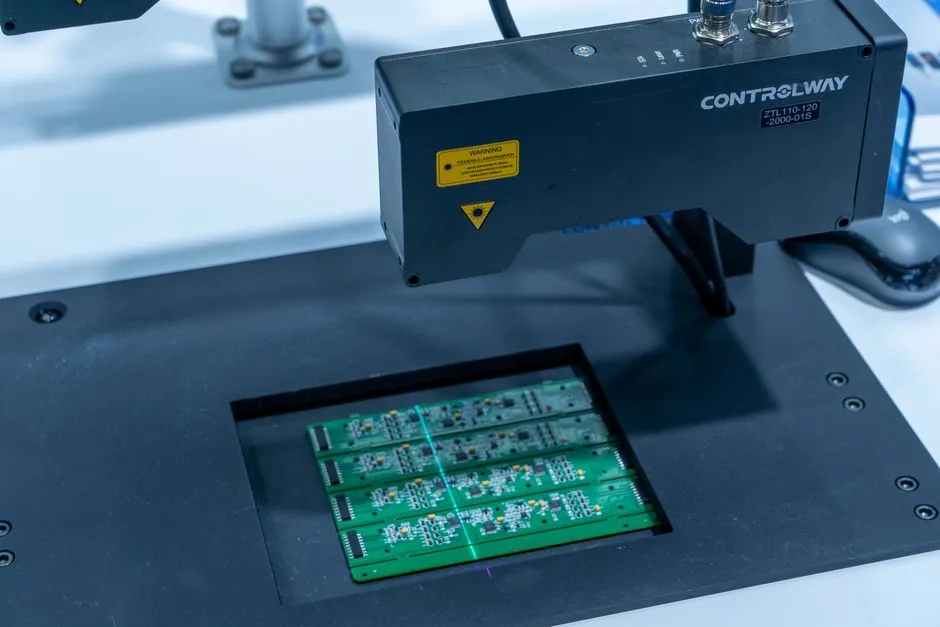
The September 2026 MEMS & Sensors Fab Report provides strategic insights into global front-end facilities specializing in MEMS and sensor technologies.
The MEMS and sensor market is experiencing strong growth driven by smart devices, IoT networks, autonomous systems, consumer electronics, automotive sensing and industrial automation.
What 2026 Capacity Expansion Covers
The September 2026 SEMI MEMS and Sensors Fab Report tracks 467 facilities and production lines over the 12-year period from 2018 through 2029, including R&D laboratories and high-volume manufacturing sites [S2].
This is a broader definition of capacity than a wafer-per-month figure because the data set includes R&D lines, volume fabs, closures, transactions and conversions between wafer sizes [S2].
For buyers, that sequence indicates that new wafer capacity should be assessed across both equipment timing and production ramp, not solely against announced project size.
Market Demand Behind the Capacity
The MEMS sensor market is projected to grow from $18.61 billion in 2025 to $20.24 billion in 2026 and $29.08 billion by 2031, a 7.52% compound annual growth rate [S4].
Five device groups require distinct fabrication capabilities: accelerometers, gyroscopes, pressure sensors and environmental sensors depend on precise microfabrication and specialized process integration [S2]. Fab differentiation therefore rests on high-yield manufacturing, advanced process control and vertical integration, not merely on installed cleanroom area [S2].
Foundry demand is growing faster than the broader device market. Specialty foundry services are expanding at a 12% compound annual growth rate, three times the device-market rate, as integrated device manufacturers consolidate or exit portions of MEMS sensing [S1]. NXP sold its MEMS operation to STMicroelectronics, Qorvo is stepping away from sensing MEMS and Infineon acquired ams OSRAM's sensor business [S1].
Capacity Criteria for Sensor Buyers
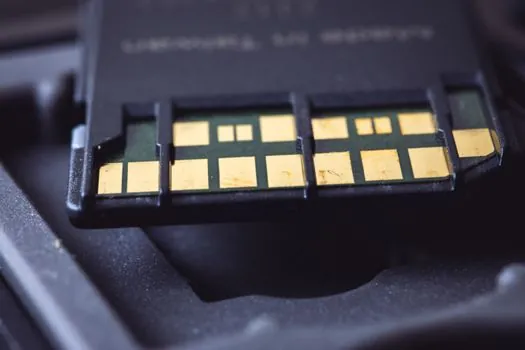
Wafer size is a useful first comparison, but it is not a sufficient capacity metric. The appropriate comparison also includes device type, process flow, qualification status and planned volume ramp.
A 200 mm expansion illustrates why throughput and floor area must be read together. One published foundry expansion increased floor space to 3,000 m², immediately more than doubling wafer throughput and providing scope for a five-fold increase in production capacity [S5]. The MEMS foundry expansion will increase floor space to 3,000 m² and immediately more than double current wafer throughput.
Buyers should also separate prototype capacity from volume capacity. A 50 mm R&D line can support process development and early samples, while a 300 mm line is suited to high-volume production and lower die cost at scale [S1][S4]. The final requirement is process fit: accelerometers, microphones, pressure sensors and optical MEMS can require different deposition, etch, release, packaging and test flows.
Automotive, AI and IoT Demand
Automakers are raising per-vehicle sensor content to comply with advanced driver-assistance requirements. This demand supports volume fabs rather than remaining confined to low-volume design centers.
These figures explain why capacity planning must cover several device families rather than one generic MEMS category.
Regional and Fabrication-Model Differences

Foundries in the region continue to scale 300 mm MEMS processes, while European and North American suppliers compete through heterogeneous integration that combines MEMS dies with application-specific integrated circuits [S4].
The foundry market itself was valued at $764.05 million in 2022 and is projected to reach $1.33255 billion by 2028, representing a 9.7% compound annual growth rate [S7]. That foundry-market estimate differs from the broader MEMS sensor market because manufacturing services form only one layer of the device value chain.
U.S. incentives provide a separate capacity lever. Semiconductor projects announced since 2020 include more than 160 projects across 30 states, representing over $828 billion in private investment, with a MEMS and sensor foundry project carrying a stated $123 million incentive and $525 million project size [S3]. Project announcements do not equal installed wafer output, so qualification and ramp milestones remain decisive.
Limits and Risks in Capacity Forecasts
Announced capacity can exceed qualified supply. SEMI's forecast incorporates capital spending plans, public filings, project schedules, technology roadmaps and fab transactions, but individual projects still carry closure, delay and wafer-conversion risk [S2]. Demand forecasting has a matching limitation: market estimates vary by scope and methodology, including the $20.24 billion 2026 MEMS sensor forecast and the separate $1.33255 billion 2028 foundry forecast [S4][S7].
Three failure modes deserve explicit attention. First, a new cleanroom may install tools without producing saleable wafers because yield learning and customer qualification are incomplete. Second, demand can be concentrated in one application, leaving specialized capacity underutilized if automotive, AI wearable or data-center programs slip. Third, integration complexity can shift the bottleneck to packaging, calibration or test rather than front-end wafer fabrication.
The operational requirement is therefore traceable execution. Buyers should require installed-capacity data, device and process scope, wafer size, qualification status, expected yield and a dated production ramp. The relevant 2026 question is not whether a fab was announced, but which qualified wafers it can ship, at what volume, and for which sensor platform.
How to Read the 2026 Capacity Signal
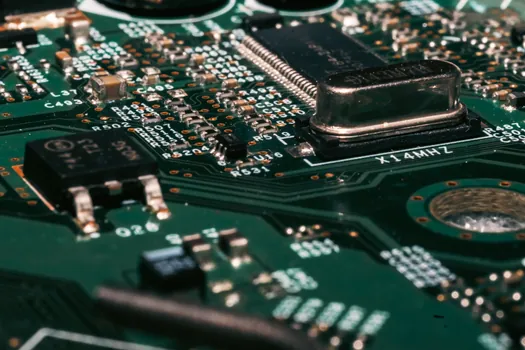
The defensible 2026 capacity conclusion is based on three linked indicators: $13 billion in projected MEMS and sensor fab spending, 19 new volume facilities and lines entering operation from 2026 onward, and a specialty-foundry growth rate of 12% that exceeds device-market growth [S1][S2]. Together, these figures support expanding supply, not immediate, uniform availability of every sensor process.
Track two operational signals before placing volume orders: equipment installation and customer qualification. Both determine whether the announced 2026 capacity becomes dependable production capacity, especially when projects also compete for mature-node equipment, process engineers and packaging resources.