
A 10-year MES total cost of ownership model should include the initial software and hardware costs as well as ongoing monitoring, maintenance, supporting and other costs [S2].
The comparison applies to on-premises and cloud deployment models for manufacturing execution systems, with the largest cost categories shifting from implementation spending to personnel, maintenance, resilience and technology refresh over the operating life.
What the 10-Year MES Cost Model Must Capture
A defensible MES TCO calculation starts with capital cost, operating cost, maintenance, infrastructure and residual value rather than software price alone [S4]. For an MES, that structure translates into implementation, licenses, plant infrastructure, integration, people, service, upgrades, training and eventual migration or replacement.
The first-year cash profile is dominated by consulting, design, data migration, deployment and workforce preparation. The on-premises cost boundary includes servers, bandwidth, data-center power, cooling, physical space and offsite backup, while cloud deployments exchange some of those assets for provider subscriptions and service fees [S2].
The 10-year horizon also exposes costs hidden by a five-year business case. MES technical debt accumulates when configuration, interfaces and operating knowledge are not maintained, while standardized out-of-the-box use can lower ownership cost by reducing avoidable customization [S2].
Deployment Options Against Four Decision Criteria
On-premises MES and cloud MES differ most clearly in control, staffing burden, infrastructure exposure and operating flexibility [S2]. The selection should therefore be based on the plant’s governance requirements and capacity to support the selected architecture, not on license format alone.
This option is for manufacturers that require local data control, specific security procedures, discretionary configuration or have the technical capacity to operate an MES estate. It is a poor fit for sites lacking database, network or system-administration resources, or for plants that want a small operating team.
License and Implementation Cost Drivers

An MES total cost of ownership assessment should account for upfront software and hardware costs as well as ongoing monitoring, maintenance, supporting and other costs [S2]. That makes software price a starting estimate rather than a ten-year purchase commitment.
Implementation cost rises with custom development, the number of enterprise-resource-planning and shop-floor interfaces, data-migration complexity, plant count and transaction volume. Consultants are required where internal expertise is unavailable, while training must cover all workers who will use or support changed procedures [S2].
Volume tier and architecture matter as the footprint expands. More sites and larger applications can require more servers, additional software licensing and higher data-center expenditure [S2]. For a ten-year model, compare the quoted subscription with the perpetual-license route before adding infrastructure, support and migration assumptions.
A practical comparison can be found in MES Subscription vs. Perpetual Licensing Decision Guide, which addresses the commercial model that determines whether software cost remains fixed or scales through the 10-year horizon.
Operating and Maintenance Costs
An on-premises MES requires recurring spending on system administration, network administration and database administration, and some plants require coverage throughout most of the year [S2]. Personnel can become the largest operating expense, making support coverage and internal labor a more important TCO driver than the initial server purchase.
A ten-year plan therefore needs at least three refresh opportunities. The cost table should identify a year-3 review, a year-6 review and a year-9 review, with separate lines for software versions, server capacity, storage, database work, testing and downtime.
Hardware failures, natural disasters and human error create expenses that cannot be predicted precisely but must be provisioned [S2]. The cost model should include offsite backup, recovery testing, incident response and replacement capacity rather than treating disaster recovery as a one-time server line.
For manual production measurement, connected laser distance meters can introduce another calibration, damage and integration burden if they are treated as fixed MES infrastructure. That is a field-equipment decision within the MES project, not a free variable in the software estimate.
Installation, Energy and Maintenance Shape Total Cost
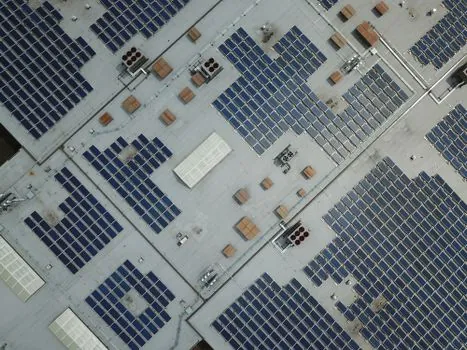
Installation effort includes infrastructure design, electrical and network work, data migration, interface commissioning, user training and production cutover [S2]. These costs can exceed license fees in a brownfield plant where legacy data and disconnected controls must be reconciled.
On-premises energy costs cover servers, storage, cooling and related data-center services [S2]. Maintenance includes patching, backup verification, database administration, hardware servicing and application support, with the labor burden multiplying when several plants or time zones require continuous coverage [S2].
The total-cost model should therefore combine purchase price with installation, energy, maintenance, training and operating downtime. If MES deployment also changes plant measurement or layout, the laser level and automatic level requirements should be separated from the MES license decision and costed as production equipment.
Residual value is the final deduction or reallocation term. The ICCT calculator includes residual value alongside purchase, energy or fuel, maintenance, insurance and infrastructure costs, demonstrating the structure useful for long-life assets [S4]. An MES model can use residual software value, migration cost and the labor saved by retiring a brittle platform, but each value needs an explicit assumption.
Ten-Year Cash Model and Risk Scenarios
A 10-year MES TCO model should present a year-0 implementation row, annual subscription or support rows, a three-year refresh cycle, training, infrastructure, integration and downtime rows, plus year-10 residual value. The 2–3 times licensing benchmark over five years provides a screening check, not a substitute for a bottom-up estimate [S3].
The base case should use planned scope and staffing. A downside case should include one unplanned hardware failure, higher support hours, delayed migration and a larger integration requirement. A further scenario should model cloud subscription escalation, on-premises energy inflation or a required platform upgrade.
The model must also identify when the business case changes. Track number of connected plants, production sites, operator seats, interfaces, transaction volume, custom-code percentage, unplanned downtime hours and infrastructure capacity each quarter. Those are the measurable variables that can move the ten-year estimate.
Exit planning is part of TCO because proprietary configuration, custom interfaces and incomplete documentation create future migration cost. A plant-level MES exit plan can reduce replacement risk by defining data export, interface documentation, configuration records and vendor obligations before deployment begins.
How to Validate the Business Case

Three controls separate a defensible MES estimate from a vendor quotation: reconcile the 10-year cash flow to the 2–3 times licensing benchmark over five years, assign an owner to every recurring line, and document the assumptions behind staffing, refresh, downtime and residual value [S3].
For on-premises deployments, assess the true total cost of ownership by considering upfront software and hardware costs along with ongoing monitoring, maintenance, supporting and other costs [S2]. For cloud deployments, verify contract duration, renewal terms, implementation services, data-export provisions and the cost of customer-side integration and administration.
Approval should require both a base case and a stress case. If the business case depends on unpriced custom development, 24-hour internal support or the absence of one major failure, the apparent software discount is not bankable. The first trackable signal is the approved cost model itself, followed by quarterly updates to license scope, integration effort, upgrade timing and downtime exposure.