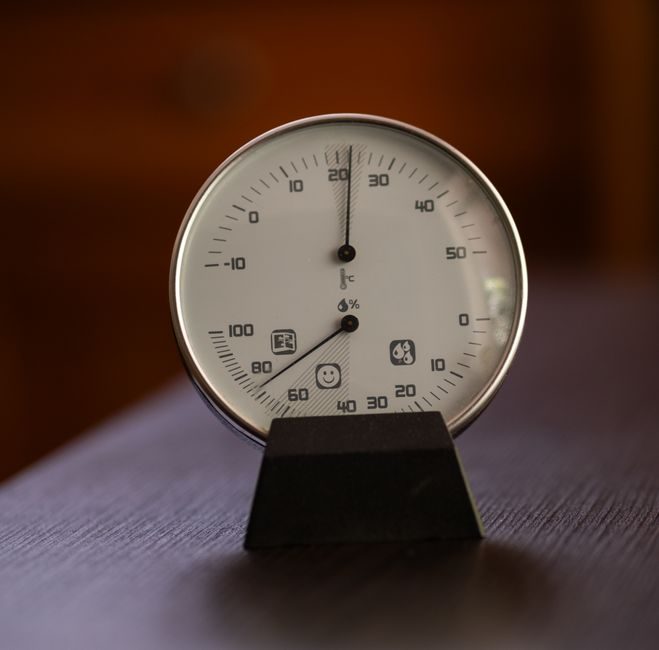
The most consequential decision in moisture analyzer selection is the measurement principle, because each method solves a different analytical problem: loss-on-drying (LOD) for solids, Karl Fischer titration for trace water in liquids and oils, and capacitance/infrared probes for in-line monitoring [S2][S4].
Misalignment between principle and sample is the single largest source of rejected analyzer purchases — a halogen-heated LOD unit that works perfectly on powder will give meaningless numbers on a low-ppm water-in-crude application, where only a Karl Fischer coulometric cell delivers the sensitivity required [S2].
Loss-on-Drying (Thermogravimetric) Analyzers: Halogen vs Infrared
A 5-decimal-place analytical balance paired with a 0.1 mg readability cell is now standard in the laboratory segment, and the heating element choice — halogen for fast ramp, infrared for gentler thermal profile — drives both cycle time and thermal-degradation risk on heat-sensitive organics [S4]. For at-line production checks on packaged goods, halogen-heated units are the default because the higher mass-loss resolution at short cycle times is what gives the production-line throughput the QC lab needs [S1].
Karl Fischer Titration: Volumetric vs Coulometric
Karl Fischer titration remains the reference method for water content in liquids, oils, solvents, and petrochemical streams, with volumetric cells covering the 0.1 % to 100 % range and coulometric cells targeting 1 ppm to 5 % with no titer calibration [S2]. For crude-oil BS&W (basic sediment and water) and refined products, coulometric KF is the dominant choice because it is a primary chemical method rather than a thermal-derivative measurement [S2]. Sample handling — oven evaporation modules that transfer water vapor into the titration cell — is the workaround for solids, paints, and viscous petroleum residues that would otherwise react poorly with the KF reagent [S2].
Online and In-Process Moisture Sensors

In-line moisture measurement on conveyors, in dryers, and inside bulk solids hoppers uses near-infrared (NIR) reflectance probes or microwave/capacitance sensors, where the sensor body must tolerate the process temperature and dust loading of the installation [S4]. NIR is favored for non-contact scanning of webs, sheets, and surface moisture, while capacitance pins are common in granular and bulk-solids bins [S4]. For a process engineer specifying an in-line unit, the decision is dominated by the mounting interface, the analog output (4-20 mA + HART, IO-Link, or PROFIBUS PA), and the calibration strategy against the laboratory reference method [S4].
Resolution, Repeatability, and Readability — the Datasheet Traps
Datasheet resolution (0.001 % vs 0.01 %) is a marketing line; what actually governs a process decision is repeatability expressed as the standard deviation of at least 5 measurements on the same sample under the same drying program [S4]. Sample mass, temperature uniformity across the pan, and drying-time profile together determine the achievable repeatability, and a 0.1 mg readability balance does not by itself produce a 0.001 % moisture result on a 1 g sample [S4]. On Karl Fischer instruments, drift stability of the titration cell over a 60-minute idle window is the equivalent repeatability metric and a common differentiator between bench and process-grade units [S2].
Standards, Compliance, and Method Validation

For pharmaceutical and food applications, the analyzer must support a method that ties into a recognized drying or extraction reference — pharmacopeial methods specify drying temperature and tolerance windows that the analyzer's heating program has to reproduce within stated limits [S4]. For petroleum and lube-oil laboratories, the relevant KF methods define reagent composition, sample size, and endpoint detection; the instrument must accept the appropriate cell and reporting format [S2]. ISO and ASTM drying methods for grain, feed, and food powders set temperature and time profiles that a laboratory LOD unit must be able to program and hold [S4]. Reference testing of new analyzer firmware against a known mass-loss standard is documented in the manufacturer's own validation protocol, which is the document QA auditors will ask for before approving the unit for release testing [S1].
Application Match: When NOT to Use a Halogen LOD Unit
Halogen LOD analyzers fail on samples that release volatile components other than water (oils, solvents, plasticizers) because the mass loss is not equivalent to water content; only a Karl Fischer method or a suitable distillation can isolate water from those matrices [S2]. They also struggle on samples that oxidize, char, or decompose below the drying temperature setpoint, which is why a pre-programmed temperature sweep is preferred over a fixed-temperature method on unfamiliar materials [S4]. For low-ppm water in insulating oils, reactor coolant, or anhydrous chemicals, a coulometric KF cell with a sealed diaphragm and a low-drift indicator electrode is the only credible choice, with detection limits in the 1 µg water range [S2].
Comparison Table: Principle vs Application
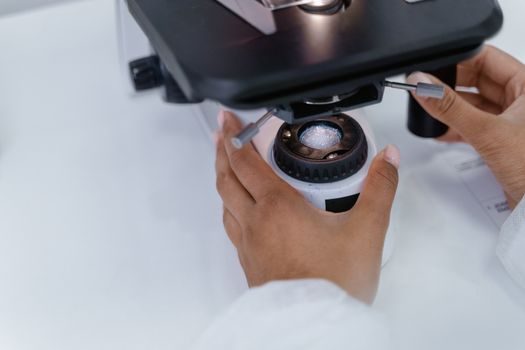
Halogen LOD units win on cycle time and ease of use for powders, granules, and pastes; infrared LOD units are preferable where gentle heating avoids surface decomposition; Karl Fischer coulometry is the right tool for liquid hydrocarbons, low-ppm water, and any matrix where water must be chemically distinguished from other volatiles; NIR and capacitance sensors are the right tool for in-line control loops where contact with the process is impossible or undesirable [S2][S4]. On the cost axis, benchtop LOD units are the lowest entry price, KF titrators sit in the mid-range, and in-line NIR/capacitance systems carry the highest installed cost but provide continuous data for closed-loop control [S4].
Selection Checklist for Process Engineers
Before approving a vendor shortlist, pin down five things: (1) sample matrix and water-content range, (2) required accuracy and repeatability on a defined reference method, (3) cycle time and operator workload at the intended cadence, (4) connectivity to the existing DCS/LIMS — most process-grade units support 4-20 mA, HART, Modbus, or OPC UA — and (5) compliance with the method standard the QA system requires [S2][S4]. A unit that scores well on raw readability but poorly on cycle time or method-program storage will be quietly shelved within a quarter; throughput beats resolution on most production-floor decisions [S4].
A useful next step is to cross-check the candidate model against a published cross-instrument comparison such as this selection guide for analytical instruments to confirm the vendor's repeatability claims are stated against a recognized reference, and to verify the KF reagent compatibility if the analyzer is a titration unit [S2]. Watch for a second signal: vendor firmware updates that add new drying profiles or new endpoint algorithms are typically the only time a moisture analyzer's published repeatability spec is revised, so tracking firmware release notes over a 12-month window is a good predictor of whether the unit will stay in compliance with the lab's reference method. For related process-instrument selection logic on a different measurement family, see pressure gauge vs differential pressure transmitter selection criteria and for the online water-quality counterpart to a KF bench unit, see online water analyzer selection principles.
For component-level specifications, see moisture analyzer, and gas analyzer.