
A new multi-cavity die-casting die generally needs 8–16 weeks for production tooling, with complex multi-slide or multi-cavity designs extending beyond that range [S7].
The wider program takes about 14–24 weeks from quotation to first delivery, including design review, tool construction, T0 and T1 samples, inspection, pilot production, finishing, and freight [S4].
What Sets the Tooling Timeline
Tooling is the controlling constraint in a new die-casting program: conventional production dies typically require 4–12 weeks, while complex multi-slide tools can require 12–20 weeks [S4]. A separate die-casting tooling guide places production tools at 8–16 weeks and identifies complex multi-cavity arrangements as a driver of longer schedules [S7].
The scope includes more than cavity count. Steel procurement, rough machining, heat treatment, finish machining, EDM work, bench fitting, and validation all contribute to the calendar [S4]. Tool builders describe capability spanning small- or large-, single- or multi-cavity tools [S2].
For a project plan, use 8–16 weeks as the initial planning band for a standard multi-cavity production die, then place the remaining launch activities around that tooling date rather than treating tooling as the entire schedule [S7][S4].
Lead Time by Project Stage
A new die-casting program requires about 14–24 weeks from quote to first delivery, while repeat orders using approved tooling generally take 4–10 weeks [S4]. For comparison, the die itself is only one portion of the schedule, and the 20–60 second casting cycle does not determine launch timing [S4].
Multi-Cavity versus Other Tooling Routes

A production multi-cavity die offers repeatability and amortized tooling cost over sustained volume, while prototype tooling is faster but intended for testing, design validation, and short runs [S7][S3]. Prototype injection molds generally take 2–6 weeks, and bridge molds generally take 4–10 weeks [S3].
The decision is driven by duration, output, and geometry complexity. Prototype molds generally take 2–6 weeks [S3]. By comparison, the production die-casting route normally requires hardened tooling and process validation before repeat production [S4][S2].
For a complex component, slide architecture matters as much as cavity count. Multi-slide tooling can raise the die-building range from 4–12 weeks to 12–20 weeks [S4]. Internal undercuts or cored features should therefore be reviewed before cavity configuration is frozen, because angle-pin slides and hydraulic core pulls can change both the tool architecture and the number of machining operations.
Who Needs a Multi-Cavity Die
A multi-cavity die is suited to repeat production of dimensionally consistent parts where cycle efficiency can offset the higher initial tool cost. Die casting is a high-pressure metal-casting process that forces molten metal into a mold and produces dimensionally accurate precision metal parts with a high-quality finish for repeatable, high-volume production [S5]. Those process capabilities make cast tooling appropriate for automotive parts, electronics housings, appliance components, and industrial hardware [S5].
A multi-cavity production die is not the right first route for an unstable geometry, unresolved internal coring, or a short market-validation run. Prototype tooling in the 2–6 week range can test fit, form, function, and performance before committing to a longer production-tool cycle [S3]. The economic comparison between single-cavity and multi-cavity die casting tooling should use expected annual volume, cavity balance, and required output per press hour rather than cavity count alone.
Machine selection must also be confirmed before design freeze. The choice between hot-chamber and cold-chamber equipment depends on alloy melting behavior and part geometry; aluminum, brass, and copper alloys are suited to cold chamber, while zinc, lead, and magnesium alloys are used with hot chamber [S5]. This selection determines the applicable cold chamber machine or hot chamber die casting machine capacity envelope.
What Can Delay the First Good Casting
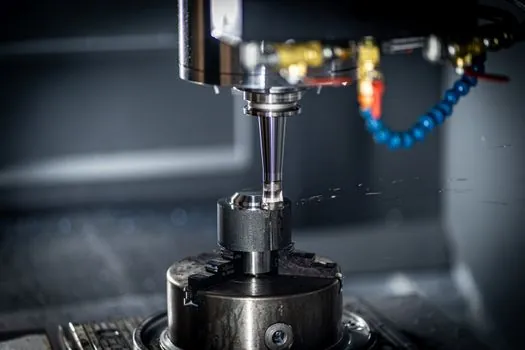
Schedule factors and related pre-production activities can affect engineering sign-off timing [S4]. A production tool also requires controlled machining, heat treatment, EDM, bench fitting, and process development, so reducing the casting cycle alone cannot compress the launch schedule [S4].
Validation failures can add time after the tool is physically complete. A new die-casting program typically takes 14–24 weeks from quote to first delivery and includes T1 samples and customer approval such as PPAP where required [S4]. If the design requires internal passages, the die design must account for cores and core-pull action; a casting ladle and molten-metal delivery plan also need to match the selected casting process and production sequence [S5].
Material selection affects both the die process and the part specification. Aluminum offers low weight and corrosion resistance for many applications, magnesium is suited to lightweight components, and zinc supports tighter dimensional tolerance [S5]. The selected alloy, shrinkage allowance, gating system, venting, ejection, and surface-finish requirement should be frozen before detailed tool construction begins [S5][S4].
How to Contract the Schedule
The contract baseline should separate the physical die from the complete program. A defensible structure is 8–16 weeks for a standard multi-cavity production die, 1–2 weeks for T0 and T1 sampling, 1–3 weeks for FAI and PPAP when applicable, and 1–2 weeks for a 50–500 part pilot run [S7][S4]. Complex multi-slide tools need a 12–20 week build allowance rather than the standard range [S4].
Milestone acceptance should cover design freeze, machining completion, heat-treatment records, bench-fit results, first-shot dimensions, and process-parameter records. Tool validation is already a defined supplier service, and metal-flow analysis can be performed with MAGMAsoft alongside CAD tools such as Pro Engineer, Creo, and AutoCAD [S2]. These controls support a factual acceptance gate rather than a calendar-only commitment.
Logistics need a separate line. Air freight can add 3 days, while sea freight can add up to 6 weeks [S4]. Tool transfer should also be planned as a controlled event involving machine compatibility, rigging access, die weight, and the receiving die casting machine, rather than left until the die has passed T1 sampling.
Decision Gate Before Tool Release
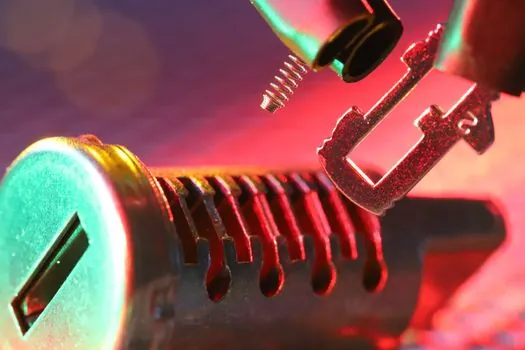
Proceed with a multi-cavity production die when the geometry is stable, expected volume justifies the 8–16 week tooling path, and the required output per hour can be balanced across the cavities [S7]. Use prototype tooling when the design still needs a 2–6 week learning cycle before production commitment [S3].
Track three schedule signals: engineering sign-off against the 1–2 week allowance, tool completion against 4–12 weeks or 12–20 weeks for complex multi-slide construction, and T1 release against the following 1–2 week sampling window [S4]. If any one slips, the 14–24 week launch target should be moved rather than compressing inspection or pilot validation [S4].