
The 2026 warehouse multi-gas detector market is anchored on 4-sensor LEL/O2/CO/H2S portables, with a fifth (PID or IR CO2) channel added wherever solvent volatiles, refrigerant leaks, or combustion-by-product hazards dominate the risk register [S2][S3][S4].
For a typical dry-goods or battery-charging warehouse, the minimum viable specification is a portable 4-gas monitor with combustible (catalytic-bead or NDIR LEL), oxygen, carbon monoxide, and hydrogen sulfide channels, IP66/67 ingress, audible ≥95 dB alarms, and a runtime of 12-18 hours per charge, with optional motorized sampling for confined-space battery rooms [S3][S5].
Sensor stack: which four channels are non-negotiable
The standard 4-sensor stack in a warehouse-class multi-gas detector is LEL (methane-calibrated catalytic bead or NDIR), O2 (electrochemical, 0-30% vol range), CO (electrochemical, 0-500 or 0-1000 ppm), and H2S (electrochemical, 0-100 ppm) [S3][S5]. This quartet covers forklift exhaust (CO, unburned HC), battery off-gassing (H2 detectable via LEL cross-sensitivity on some sensors but explicitly monitored where flooded lead-acid charging occurs), and oxygen displacement during purge cycles or nitrogen-padded packaging lines [S3][S5].
A fifth sensor changes the use-case envelope. RKI GX-6000 configurations priced at CAD 3,304-4,787 add PID (10.6 eV, 0-6,000 ppm VOC), IR CO2 (0-10,000 ppm), NH3 (0-400 ppm), SO2 (0-99.9 ppm), NO2 (0-20 ppm), Cl2 (0-10 ppm), or HCN (0-15 ppm) on top of the LEL/O2/CO base [S2]. A warehouse storing solvents, paints, or adhesives should specify PID; a refrigerated warehouse with CO2 / NH3 refrigerant should specify the IR CO2 or NH3 channel rather than rely on the LEL sensor alone [S2].
The BW GasAlertMicroClip XT remains the dominant entry-level 4-gas form factor in this segment, positioned for general industrial use and confined-space worker monitoring, with one of the lightest housings in the category and an integrated concussion-proof boot [S3][S4]. The Micro 5 IR variant extends that platform to five-gas monitoring with IR combustible sensing, which avoids the poisoning failure mode of catalytic-bead LEL in silicone- or lead-contaminated atmospheres common around packaging machinery [S4].
Zone rating, ingress, and the warehouse hazard picture
Warehouse gas-detection equipment falls under two parallel protection concepts. North American sites follow NEC Class I Division 1 / Division 2 group D, while European and most export-bound operations require ATEX 2014/34/EU with IECEx equivalent, typically Zone 1 (likely explosive atmosphere in normal operation) for forklift refuelling and battery-charging enclosures, and Zone 2 (not likely in normal operation) for ambient storage aisles [S2][S3].
For indoor dry-goods warehouses without flammable atmospheres, non-explosion-proof enclosures with IP66 or IP67 rating and a drop-tested 4-7 m concrete survival spec are the practical baseline; the BW GasAlertMicroClip XT is designed for this entry-level industrial environment [S3]. For sites adjacent to solvent drum storage, aerosols, or propane-forklift refuelling bays, a Zone 1-rated portable with intrinsically safe sensor packs is mandatory.
Ingress protection numbers translate directly to warehouse floor realities. IP66 means dust-tight and protected against powerful water jets, suitable for wash-down zones; IP67 adds temporary immersion to 1 m for 30 minutes, which matters in cold-storage condensation and outdoor loading-bay applications [S3]. Electrochemical sensors for H2S and CO typically carry a 2-3 year operating life in clean warehouse air; the LEL catalytic bead can be poisoned by silicones, lead, and halogenated compounds and must be bump-tested before each shift.
Selection criteria that map to warehouse operations
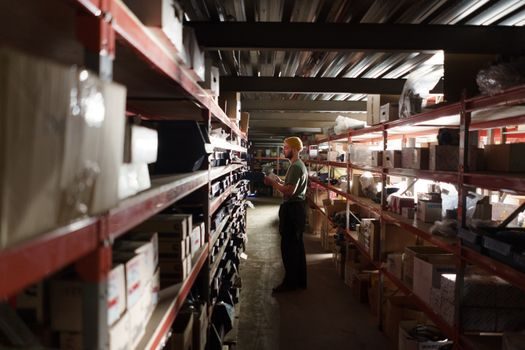
Four decision criteria dominate the warehouse purchase: gas-channel count, sensor technology (catalytic bead vs NDIR vs PID), battery runtime, and docking/calibration infrastructure. The portable gas detector form factor is the default for floor-walking safety officers, while fixed gas detectors cover battery rooms, refrigerant plant rooms, and chiller enclosures where continuous area monitoring is required. [S3]
For high-throughput distribution centers, the practical comparison reads as follows. An entry 4-gas catalytic-bead LEL unit runs CAD 700-1,500 with 12-16 h battery and 4-sensor stack. A mid-tier 4-gas with IR LEL plus motorized sampling pump runs CAD 2,000-2,800, with 18 h battery and cold-storage-rated electronics. A 5-6 gas PID/IR unit like the RKI GX-6000 runs CAD 3,300-4,800 with 5-6 sensor channels and Li-Ion battery pack, with 2-3 week availability from Canadian distributor ITM [S2]. A 5-gas BW Micro 5 IR sits in the CAD 2,200-3,200 band for IR-combustible plus electrochem stack, with the same ITM distribution channel [S4].
Bump-test and calibration infrastructure is a hidden cost line. Each portable requires a docking station (such as the BW MicroDock2) and related accessories including calibration gas and flow regulators [S3]. Spec'ing a fleet without a shared docking-and-bump-test program is the single most common reason portable detectors fail compliance audits even when the hardware is correctly specced [S3].
Use-case fit: dry warehouse, cold storage, battery room, hazmat
A standard dry-goods warehouse with diesel or LPG forklifts, ambient temperature, and packaged consumer goods needs the 4-gas baseline (LEL/O2/CO/H2S) only; an entry-level MicroClip XT-class instrument satisfies OSHA general-duty and confined-space-entry requirements [S3]. A cold-storage warehouse adds condensation management (IP67), low-temperature battery chemistry (Li-Ion rated to -20 °C is preferable to NiMH), and IR LEL to prevent catalytic-bead drift in the dry recirculated air.
A battery-charging room for electric forklifts demands a combustible gas detector with H2 channel, because flooded lead-acid batteries off-gas hydrogen at >4% volumetric concentration during equalize charge, well below the 4.1% LEL of hydrogen. A fixed H2 detector with 0-100% LEL range plus a remote sensor head mounted at ceiling level is the standard arrangement. Lithium-ion battery storage warehouses should add a CO sensor with 0-1,000 ppm range, since Li-ion thermal runaway generates CO as the primary signature gas before smoke.
A hazmat or chemical-distribution warehouse storing solvents, pesticides, or ammonia refrigerant should step up to a 5- or 6-gas unit with PID (for VOC leak detection at sub-TLV levels) plus an NH3-specific electrochemical sensor; the RKI GX-6000 in its 72-6BME-B configuration (LEL/O2/CO/NH3/CO2 with PID and Li-Ion pack) is the canonical spec for this profile at CAD 3,778.94 list [S2]. A semiconductor or electronics warehouse handling isopropyl alcohol, acetone, and flux chemistries should similarly add PID to detect leaks below LEL.
Limitations, failure modes, and what not to do
Three failure modes dominate warehouse detector incidents. First, relying on the LEL sensor for hydrogen detection: hydrogen reads poorly on catalytic-bead sensors and on standard NDIR (which has no IR absorption in H2's spectral band), so a dedicated H2 electrochemical or thermal-conductivity sensor is required for battery rooms. Second, skipping bump tests: catalytic-bead and electrochemical sensors both drift, and OSHA / most provincial safety codes expect a bump test before each shift's use. [S3]
Third, deploying the same 4-gas instrument across incompatible zones: a Zone 2 certified unit in a Zone 1 refuelling bay is a regulatory violation; conversely, paying for Zone 1 certification on a unit that lives in a dry-goods aisle is wasted capital. The BW MicroClip XT is positioned for general industrial use; for Zone 1 applications, vendors offer higher-tier SKUs with explicit IECEx / ATEX markings [S3].
A toxic gas detector channel choice is itself a failure mode: H2S and CO sensors cross-interfere with each other and with solvents; CO sensors in particular give false readings on ethanol and isopropanol, which is the reason refrigerated warehouses with alcohol-based sanitizers may need an H2-compensated CO sensor. Sensor selection is not a checkbox; it requires a site-specific hazard assessment.
Standards, sourcing, and a 2026 comparison table
The governing standards for a warehouse multi-gas detector are ATEX 2014/34/EU (European equipment for explosive atmospheres), the IEC 60079 family for electrical apparatus in hazardous areas, and the IECEx scheme for global certification, paired with OSHA 29 CFR 1910.146 (confined-space entry) and various local fire codes. Performance of the LEL sensors follows the IEC 60079-20-1 gas groupings, with methane as the calibration reference for general-purpose LEL instruments [S2][S3].
Verified comparison across the four most common warehouse profiles, drawn from current 2026 distributor listings:
Profile A: dry warehouse, no flammables, 4-gas only. Recommended spec: BW GasAlertMicroClip XT class, LEL/O2/CO/H2S, IP66/67, 12-18 h runtime, 2.5-3 year sensor life. Indicative price band CAD 700-1,500 per unit plus CAD 800-1,200 per docking station [S3].
Profile B: cold storage with CO2 refrigeration. Recommended spec: 5-gas with IR CO2 (0-10,000 ppm) plus LEL/O2/CO; example RKI GX-6000 72-6BME-B at CAD 3,778.94 list, lead time 2-3 weeks via ITM [S2].
Profile C: battery-charging warehouse. Recommended spec: 4-5 gas with dedicated H2 channel (0-4,000 ppm range typical), fixed ceiling-mounted H2 sensor plus portable LEL/O2/CO/H2S. ITM channel supports RKI GX-6000 72-6AXX-C-05-01 (LEL/Oxy/H2S/CO + probe & 5 ft hose) at CAD 2,653.98 list, lead time 2-3 weeks [S2].
Profile D: hazmat / chemical distribution. Recommended spec: 6-gas with PID + NH3, RKI GX-6000 72-6BBM-C (LEL/O2/CO/VOC/NH3) at CAD 4,787.31 list, lead time 2-3 weeks [S2]. BW Micro 5 IR is the alternate at 5 channels with IR LEL for silicone/lead-resistant operation [S4].
The cross-cutting multi-gas detector selection for adjacent operations such as welding cells follows the same sensor-stack logic with higher emphasis on NO2 and ozone channels rather than H2S.
For related coverage, see Multi-Gas Detector Selection for Oil and Gas Facilities: Sensor Stack, Zone Rating, Output.