A four-to-six-sensor multi-gas detector covering LEL, O2, H2S, and CO is the baseline for upstream and midstream oil and gas work, with a PID or NDIR channel added wherever benzene, toluene, or CO2 exceed the lower explosive limit (LEL) threat envelope [S2][S7]. On current distributor listings, the same handheld platform — the RKI GX-6000 PID — is offered in sensor configurations ranging from a four-gas LEL/O2/H2S/CO build (model 72-6AXX-C-05-01) to six-gas builds adding NH3 (0-400 ppm), HCN (0-15 ppm), Cl2 (0-10 ppm), SO2 (0-99.9 ppm), or NO2 (0-20 ppm) [S1].
Oil and gas facilities sit inside hazardous-area classifications (Zone 0/1/2 for gas, Zone 20/21/22 for dust) where an unrated instrument is both a code violation and a credible ignition source, which is why a multi-gas detector is the more common purchase than a single-gas unit in this segment [S2][S6]. One OEM's industrial multi-gas platform explicitly states a four- or five-gas simultaneous measurement target with advanced sensors plus audible and visual alarms, and that handheld or fixed formats are both available from the same vendor line [S2].
Sensor Stack: What the Four-to-Six Channels Buy You
The four-gas core — LEL (catalytic bead or IR), O2 (electrochemical), H2S (electrochemical), CO (electrochemical) — covers the routine threats at a wellhead, separator, or compressor station: hydrocarbon vapour below its flammable limit, oxygen displacement or enrichment, and the two toxic gases generated by sweet or sour crude handling [S2][S6][S7]. One Chinese OEM documents a "smart sensor platform" that mixes EC, LEL, PID, and IR cartridges in a single handheld, which is the configuration that lets the user swap a PID sensor into the fifth or sixth slot for confined-space entry (CSE) where benzene, toluene, ethylbenzene, and xylene (BTEX) may be present [S7].
Adding a fifth or sixth channel costs real money on a current price list: the four-gas GX-6000 with LEL/O2/H2S/CO plus a sample-draw probe lists at CAD 2,653.98, while a six-gas LEL/O2/CO/VOC (0-6,000 ppm at 10.6 eV)/HCN (0-15 ppm) build lists at CAD 4,787.31, an 80% step-up that reflects the PID lamp, the extra smart sensor, and the longer calibration [S1]. The same platform can be ordered with NH3 (0-400 ppm) at CAD 4,787.31, with SO2 (0-99.9 ppm) plus NO2 (0-20 ppm) at CAD 3,304.57, or with Cl2 (0-10 ppm) plus HCN (0-15 ppm) at CAD 3,544.87, so the gas-by-gas delta is roughly CAD 600-2,100 over the four-gas baseline [S1].
Fixed vs Portable: Same Sensors, Different Duty Cycle
Wall-mounted fixed units are designed to run 24/7 with relay outputs for shutdown logic and 4-20 mA or RS-485 for the DCS layer, and a fixed O2 detector explicitly supports both 4-20 mA analog output and RS-485 in a single unit, which is the typical wiring pattern for a SCADA-integrated facility [S2]. The fixed form factor suits a known hazard point — near a flare knock-out drum, a glycol contact tower, an LACT skid, or an analyser house — where a diffused portable unit would need to be carried or staged.
Portable units are for the workforce: turnarounds, hot work permits, CSE, and unannounced leak surveys. Dräger's oil, gas, and chemical industry page frames the problem as "every day we work hard with our employees and our solutions to make y" [S6], and a portable multi-gas detector is the format that fits that mobile permit-to-work loop. The 241-260-of-682 listing on a North American safety distributor shows that even within a single platform (GX-6000) the channel combinations span fourteen variants, which is itself a signal that the buying decision is a sensor-cartridge decision before it is a brand decision [S1].
Hazardous-Area Certification: ATEX, IECEx, and the Zone Map
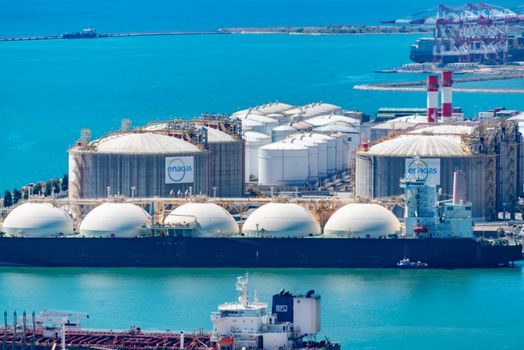
Any detector used inside a classified area must carry a rating that matches the zone, and a fixed gas detector intended for Zone 1 needs an Ex db or Ex eb marking with the gas group (IIA/IIB/IIC) and temperature class (T1-T6) appropriate to the worst-case process stream. Dräger explicitly markets "innovative gas and flame detection solutions" into the oil, gas, and chemical industry segment, which is the segment where ATEX 2014/34/EU equipment directive and IECEx certification are the two accepted marks [S6].
Sensor type also drives the certification path: catalytic-bead LEL sensors require oxygen to function and can be poisoned by silicone or lead compounds, while IR LEL sensors fail-safe in oxygen-depleted atmospheres and tolerate longer calibration intervals on heavy-hydrocarbon streams [S2][S7]. A combustible gas detector for a confined space at a refinery should therefore be IR or dual-LEL, not bare catalytic bead, because the CSE atmosphere routinely runs oxygen-deficient after purging.
Selection Criteria: A Decision Matrix for the Buyer
Five criteria rank the candidate options. (1) Sensor count and target gas list: minimum four (LEL/O2/H2S/CO), add PID for VOC or NDIR for CO2 on sweet-gas or CO2-flood plants. (2) Certification: ATEX/IECEx for Zone 1 fixed, intrinsically safe (Ex ia) for Zone 0 portables. (3) Output: 4-20 mA + HART or RS-485 for fixed DCS integration; local audible + visual + datalogging for portable. (4) Run time and battery: 12+ hours on Li-ion for a full shift, with hot-swap on the portable gas detector form. (5) Sensor cross-sensitivity and poison resistance: IR for heavy HC and H2-rich streams, electrochemical H2S with a filter for chlorinated atmospheres [S1][S2][S7].
On the same GX-6000 line, the price-vs-config delta is informative: PID + NH3 (CAD 4,787.31) versus PID + SO2 + NO2 (CAD 3,304.57) versus PID + Cl2 + HCN (CAD 3,544.87) versus four-gas + probe (CAD 2,653.98) — meaning a buyer who only needs a gas detector for sour-gas handling should resist the upsell to PID unless benzene is on the exposure inventory [S1]. One industrial-platform datasheet documents CO, O2, H2S, and EX as the standard four, with "other gas customizable" as the fifth and sixth slot, which is the explicit contract between buyer and OEM [S7].
Use Cases: Where Each Configuration Earns Its Place
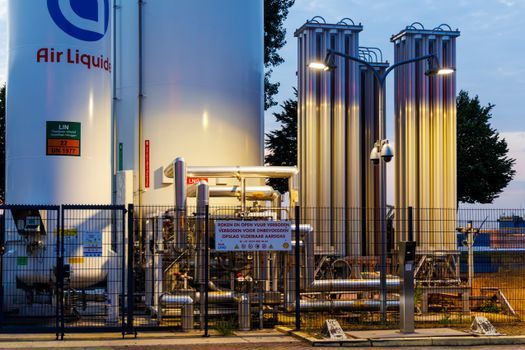
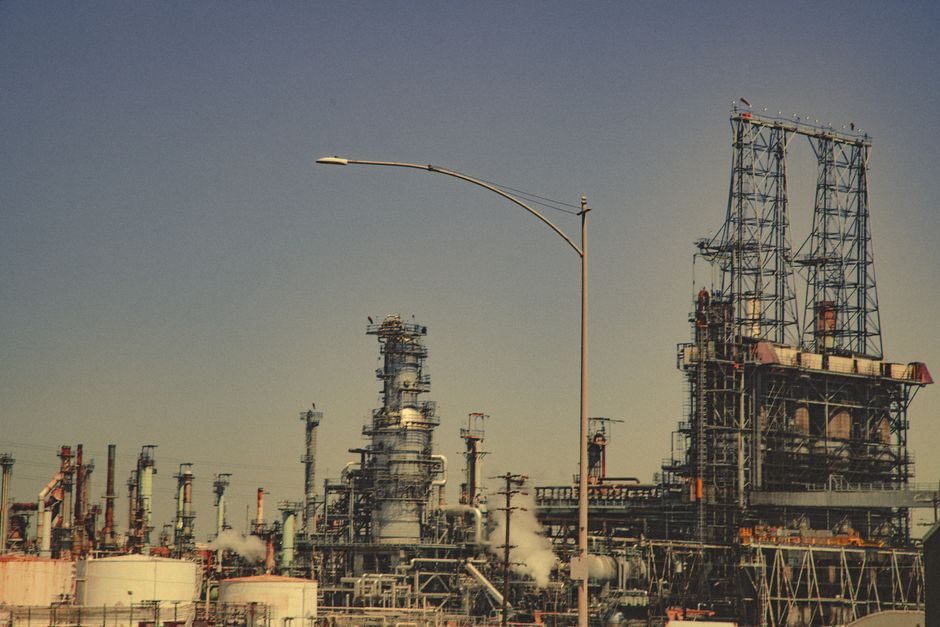
Upstream wellhead and test separator: four-gas portable with H2S and CO emphasis, plus a fixed LEL/O2/H2S/CO unit powered from the RTU, because the wellhead is a sour-gas exposure point and a manned entry point. Midstream compressor station: fixed multi-gas with IR LEL and remote sensor heads, because compressor buildings are Zone 1 and IR tolerates the lubricant mist that poisons catalytic beads. Downstream refinery turnarounds: six-gas portable with PID for BTEX, because the confined-space work is the dominant toxic exposure [S2][S6][S7].
Dräger's framing of the oil, gas, and chemical industry markets "innovative gas and flame detection solutions" together, which points at the joint specification problem: gas detection covers the toxic and asphyxiant threats, flame detection covers the thermal radiation and UV/IR fire threat, and the buying specification for a new unit train should write both lines, not one [S6]. A fixed O2 detector on a 4-20 mA + RS-485 bus, running 24/7, can be paired with a portable multi-gas detector on a sample-draw probe for the CSE crew, with no overlap of function [S2].
Limitations, Failure Modes, and What the Datasheet Will Not Tell You
Every sensor in a multi-gas cartridge has a poison profile: H2S electrochemical cells are killed by prolonged high-concentration exposure; catalytic-bead LEL sensors are killed by silicone, tetraethyl lead, and H2S above 100 ppm; PID lamps drift when humidity drops below 10% RH; IR LEL sensors will not detect hydrogen at all and read low on acetylene relative to catalytic bead. Calibration interval, bump-test interval, and sensor warranty are the three numbers a spec should call out by name, because vendors quote "lifetime" figures that assume a clean atmosphere and a one-shift duty cycle [S1][S2][S7].
Fixed units have a separate failure mode: they sit on a wall and are trusted, until the dust cap is left on, the rain shield is plugged, or the sensor head is mounted in a dead-air pocket downstream of a vent. A 24/7 wall-mounted fixed gas detector is only as good as its siting, and the standard practice is a wind-tunnel or computational fluid dynamics siting study for any new detector that is meant to be a life-safety instrument, not a perimeter instrument [S2][S6].
Standards, Sourcing, and Trackable Signals

The governing standards for a multi-gas detector in oil and gas are ATEX 2014/34/EU for EU hazardous-area equipment, the IEC 60079 series for explosion-protection construction, and IECEx for the international scheme; in the US, the NEC hazardous-area articles apply, and for sour service, NACE MR0175 governs the materials exposed to H2S — not the detector itself, but the bracket, the sample line, and the housing that the detector is mounted in [S6]. A specification that names the zone, the gas group, the temperature class, the sensor list, the output, and the calibration interval is the minimum bar; anything less is a procurement-line item, not a safety instrument.
For related fixed-instrument selection, the Fixed Gas Detector Spec Map for Laboratory Installations and the Fixed Gas Detector Selection for Food Processing Lines articles extend the same sensor-stack and output logic into adjacent segments. Trackable signals to watch over the next quarter: a 2026 revision to the GX-6000 firmware bulletin (the current line is still shipping the 10.6 eV PID lamp at 0-6,000 ppm VOC), the 2026 release of the Dräger X-am family for Zone 0, and any IECEx certification database update for IR-LEL dual-range sensors.