
A 2026-07-04 sourcing page from a Chinese instrument maker lists ATEX-certified portable multi-gas units with IP66/IP68 protection and 24 h battery life targeting four-gas detection, with pricing structured as "Get Best Quote" rather than fixed list [S4].
The same ATO.com reference dated 2026-07-27 defines a gas detector as any instrument using an internal gas sensor to convert ambient concentration into an electrical signal that trips an alarm when a preset threshold is crossed, and explicitly splits its target gases into three families: combustible, toxic, and VOC [S3].
Definition and sensor count: where the two product classes actually split
The functional split is sensor count, not brand. A single gas detector carries one sensing element and is calibrated to one species; a multi-gas detector carries two to five sensors and reads them on a shared display, with interchangeable smart modules that can be swapped in the field without re-calibrating the rest of the instrument [S1].
Hanwei's E4000 platform, listed on DirectIndustry on 2026-06-06, is a representative multi-gas instrument: it measures up to four gases simultaneously — combustible gas, O2, CO and H2S — and supports MOS, catalytic, electrochemical, infrared and PID sensor modules selectable per slot, with optional built-in pump sampling and visual/audible/vibrative alarm [S1]. New Cosmos's XP-3000II series, by contrast, is a portable combustible-gas detector convertible to 32 target gases via a semiconductor cell, ATEX-rated, IP67, with data logging, and is positioned as a replacement for the legacy XP-3110 / XP-3160 single-target instruments [S2].
Hazard scope: combustible vs toxic vs VOC, and why one sensor is rarely enough
ATO's editorial content dated 2026-07-27 maps the three target families: combustible gases (H2, CH4, C3H8, C4H10, C2H4, C2H2, H2S, PH3 and the petroleum-gas mix), toxic gases (CO, H2S, NH3, Cl2, SO2), and VOCs — and notes explicitly that real working environments almost always contain a mixture, which is the reason multi-gas instruments exist rather than as a marketing upsell [S3].
For toxic exposure, the same ATO reference defines four limit values the instrument must compute: TWA (8 h weighted average, sampled every 15 min), STEL (15 min weighted average, sampled every 5 min), IDLH (immediate threat to life and health) and MAC (maximum allowable concentration) — limits that are only meaningful if the device can read the toxic species alongside O2 and LEL on the same duty cycle [S3]. The E4000 implements STEL and TWA alarms for its toxic channels and adds password management plus self-test on power-on, which is the minimum feature set for IDLH-rated confined-space work in petrochemical, sewage and mine applications [S1].
Selection criteria: sensor technology, ingress protection, and certification
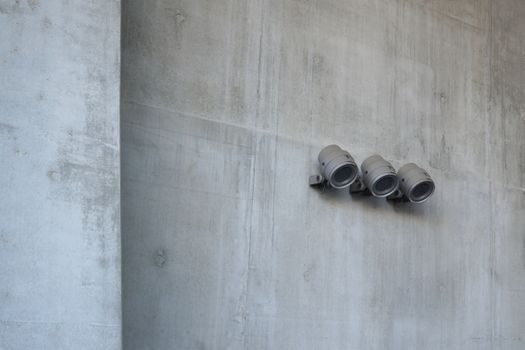
Three specs drive the buy/no-buy decision more than any other. First, sensor technology mix — catalytic bead and NDIR for combustible, electrochemical for CO/H2S, PID for VOC, semiconductor for low-cost refrigerant leak work [S1][S3]. Second, ingress protection — ATEX-certified portables in 2026 are routinely quoted at IP66 (dust-tight + powerful jets) for general industry, with IP67 (immersion to 1 m) for wash-down, and IP68 for the harshest confined-space work; the K60-IV from KELISAIKE and the Hanwei E4000 are both IP66 minimum, and the July 2026 Chinese factory page lists IP66/IP68 as the explicit buyer-facing differentiator [S1][S4][S5]. Third, hazardous-area certification — ATEX for European sites, IECEx for international projects, and Class I Div 1 for North American oil & gas; the New Cosmos XP-3000II explicitly carries ATEX marking in its datasheet, and the Zhong An S360 pump-suction unit is offered as a combustible / O2 / CO / H2S five-gas portable aimed at the same market [S2][S10].
Battery and data-logging behaviour also feeds the spec. The same Chinese supplier page advertises 24 h battery life, 1000-record internal data logging and Bluetooth transmission on its IP68 portable multi-gas flagship, and the S360 ships with built-in pump suction as standard rather than as an option [S4][S10]. For a confined-space team that needs to clear tanks, the pump variant is non-negotiable; for a roving leak-check on a refinery pipe rack, the diffusion version is fine.
Head-to-head comparison: multi-gas vs single gas on four decision criteria
On cost, single-gas units are 2-4x cheaper per device because they ship with one calibrated cell, one display channel and one alarm set; multi-gas units integrate two to five sensors plus a pump, a larger battery and dual alarm logic, which is why the typical 2026 factory-floor quote is "Get Best Quote" rather than a transparent list [S1][S4]. On operator footprint, a single-gas unit is a clip-on badge weighing roughly 100-200 g; a multi-gas portable like the E4000 or S360 is a belt-mounted instrument with pump, hose and probe, typically 400-800 g, and that weight delta matters over a 10 h shift [S1][S10].
On lifetime and calibration, multi-gas units have higher per-channel maintenance because each sensor has its own drift curve — electrochemical CO/H2S cells typically need replacement every 24-36 months in field service, while NDIR combustible cells can run 5+ years, and the smart-module architecture of the E4000 is specifically designed so a failing channel can be swapped without sending the whole instrument to a workshop [S1]. On use-case fit, a single-gas detector wins for refrigerant leak tracing in HVAC, for natural-gas sniffer sweeps in domestic meter work, and for one-toxic-species process lines such as chlorine-cell rooms; a portable gas detector of the multi-gas class wins for pre-entry confined-space testing, refinery turnarounds, sewage-plant manhole work and any mine entry where the four-gas rule (O2 / LEL / CO / H2S) is mandated [S1][S3][S4][S5].
Who should and should not buy each class
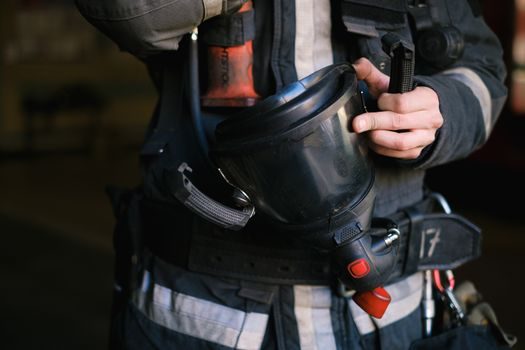
Buy a multi-gas detector if the work site is a confined space, a petrochemical process unit, a sewage treatment plant, a steelworks, a mine, a shipbuilding yard, or any location where an OSHA/NIOSH-style four-gas protocol is written into the safety procedure [S1][S3]. Buy a single-gas detector if the worker is doing point leak detection on a known pipe, refrigerant service in HVAC, or fixed toxic-species monitoring where one channel has been proven adequate by a risk assessment [S3]. Do not buy a multi-gas unit as a status symbol for a small workshop that only handles propane cylinders — the extra sensors add cost, calibration burden and false-alarm risk with no safety upside; conversely, do not send a worker into a manhole with a single-gas combustible unit and call it compliant, because the oxygen-deficiency and H2S-poisoning failure modes are invisible to that instrument [S3][S4].
Failure modes, standards and sourcing checkpoints
The two dominant failure modes are sensor poisoning and water ingress. Electrochemical H2S cells are poisoned by silicone vapours and by prolonged high-concentration exposure; NDIR combustible cells are blinded by water condensate on the optics, which is why the IP66/IP68 specification on the 2026 ATEX-certified portables is paired with a mandatory bump-test before each shift [S1][S4]. On standards, ATEX 2014/34/EU governs EU hazardous-area equipment, IECEx governs international projects, and the relevant installation rules sit in the IEC 60079 series for explosive atmospheres; a buyer should require the certificate number, not just the word "ATEX", on every quote [S2][S4]. For confined-space entry specifically, EN 60079-29-2 is the functional-selection guide for combustible-gas detectors, and the four-gas rule is a procedural requirement, not a standard-mandated configuration — the standard defines the selection logic, the employer defines the gas list [S3].
Two trackable signals for the next purchasing cycle: the multi-gas vs single-gas split is being pulled harder toward multi-gas by ATEX/IECEx procurement language that increasingly requires four-gas pre-entry verification, and by the July 2026 Chinese factory pages quoting IP66/IP68 and 24 h battery life as baseline rather than premium features [S2][S4]. For related instrument-class decisions, see the Smoke Detector vs Gas Detector: Spec-First Selection Map and the Heat detector vs gas detector: hazard class, sensing principle, and EN 54 / ATEX breakdowns on SourceBySpec.