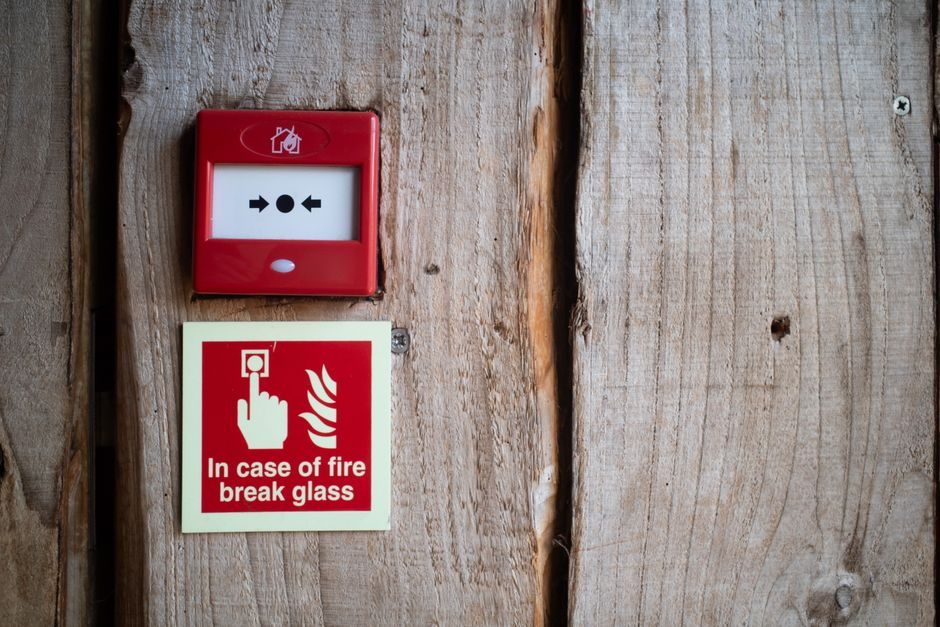
A heat detector is a fire-sensing element that responds to a fixed temperature threshold (typically 57 °C, 70 °C or 90 °C) or to a rate-of-rise (RoR) of about 8–10 °C/min, and is governed inside fire-detection panels by EN 54-5 classes A1, A2, B, C, D, E, F, G [S1]. A gas detector is a life-safety instrument that measures the partial pressure or volume fraction of a target gas — methane, propane, CO, H2S, NH3, O2, CO2, VOC — against LEL, ppm or %vol alarm setpoints, and is specified for ATEX/IECEx classified zones where the fire load is the gas/air mixture itself [S2].
DirectIndustry lists 25 industrial heat-detector manufacturers with 52 products on its 2023-06 index page, and the Crowcon Triple Plus+ portable multigas unit alone has logged over 90,000 sold units into oil & gas, chemical, utility and manufacturing sites since launch [S1][S2]. Both are mature, broadly sourced categories, but they protect against fundamentally different loss mechanisms — heat detectors protect property from a developing fire, gas detectors protect people and process from a release that has not yet ignited.
Hazard class and governing standard
Heat detectors fall under EN 54-5 (point heat detectors) and are integrated into fire detection and fire alarm systems (FDAS) per EN 54-2 control panels, with typical fixed-temperature ratings at 57 °C (class A2/S) and 90 °C (class C) for industrial ceilings [S1]. Gas detectors fall under IEC 60079-29-1 for flammable gas detectors and IEC 60079-29-2 for toxic gas detection, with EN 50402 / IEC 60079-29-4 covering performance requirements of fixed gas detection apparatus, and the installation zones (0/1/2 for gas, 20/21/22 for dust) drawn per ATEX 2014/34/EU and IEC 60079-10-1 [S2]. The two standards do not overlap: EN 54 is a fire-alarm product standard, while IEC 60079-29-x is an explosion-protection / occupational-hygiene product standard.
If the loss you are trying to limit is building or asset damage from a seat-of-fire that follows an unrelated ignition source (electrical, friction, hot work), EN 54-5 heat or EN 54-7 smoke detectors are the correct pick [S1]. If the loss is personnel exposure to a flammable cloud before it finds a source of ignition, or to a toxic vapour such as H2S, NH3 or CO, an IEC 60079-29-1/-2 gas detector is the correct pick [S2]. Putting a heat detector in a battery room, LNG compressor shed or refrigerant plant leaves a blind window from the moment the leak starts until an external ignition event raises ambient temperature past the trip point.
Sensing principle and what each instrument actually measures
Industrial heat detectors on DirectIndustry's index cover four physical principles: fixed-temperature bimetallic or fusible-alloy elements (e.g. Auxitrol Weston's TM 1/9 Ex line), rate-of-rise thermistor pairs (e.g. Siemens 5151 / FDT221 dual-redundant), linear thermopile non-contact IR (e.g. MTS1HIGHTEMP TS1x80B-A-D0.75-1-Kr-B1 with 80 antimony/bismuth thermocouples), and combined heat+smoke or heat+CO multi-criteria elements (e.g. Ajax FireProtect 2 Jeweller, HTI Sanjiang A9036T) [S1]. Output is a single fire-alarm contact or an analogue addressable value on a 2-wire loop; data logging is not a heat-detector feature.
Gas detectors on the same marketplace use five principle families: catalytic pellistor for %LEL combustible gases, non-dispersive infrared (NDIR) for hydrocarbons and CO2 (0-5 %vol for purge on the Crowcon Triple Plus+ IR option), electrochemical cell for toxic gases and O2, metal-oxide semiconductor / PID for VOC, and acoustic or ultrasonic variants for leak detection [S2]. The Crowcon unit combines up to four sensors in one portable, logs to internal memory, and exposes LEL, %vol, ppm and O2 readings on a single display, which is the working pattern for an IEC 60079-29 portable [S2]. Heat detectors cannot replicate this because temperature is a proxy, not a measurement, of combustion precursor concentration.
Decision matrix: which one for which application
Use the matrix below when writing a specification line item; every cell maps to a code-clause that an inspector can verify.
• Battery storage / UPS room: catalytic-bead or NDIR gas detector for H2 (LEL 4 %vol) plus EN 54-7 smoke; heat alone misses the off-gas pre-ignition phase. • LNG / LPG bullet farm: NDIR or catalytic fixed gas detector at LEL 10–20 % alarm / 20–40 % trip, plus EN 54-5 rate-of-rise at the vapour cloud boundary. • H2S-bearing oil & gas wellhead: electrochemical 0–100 ppm portable, STEL 10 ppm / TWA 5 ppm per occupational hygiene practice; heat detector is irrelevant. • Commercial kitchen: EN 54-5 class A2 fixed-temperature 57 °C heat detector above cooking lines; gas detector not required if the gas train is solenoid-interlocked upstream. • Semiconductor cleanroom (NH3, HF, SiH4): electrochemical / PID multi-gas detector with 1 ppm resolution; heat detector is out of scope. • Refinery FCC platform: combination — rate-of-rise heat at sample points, NDIR hydrocarbon gas detector at compressor sheds, electrochemical H2S at the manifold.
Where the hazard is dual — a flammable release that, if ignited, becomes a process fire — the right answer is a fixed gas detector upstream of the heat detector, not "either / or". The gas detector gives a 30–120 s pre-ignition warning the heat detector cannot, and the heat detector gives a redundant fire-alarm trip if the gas detector fails or the release bypasses the sampling point [S2].
Installation and lifetime constraints
Heat detectors on the industrial market are 2-wire conventional (e.g. Ningbo Sentek CD1100, MOQ 500 pcs, FOB US$ 4.40 per piece) or addressable loop-powered (e.g. Siemens 5251CPI, Mircom 4400I with built-in short-circuit isolator) and draw no field power beyond loop current [S1][S5]. Abrasive or steam-laden atmospheres can produce false alarms; the Mircom 4400I documentation cites nuisance-alarm reduction of up to 46 % by AI-augmented smoke + heat multi-criteria analysis [S1]. Sensor life is effectively the detector life (10+ years), and there is no routine calibration step beyond a functional test with a heat gun.
Gas detectors need bump-testing and span calibration on a documented schedule. Catalytic pellistor sensors are poisoned by silicones, lead, sulphur and oil mist and lose sensitivity within 12–24 months in harsh service; NDIR sensors are immune to poisoning but fail optically (window fouling) and on lamp burnout over 5–10 years; electrochemical cells have 2–3 year typical life in clean atmospheres and shorter in dry or low-oxygen service, with output current that depends on the third electrode [S2]. A 4-gas portable such as the Triple Plus+ is sold on the strength of sensor-swappable modules and a LIBRA lithium-ion battery that the vendor rates for the full 90,000-unit fleet operating window [S2]. Budget the gas-detection lifecycle at roughly 1 calibration per month for portables and 1 bump-test per detector per quarter for fixed systems, per IEC 60079-29-2 guidance.
Cost, sourcing and where the OEM base sits

Industrial heat detectors on the DirectIndustry catalogue are dominated by European and US names (Siemens Fire Safety, Mircom, Fagus-GreCon, Auxitrol Weston, Edwards, Detectomat) with a long tail of Chinese OEM/ODM factories on Made-in-China and ECVV — Ningbo Sentek (Zhejiang), Convoy Security Technology (Guangdong), Beijing Zetron — pricing conventional fixed-temp units from about US$ 4.40 FOB at 500-piece MOQ up to US$ 55 per piece for an addressable 1/2/4-zone fire alarm control panel [S1][S3][S5]. ATEX/IECEx-certified explosion-proof heat probes (e.g. Auxitrol TM 1/9 Ex) sit at a premium tier with lead times driven by the notified-body certification rather than the bill of materials.
Industrial gas detectors are concentrated around specialist safety-instrumentation vendors (Crowcon, Dräger, MSA, Honeywell/BW, Industrial Scientific, RKI) with Chinese OEM/ODM supply on the lower tier. The Crowcon Triple Plus+ is a worked example of the portable multigas architecture — IR LEL + IR %vol + electrochemical CO/H2S/O2 — sold as a single intrinsically-safe assembly for oil & gas, chemical and utility buyers [S2]. HKTDC's sourcing index in 2026-07 lists the supplier base as "Gas Detector, Gas Alarm, Smoke Detector, Carbon Monoxide" — i.e. consumer-grade and light-commercial — and the industrial ATEX/IECEx tier is not on that consumer channel [S4]. Buyers specifying for a classified zone should source from a vendor holding an ATEX 2014/34/EU or IECEx Certificate of Conformity (CoC) for the exact sensor module, not from a consumer-grade CO alarm relabelled for the same SKU.
Cross-link: how this decision sits next to other fire / gas choices
A heat detector is the fire side of the family; a PID gas detector is the VOC side. For a 1-page decision tree on PID vs electrochemical vs NDIR for VOC and toxic-gas monitoring, see the PID vs Gas Detector spec-first selection map. For the point-vs-open-path architecture call (single-beam NDIR vs diffusion point electrochemical), the Open-Path vs Point Gas Detector spec map is the working reference. For the false-alarm-versus-detection-time trade-off on the fire side, the Smoke Detector vs Gas Detector spec map covers the EN 54-7 photoelectric / EN 54-5 heat split that this article has only touched on. [S1]