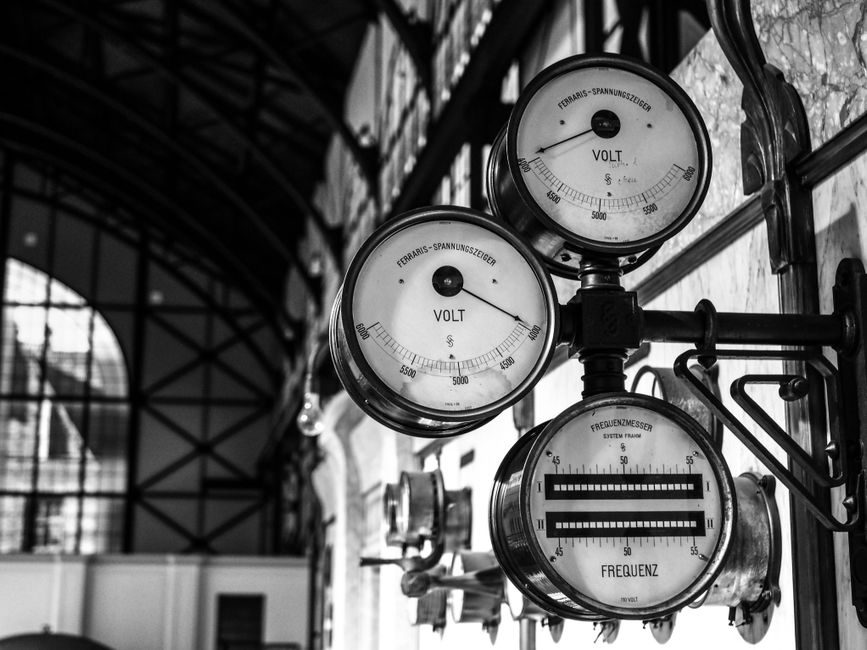
For 4-20 mA loop work the Fluke 725 remains the bench-mark handheld, sourcing/simulating mA, volts, RTDs and thermocouples, with onboard loop power and stored set-ups [S1][S2].
The category splits into three tiers: basic mA/V/RTD/TC handhelds, documenting calibrators with onboard task memory, and HART-aware documenting units that communicate with smart transmitters [S3][S4].
What "multifunction" actually covers in 2026
Fluke's multifunction family explicitly lists source/simulate for both RTD and thermocouple sensors, temperature-switch / controller testing, and (with a dry-well) full transmitter calibration including the sensor side [S4].
For HART loops the multifunction tier extends to calibrating HART smart temperature transmitters, while documenting units (e.g. Fluke 754 family) add 300 V and 110 mA ranges, plus automated as-found / as-left procedures and memory for instrument records [S2][S3].
Read the spec sheet like an instrument tech
Distributors catalog the 725 as "Multifunction Process Calibrator" with stocking SKU 70145642, and the 754 as "754 Multi Function Calibrator 300 V 110 mA" at SKU 70146004 — the extra voltage and current headroom is the only spec-level way to tell a documenting HART unit from a plain mA/V/TC handheld [S2].
Companion form-factors matter: the FLUKE-789 Process Meter ships at 50 × 100 × 203 mm with 0-1000 V / 0-1 A / 0-1000 mA ranges, while the milliamp-only FLUKE-771 clamp reads a 4-20 mA loop with 0.2 % accuracy and 0.01 mA resolution without breaking the loop [S2].
Selection criteria: tier, signals, and HART
Tier 1 buyers doing daily mA/V/TC spot-checks should pick a basic multifunction handheld such as the FLUKE-725; the four dedicated task buttons (mA, V, TC, RTD) and stored set-up recall cover >90 % of loop commissioning without paperwork overhead [S1][S3].
Tier 2 buyers managing ISO 9001 / IEC 17025 calibration records need a documenting calibrator with onboard memory, PC upload, and a full HART modem so smart transmitters can be trimmed, not just loop-powered; Fluke's 754 (300 V / 110 mA) sits in this slot [S2][S3].
Tier 3 buyers in hazardous areas should check for ATEX/IECEx-rated variants on the vendor's intrinsically-safe product line before buying a standard handheld — a non-IS unit in Zone 1 is a near-certain incident waiting to happen (vendor product pages segregate the IS line from general-purpose calibrators) [S3].
Comparison: four realistic options against four decision axes
For a working spec table, compare these four against the criteria that drive most purchase orders: (a) HART support, (b) documenting memory, (c) signal range, (d) typical end-user. [S3]
FLUKE-725 — basic multifunction; no HART, no documenting; mA / V / TC / RTD; field techs doing spot checks [S1][S2].
FLUKE-754 — multifunction documenting with HART; yes, onboard; 300 V / 110 mA; calibration lab / QA techs [S2][S3].
FLUKE-789 Process Meter — mA / V / 0-1 A; loop-power handheld; 0.2 % mA accuracy class; instrument / process techs needing mA sourcing plus DMM ranges [S2].
FLUKE-771 mA Clamp — non-contact 4-20 mA; 0.01 mA resolution, 0.2 % accuracy; control-room commissioning where breaking the loop is unacceptable [S2].
Who should NOT pick the mainstream option
If the work involves HART smart pressure or temperature transmitters, the FLUKE-725 will power the loop and read the process variable but cannot pull device variables or run automated calibration procedures — buyers needing HART should jump to the 754-class documenting tier on day one, not retrofit later [S2][S3].
Likewise, hazardous-area refineries and chemical plants should not deploy a standard Fluke 725; Fluke's catalog explicitly segregates an Intrinsically Safe product line that should be specified instead [S3].
Standards, sourcing, and signals to watch
Documenting calibrators in regulated plants typically anchor to ISO 9001 calibration records and IEC/ISO 17025 lab practice; the 754's on-board HART + documenting memory is the practical way to satisfy audit-trail demands without a separate laptop on the bench [S2][S3].
For broader test & measurement purchasing context, distributor catalogs list loop instruments under "Calibrators" alongside process meters, mA clamps, and pressure calibrators — handy when consolidating spend [S2].
For a deeper look at signal-conditioner test stacks used in power-electronics fabs (the kind of environment a process calibrator meets at the tool interface), see the process-control instrumentation stack breakdown. When the loop ties back to a billing-grade energy meter, the energy-meter cost/communications guide lines up the class-0.2S / DLT-645 comms you should expect the calibrator to verify.
Two trackable signals into late 2026: (1) HART-IP / WirelessHART adoption in new transmitter fleets — pushes buyers toward the 754 class [S3]; (2) ATEX/IECEx intrinsically-safe handheld refresh cycles — Fluke segregates the IS line in its product tree, so a 2026 model refresh there will move procurement timing [S3].
Component reference pages worth checking: multifunction process calibrator, linear guide, and crossed roller guide.