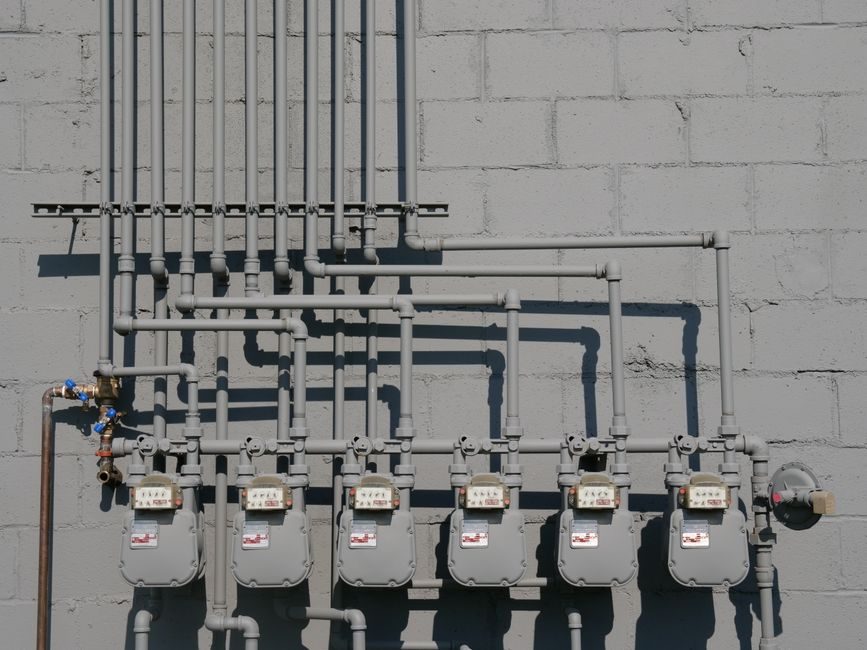
Energy meter landed cost in 2026 is dominated by accuracy class, communication protocol stack, and certification tier, with residential single-phase electronic units from Chinese OEM lines such as Hangzhou Xili Watthour Meter starting near USD 8-15 FOB and three-phase Class 0.5S smart meters clustering at USD 35-90 per unit [S3].
The product mix in active 2026 export catalogs spans twelve sub-categories, from 16 active electronic [energy meter](file:///encyclopedia/energy-meter.html) SKUs to 30 SKUs each in smart energy meters, prepaid meters, and meter boxes, confirming the unit-volume tier where most cost variance actually lives [S3]. Industrial thermal-energy (BTU) measurement, by contrast, is a paired-sensor architecture where a single measurement point on a hot/chilled-water loop can land at USD 800-3,500 once flow element, temperature pair, and integrator are bundled.
Cost driver #1 — accuracy class and metrology certification
Active IEC-standard single-phase electronic energy meter listings and three-phase four-wire smart prepayment meters in the 50/60 Hz class dominate the Hangzhou Xili catalog, indicating that the bulk of 2026 export volume is still Class 2.0 / Class 1.0 residential hardware with IEC 62053-21 conformity [S3].
Stepping from Class 2.0 residential to Class 0.5S or Class 0.2S industrial metering typically multiplies the bill of materials by 3-5x because of shunt-versus-CT sensing, tighter temperature-compensated references, and the additional calibration/audit burden. Three-phase multifunction meters capable of harmonic and power-quality logging cluster in the USD 60-90 band at OEM tier, roughly 4-6x a basic single-phase unit [S3].
For thermal-energy / BTU applications, vendors such as Cadillac Meter have shipped measurement devices for over 100 years (the original gravity meter was introduced in 1906) and now offer dual-channel graphical archiving systems for hot/chilled-water loops, paired with mass, vortex, ultrasonic, and magnetic flow elements selected per media [S2]. The certifier of last resort for utility-revenue metering remains the national metrology institute; for industrial sub-billing, vendors typically self-declare against IEC 62053-22.
Cost driver #2 — communication stack and smart-meter feature set
Smart energy meter SKUs (28 active listings) and wireless energy meter SKUs (8 active listings) in 2026 catalogs command a 20-40% premium over bare electronic meters because of the integrated communication module and the firmware stack that supports it [S3]. Common protocol options on the 2026 generation are Modbus RTU/TCP, DLMS/COSEM, M-Bus, LoRaWAN, NB-IoT, and RF mesh; each protocol tier changes the BOM by a few dollars for the modem plus a fixed NRE for protocol-stack certification and security audit.
Prepaid (30 SKUs) and multirate (22 SKUs) meters add a tariff-engine MCU and a token/recharge interface (keypad, STS, or mobile app), which is the reason these categories sit above baseline single-phase pricing even at the same accuracy class [S3]. The 2026 mobile-reading app ecosystem — e.g. Energy Meter Reader v2.2 supports ENG and FIN languages, EUR/GBP/RON/USD/CZK/SEK currencies, default 1000 imp/kWh, and 5 cents/kWh energy cost — illustrates the consumer-side cost-tracking layer that piggybacks on the optical LED pulse output every IEC-compliant meter already provides [S1].
Optical-port read is essentially free (an LED and a photodiode), while a fully remote AMI head-end requires an annual per-meter cellular data plan, which over a 10-year life can rival the meter capex itself. Spec engineers should price the head-end, not just the endpoint.
Who this guide is for — and who should stop here

Procurement and panel-build engineers specifying sub-billing meters for commercial buildings, chiller-plant BTU metering, or factory three-phase loads will find the cost-driver breakdown below directly applicable. Utility procurement officers buying 10,000+ residential smart-meter lots should engage a meter-vendor RFP process; per-unit cost is governed by tender specs (DLMS/HLS, security class, accuracy class) and is typically 30-50% below the OEM catalog tier cited in this guide.
End consumers trying to read their home electricity bill are not the audience — a USD 5-10 plug-in socket energy meter from the consumer-electronics channel is the right tool, and cost calculations can be done in a free app configured to local currency and imp/kWh [S1]. Engineers should also avoid specifying electromechanical meters (only 2 active SKUs in 2026 catalogs) for new builds — the supply base has shrunk to legacy replacements and lead times extend.
Comparison — main meter types against decision criteria
Four meter families dominate 2026 procurement, and they line up against cost, accuracy, comms, and best-fit use case as follows. Single-phase electronic (USD 8-15, Class 1-2): best for residential sub-billing, Modbus/DLMS optional, fits socket or DIN rail. Three-phase multifunction smart (USD 35-90, Class 0.5S-1): best for commercial sub-billing and power-quality logging, Modbus/DLMS/LoRaWAN typical, DIN rail. Prepaid smart (USD 25-60, Class 1-2): best for utility residential with STS token or mobile recharge, DLMS or proprietary, DIN rail or panel. Industrial BTU/heat meter assembly (USD 800-3,500, paired flow + temperature + integrator): best for chiller/district heating/district cooling revenue metering, Modbus/BACnet/M-Bus, inline pipe spool. [S3]
These ranges scale with three independent variables: accuracy class (each class step roughly +30-50% on the meter alone), communication module (NB-IoT adds ~USD 5-8 versus LoRa at ~USD 3-5), and enclosure/IP rating (IP54 indoor to IP67 outdoor is typically +10-20%). The same decision framework appears in the power meter price and cost guide 2026, where accuracy class and comms stack were likewise the dominant price levers — confirming that the energy-meter and power-meter markets respond to the same procurement physics [S3].
Real use cases and installation pattern
Hangzhou Xili's catalog explicitly supports five common installation patterns in 2026: 24 single-phase SKUs for residential DIN-rail and socket, 22 three-phase SKUs for commercial panel-board, 30 prepaid SKUs for utility AMI deployments, 28 smart SKUs for AMI and SCADA-tap submetering, and 12 socket SKUs for plug-in consumer monitoring [S3]. Industrial thermal-energy metering installs at the chiller/boiler skid and at branch takeoffs, with Cadillac Meter's BTU energy systems catalogued for hot/chilled-water, condensate, steam, natural gas, water/wastewater, and BTU-specific applications [S2].
The HEATX-2 BTU Energy System positions itself as a dual-channel, graphical-display archiving device for hot/chilled water or any liquid-carrier energy loop, with paired flow-element variants covering magnetic, ultrasonic, vortex, and mass Coriolis meters for different media [S2]. Spec engineers should match the flow-element technology to the media (magnetic for conductive water, vortex for clean steam, Coriolis for mass-critical or two-phase service) before pricing the integrator.
Total cost of ownership, failure modes, and constraints
Capex is the smallest line in a 10-year TCO. A USD 50 three-phase smart meter with a USD 4/year cellular plan and a USD 30 install/commission unit cost becomes USD 130 over the life — and the meter is only ~38% of that. Add annual re-verification (Class 0.5S units typically require re-calibration or replacement every 6-8 years depending on jurisdiction) and the lifetime cost roughly doubles the purchase price. The cell plan is the variable a buyer can negotiate, while the re-verification cost is fixed by the metrology authority. [S1]
Failure modes to plan around: (1) CT-clamp saturation on loads with high inrush (VFD-driven motors) requires a meter with extended dynamic range; (2) optical-pulse read is unreliable in bright sunlight — the phone-camera method used in apps like Energy Meter Reader requires two consecutive blinks to register and a stable hold, so production use should rely on a wired pulse output instead [S1]; (3) harmonic distortion above the meter class limit invalidates readings — a Class 0.5S meter will still drift on a heavily distorted VFD output, so a power-quality front end is sometimes the better capex.
Sourcing, standards, and 2026 procurement map

Hangzhou Xili Watthour Meter, a 13-year active member on the EveryChina export platform, operates as a representative OEM/ODM channel for Chinese IEC-standard single-phase, three-phase, prepaid, smart, multifunction, wireless, and multirate watt-hour meters with 13 years of trading history on the platform [S3]. Chinese OEMs remain the volume tier for residential and commercial energy meters, while specialty industrial thermal-energy measurement is dominated by Western vendors with 100+ year track records in flow and BTU, with the original Cadillac gravity meter shipped from 1906 [S2].
Governing standards for 2026 procurement are IEC 62053-21/22 for accuracy class, IEC 62056 (DLMS/COSEM) for data exchange, and EN 50470-3 for European MID compliance on residential meters. For hazardous-area industrial sites, pair the meter specification with ATEX/IECEx zone classification as you would for any other energy meter installed in a classified area. Engineers sourcing cables and enclosures for the metering cabinet should also review the armored cable price 2026 driver map — the meter skid typically bundles a SWA feed, and the cable premium can exceed the meter premium on small jobs.
Trackable signals over the next 6 months: (1) Chinese-OEM quote sheets for Q4 2026 — watch for a USD 2-4 step-up on LoRaWAN and NB-IoT smart SKUs as cellular module allocations tighten, and (2) MID re-certification cycles in Europe that may force Class 0.5S re-verification on legacy industrial sub-billing assets. Pin your RFQ on accuracy class + comms stack first, then price the enclosure and the head-end; the meter is the easy line to optimize.
Spec-level background on the components involved: linear guide, and crossed roller guide.